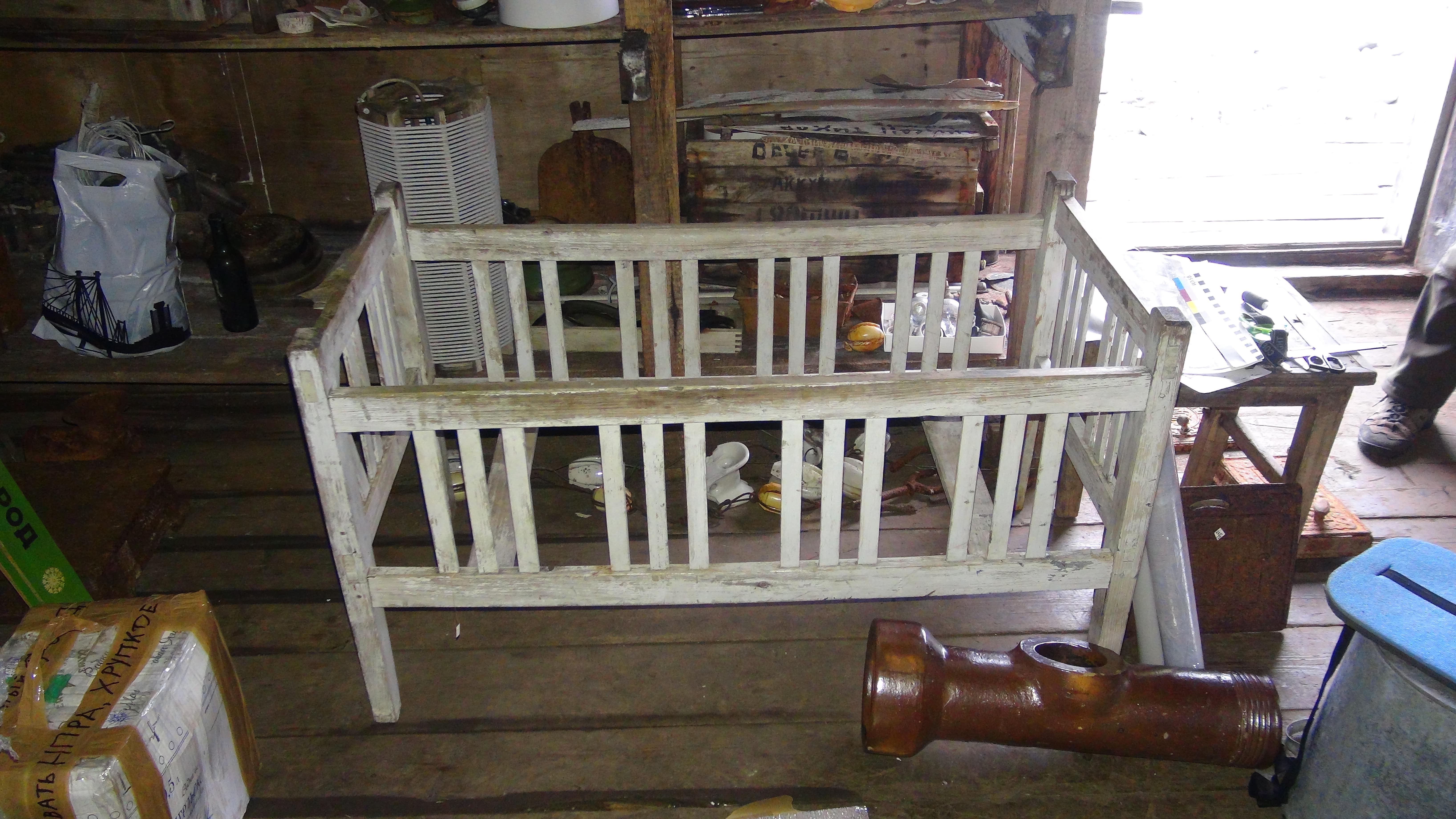
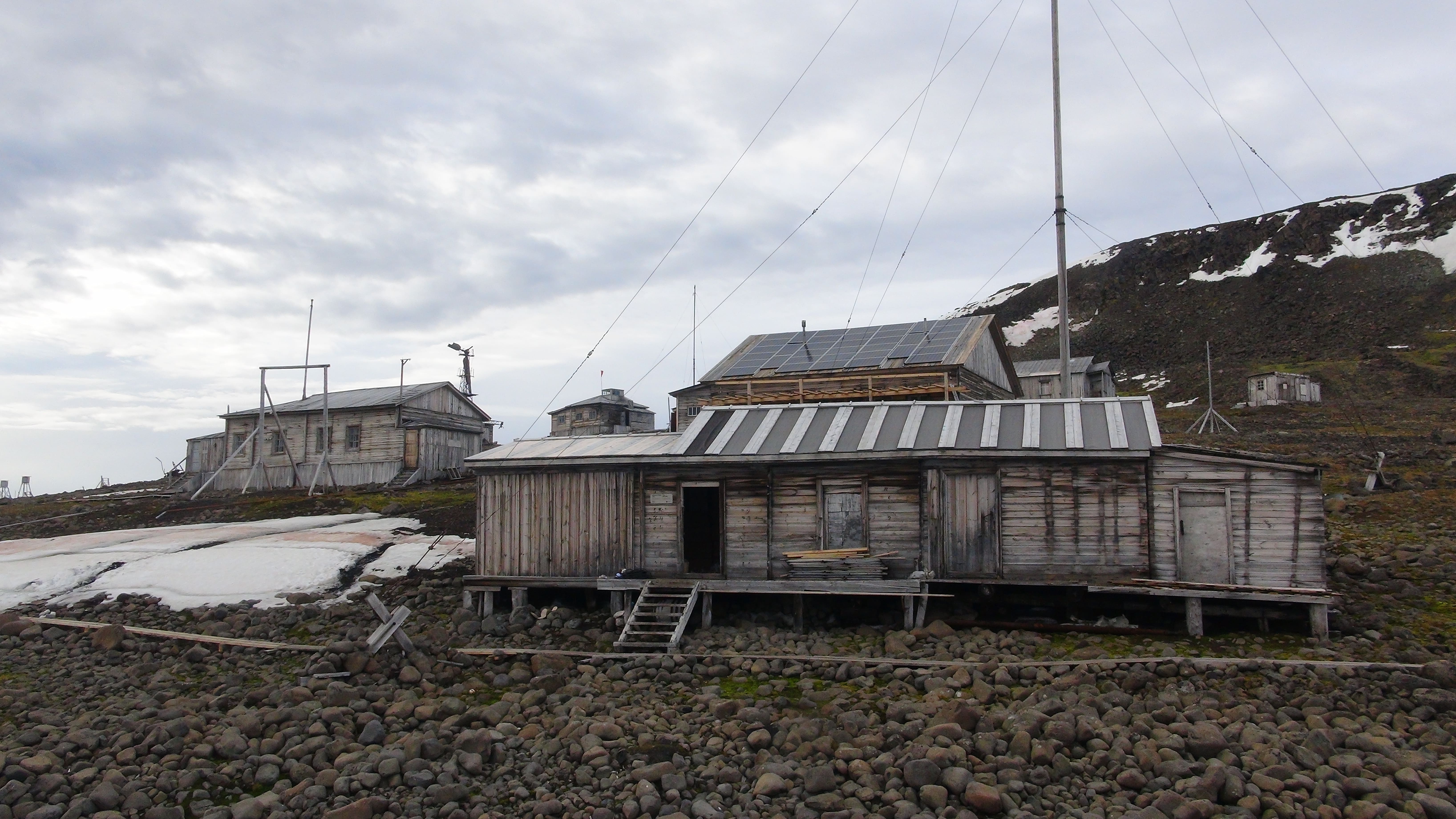
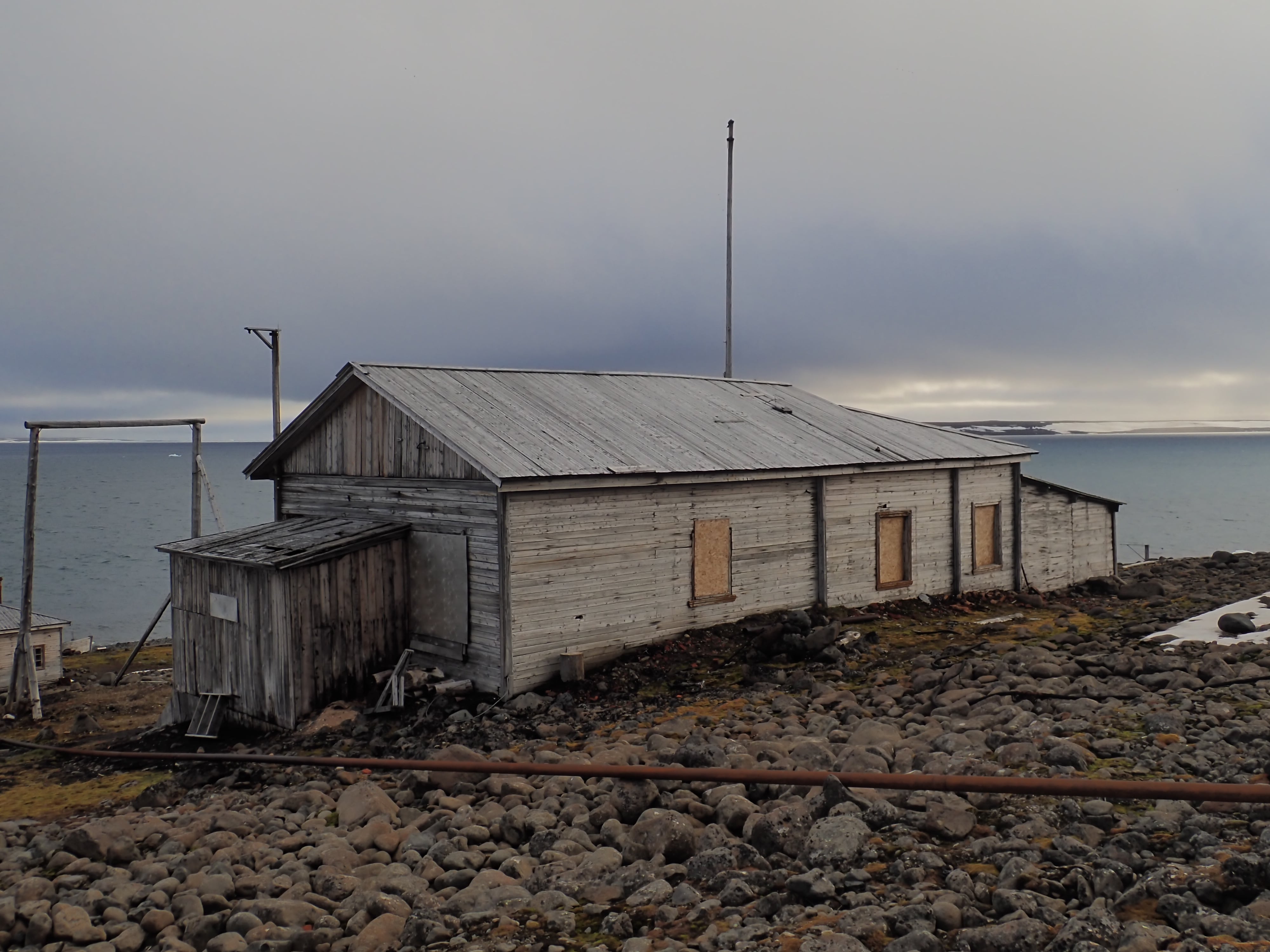
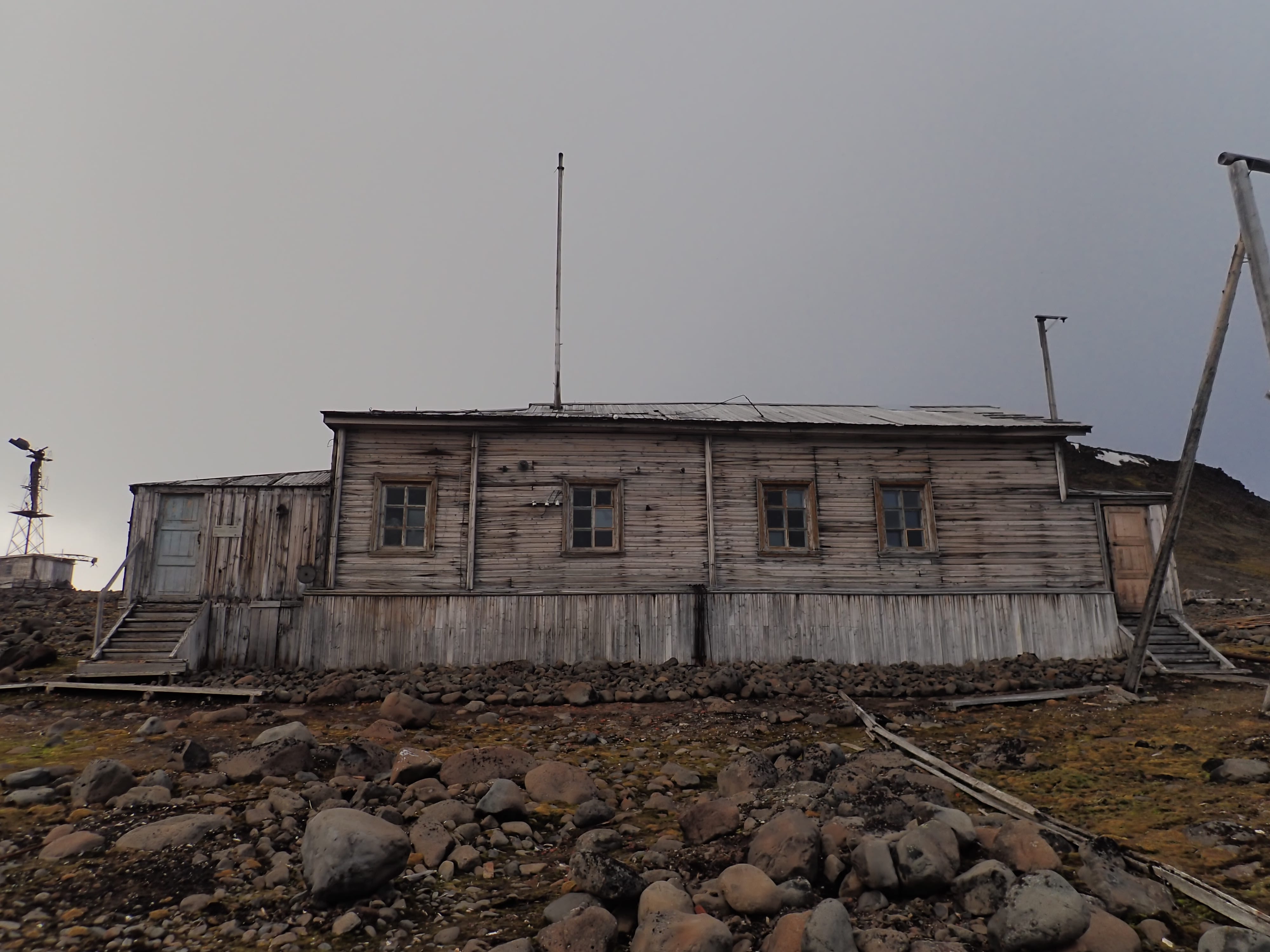
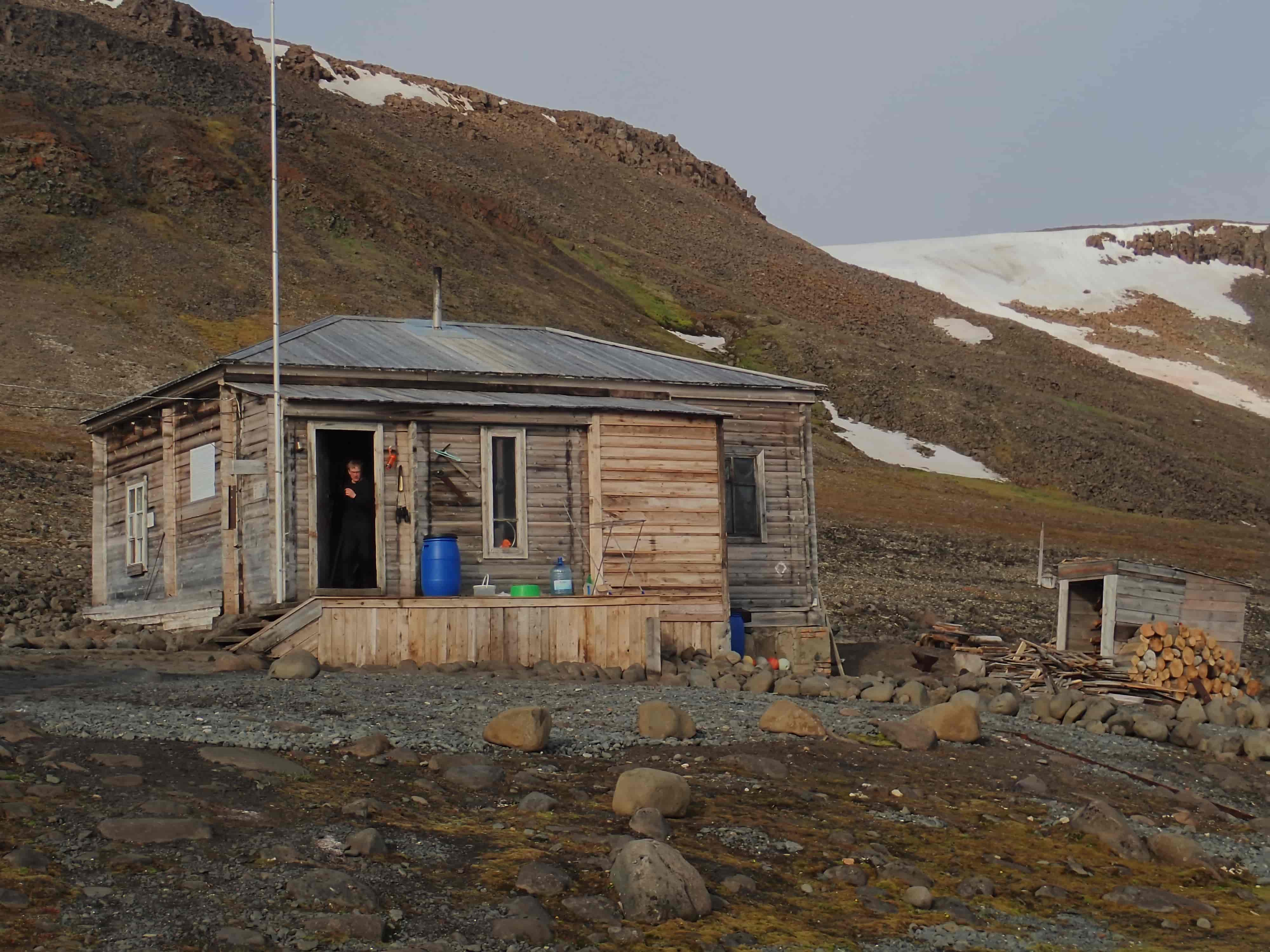
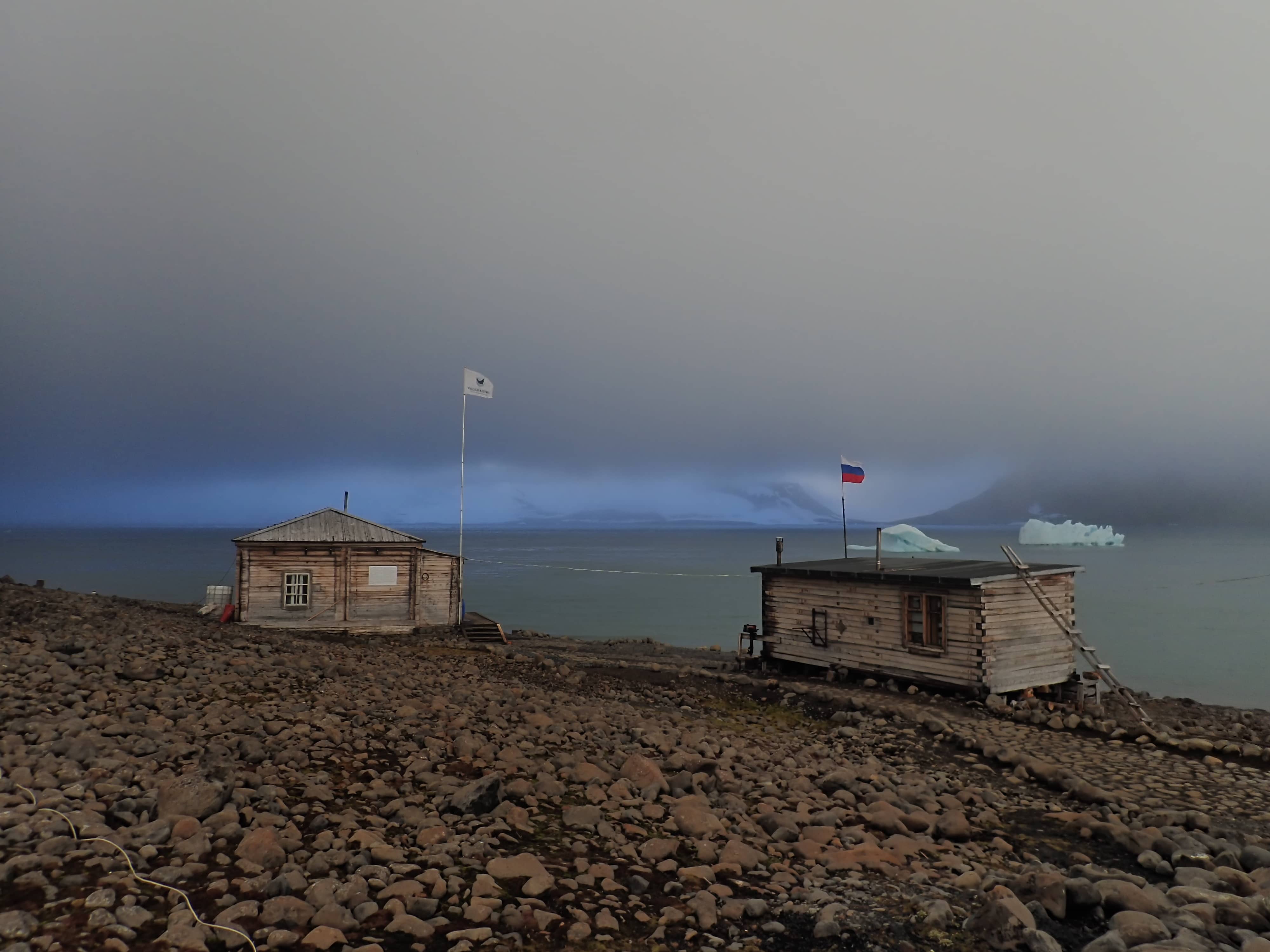
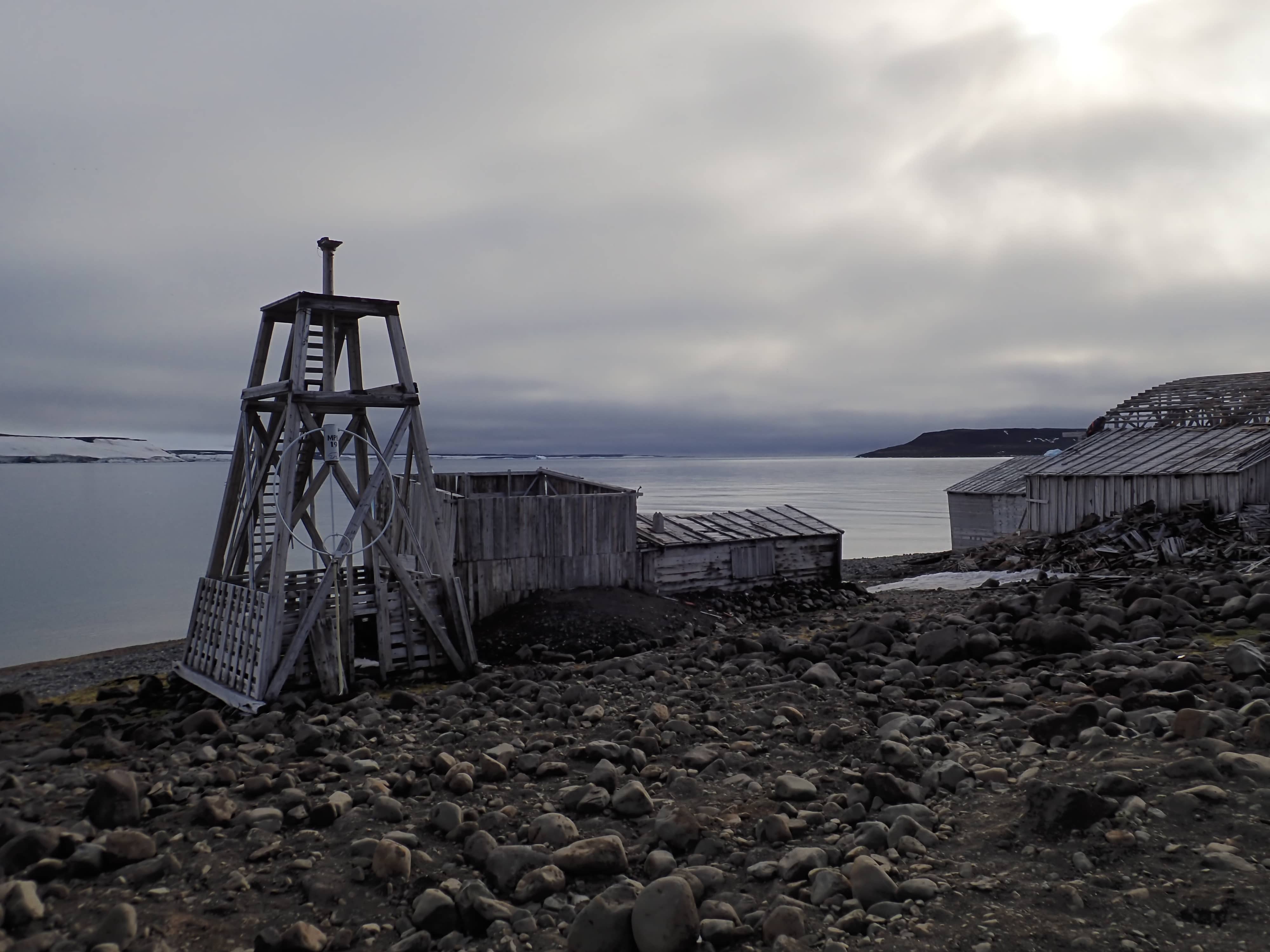
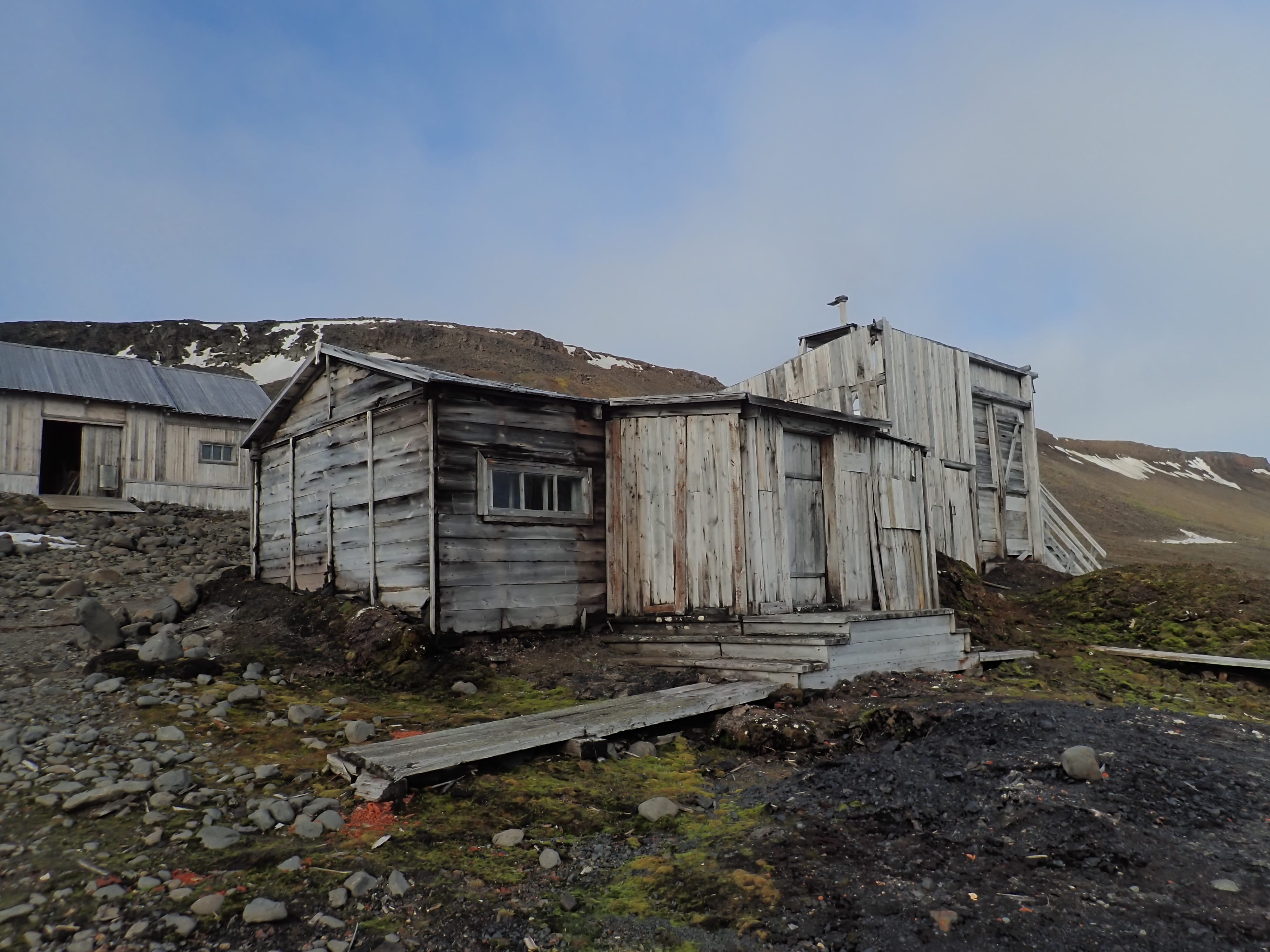
In 1990, Tikhaya Bay was visited by women's sport expedition "Metelitsa" (which means "Snowstorm"), which went on skiing trips in the Arctic as well as in the Antarctic. Some of these expeditions were on Franz Josef Land.
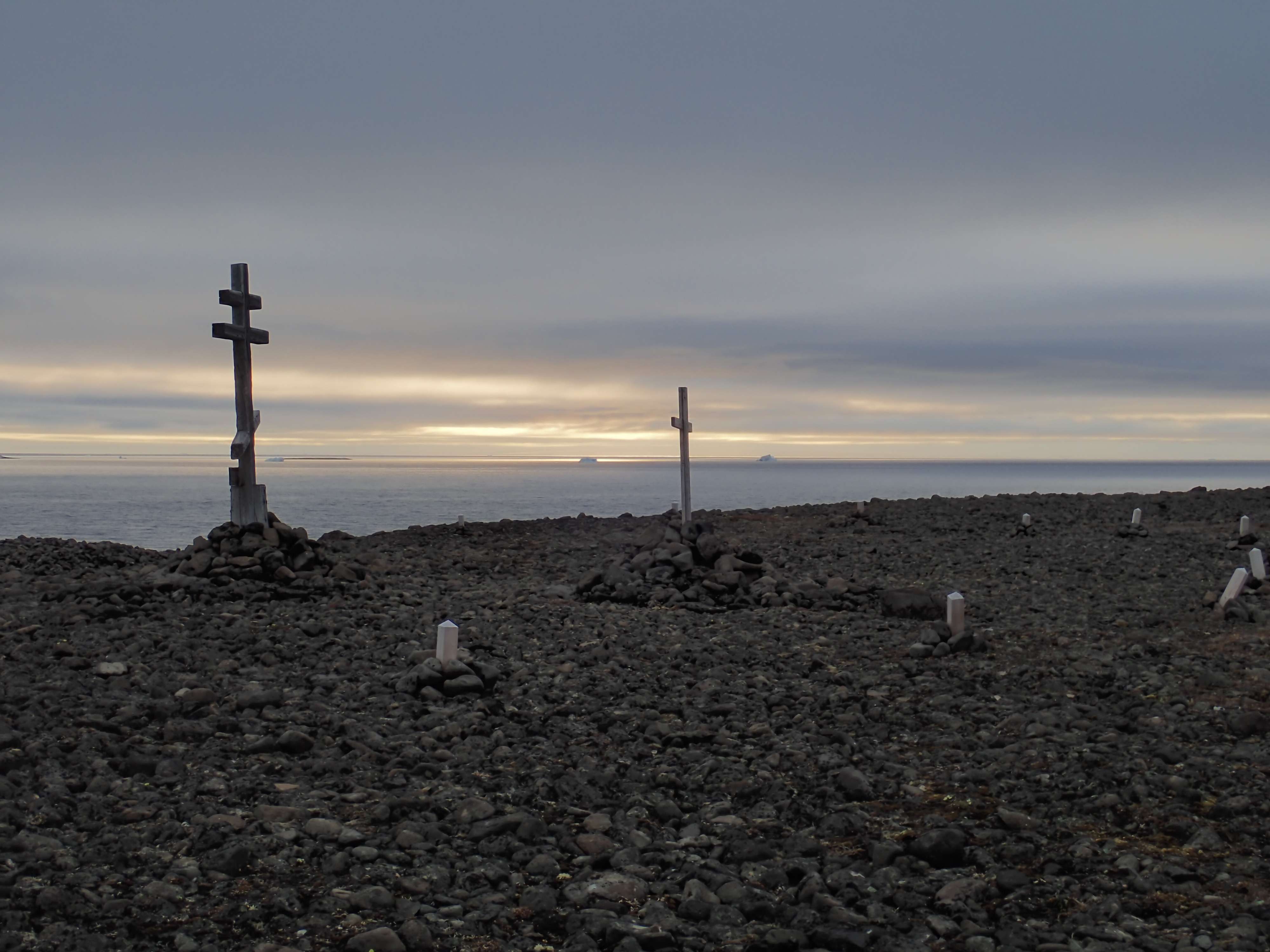
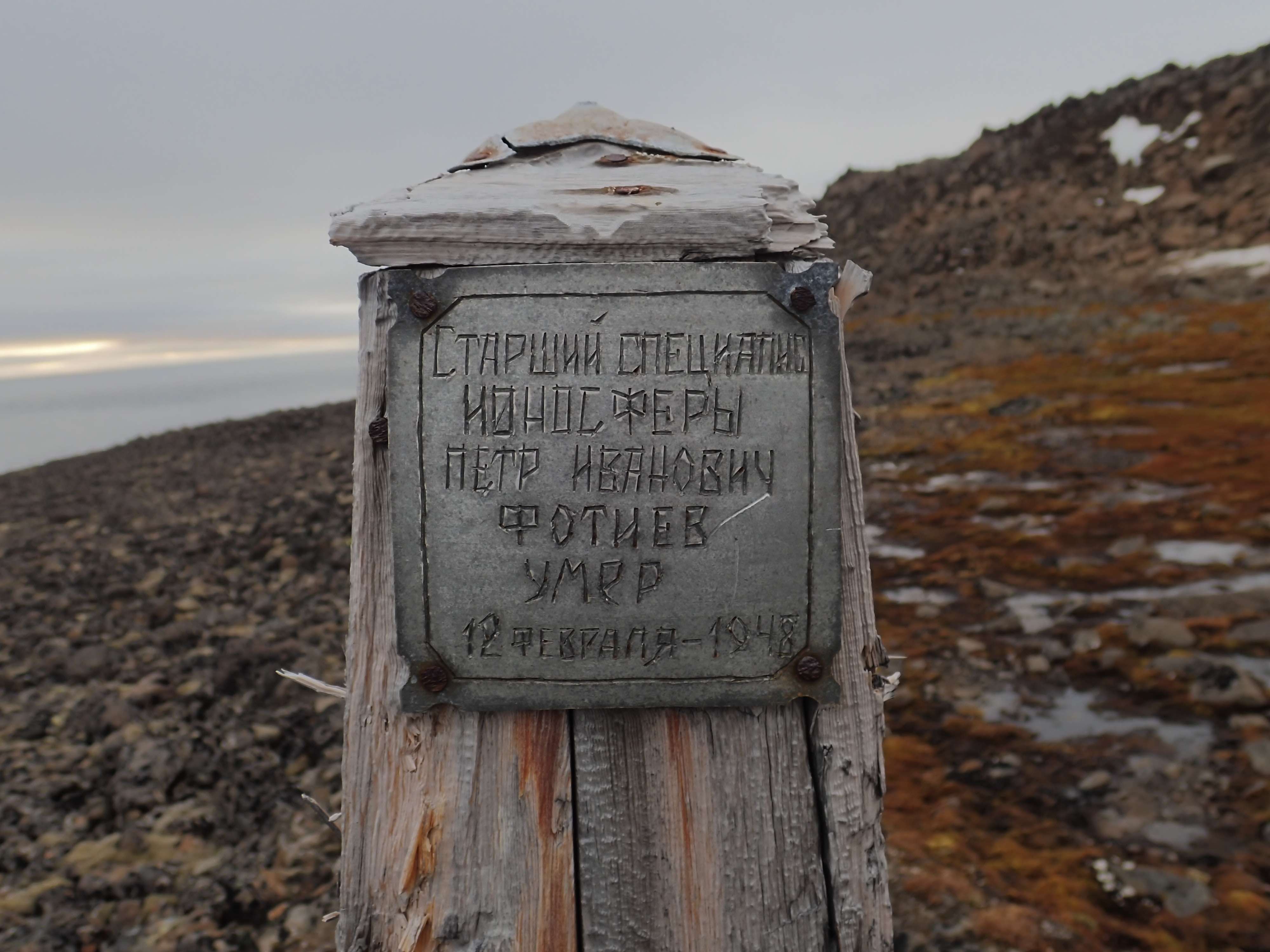
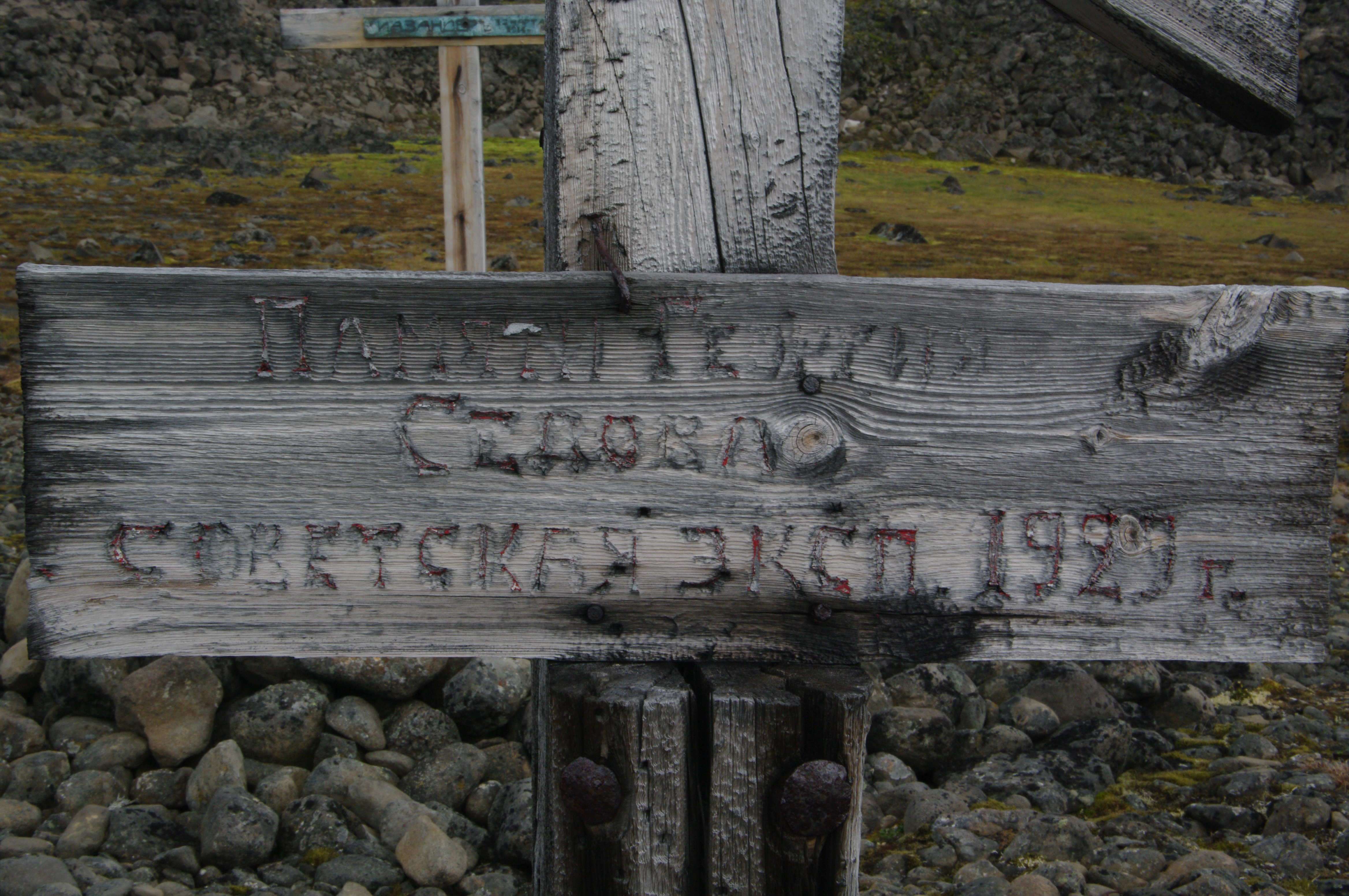
There are three graves at Tikhaya Bay. Near Sedov's cross there is a grave of Ivan Zander, a machinist of a steam boat named "Saint Phocas the Martyr".
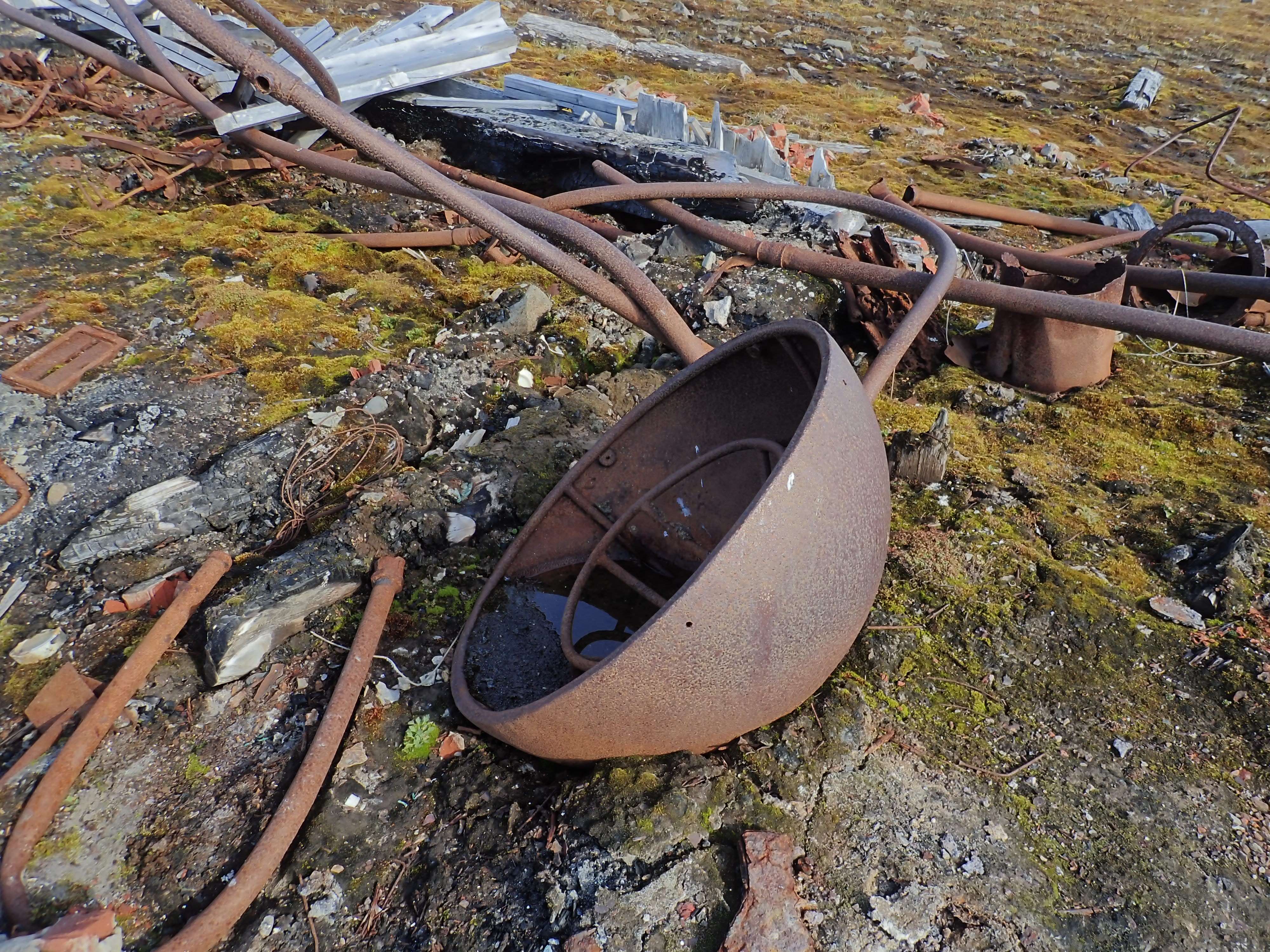
This is a site where a two-storied building of a space pavilion, built in 1952, once stood. This facility served to register intensity of cosmic rays. Unfortunately, the building and all its equipment was destroyed by fire in 1955.
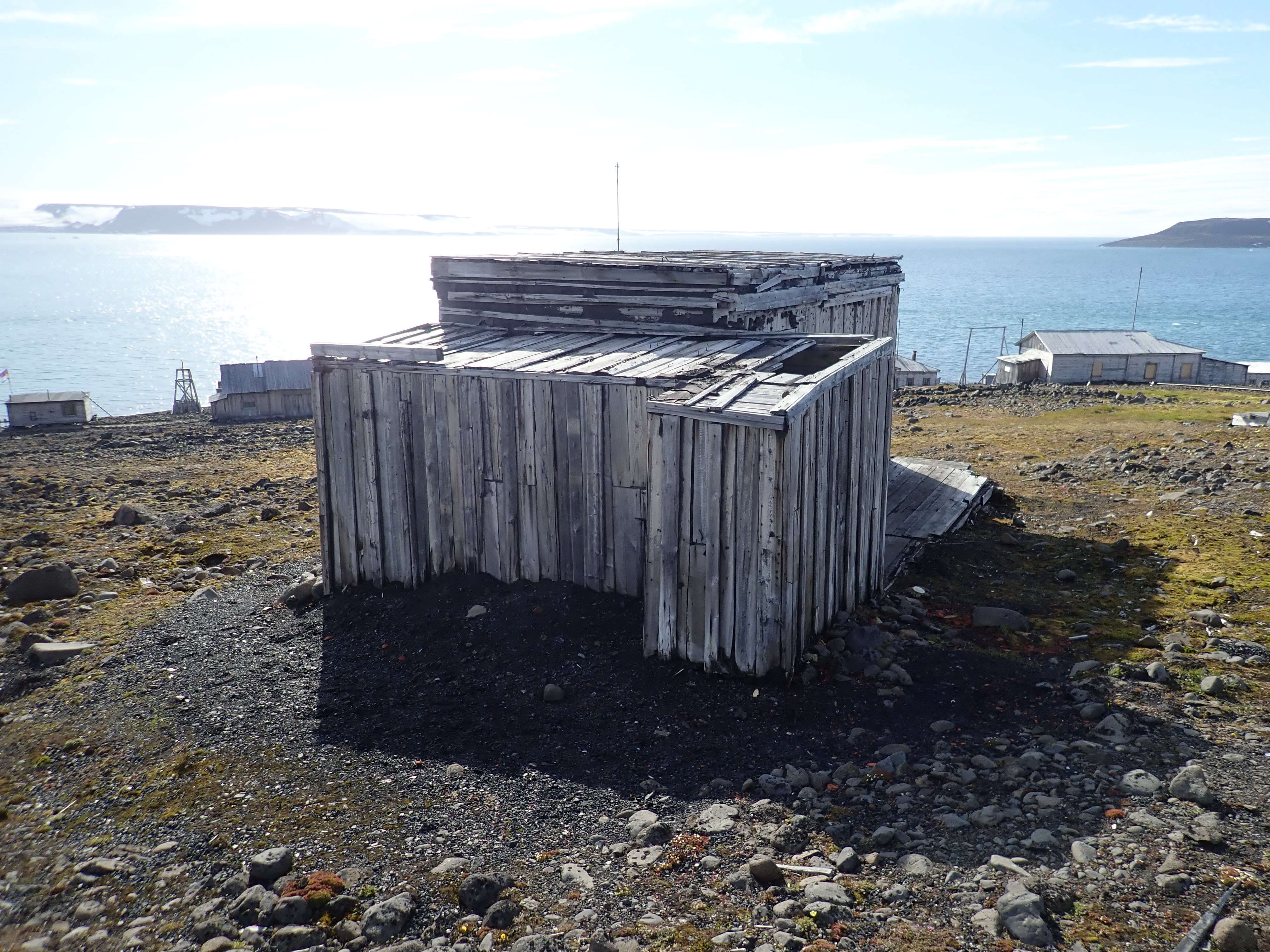
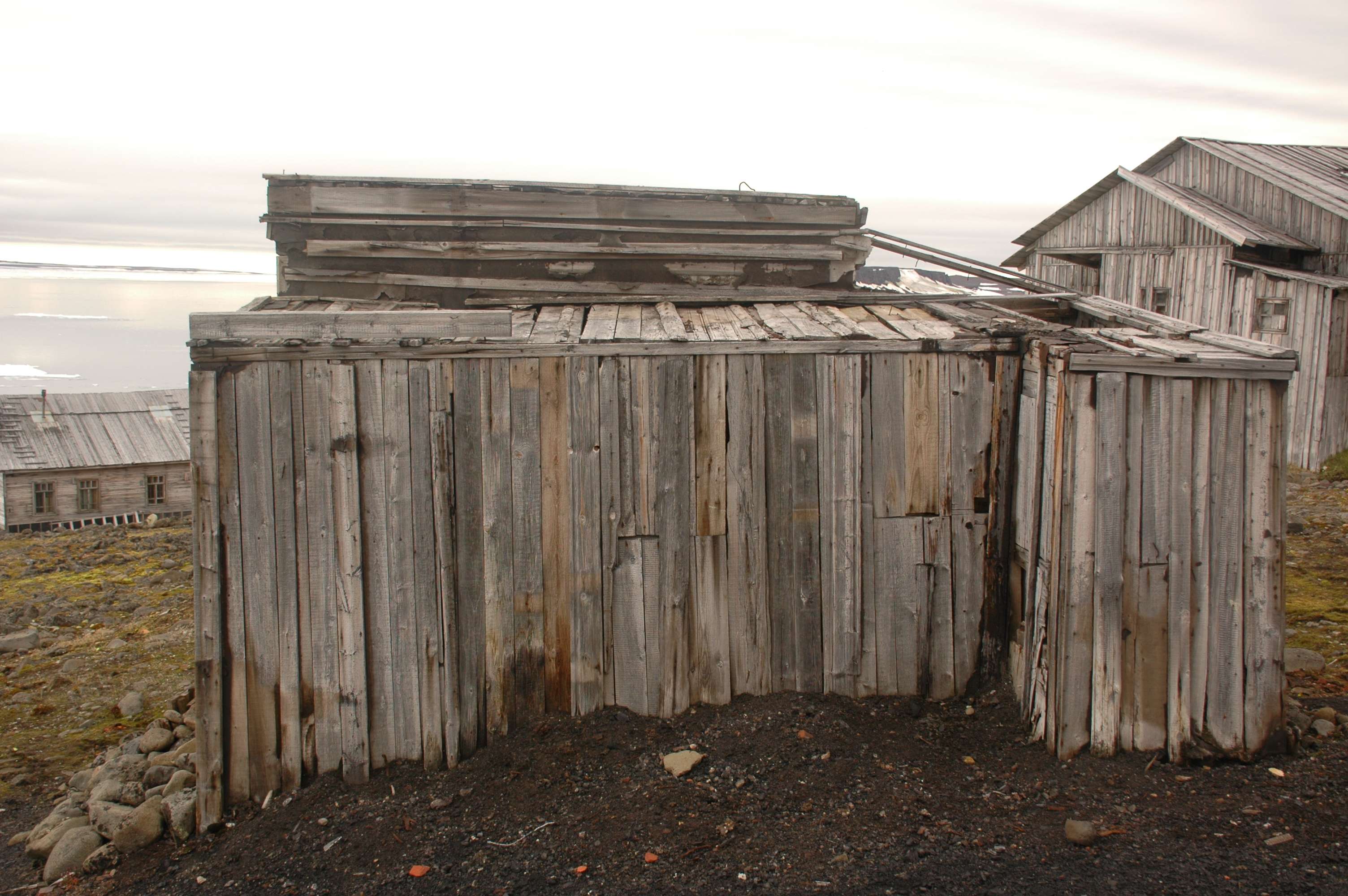
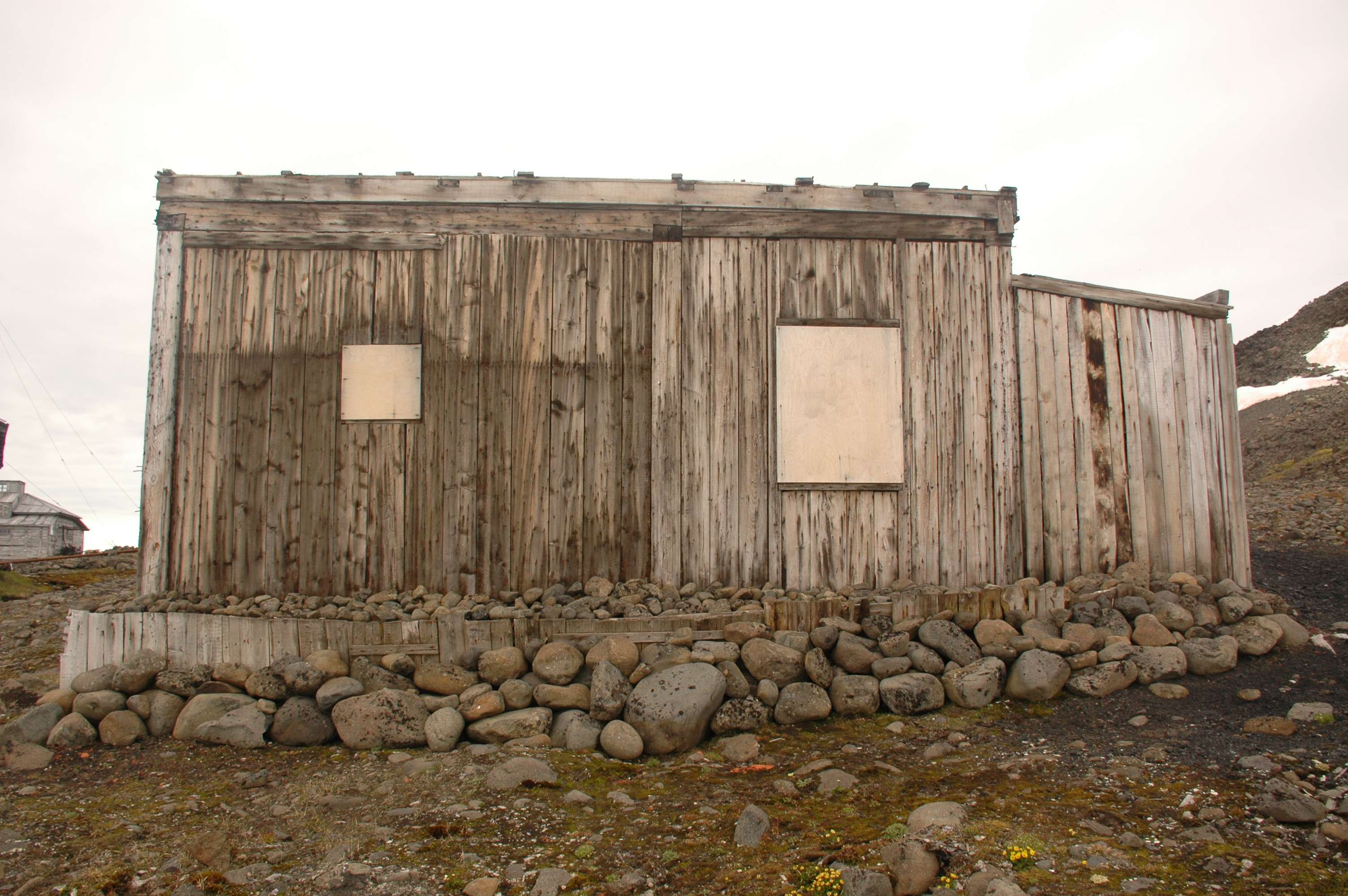
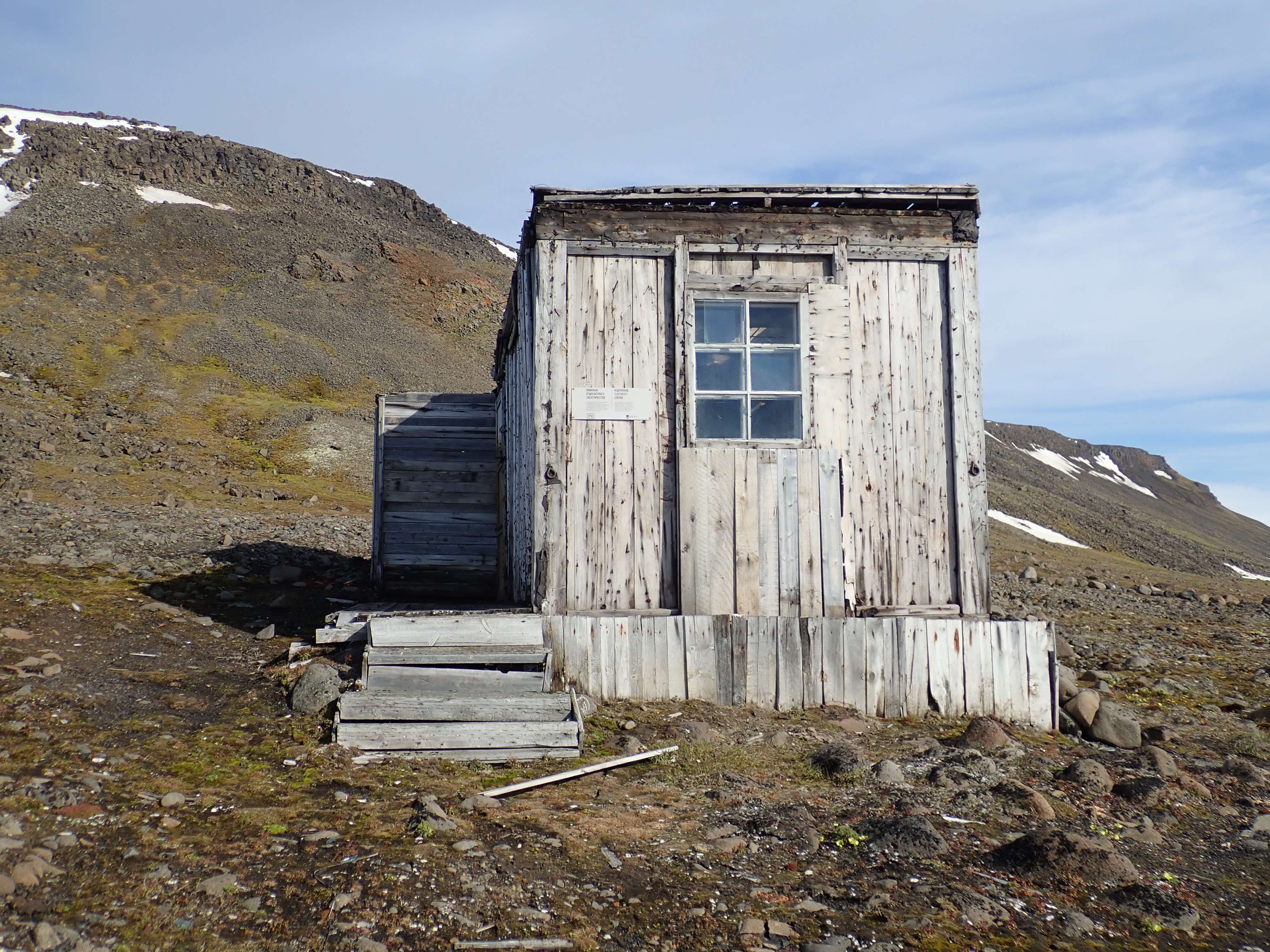
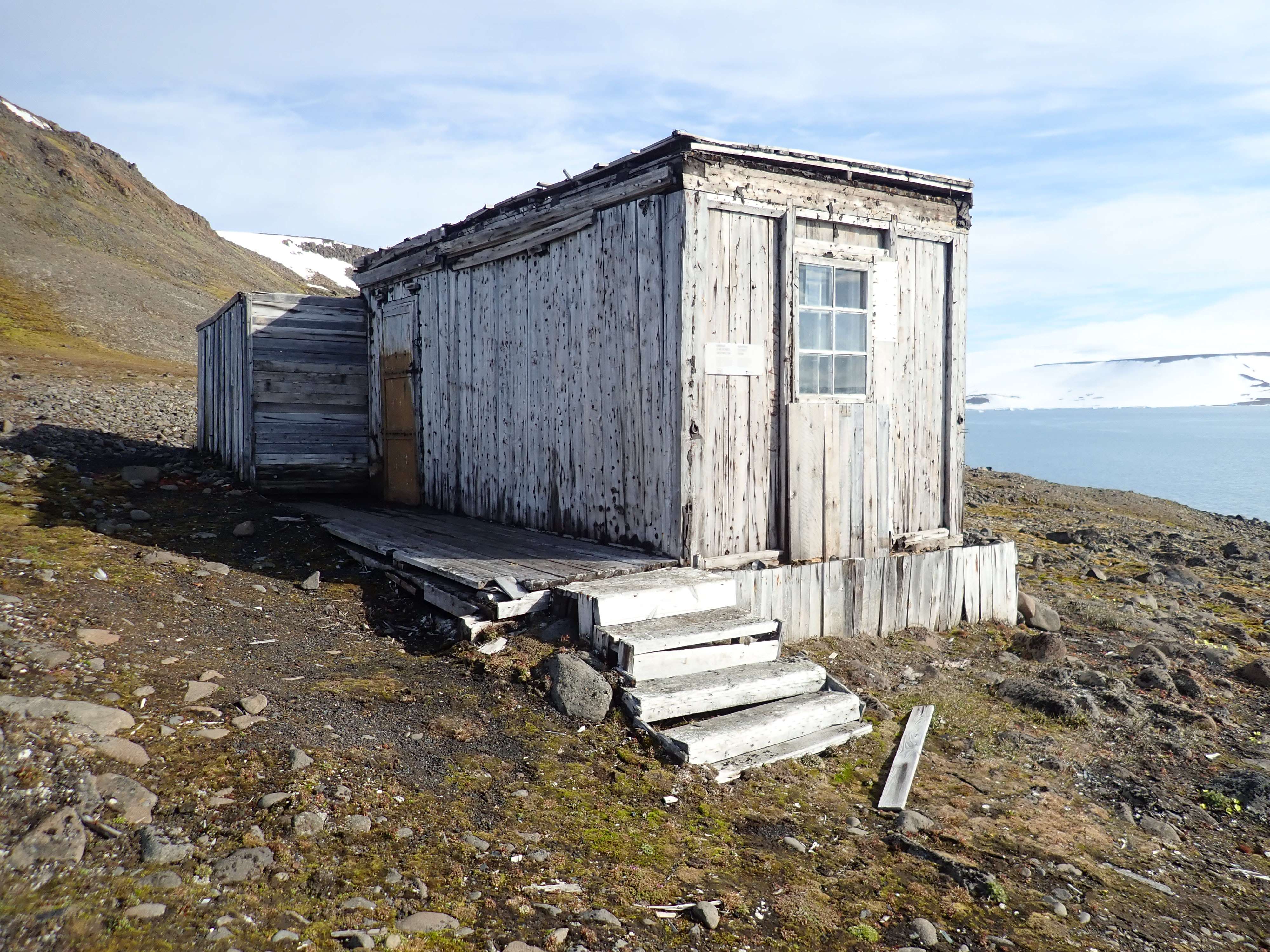
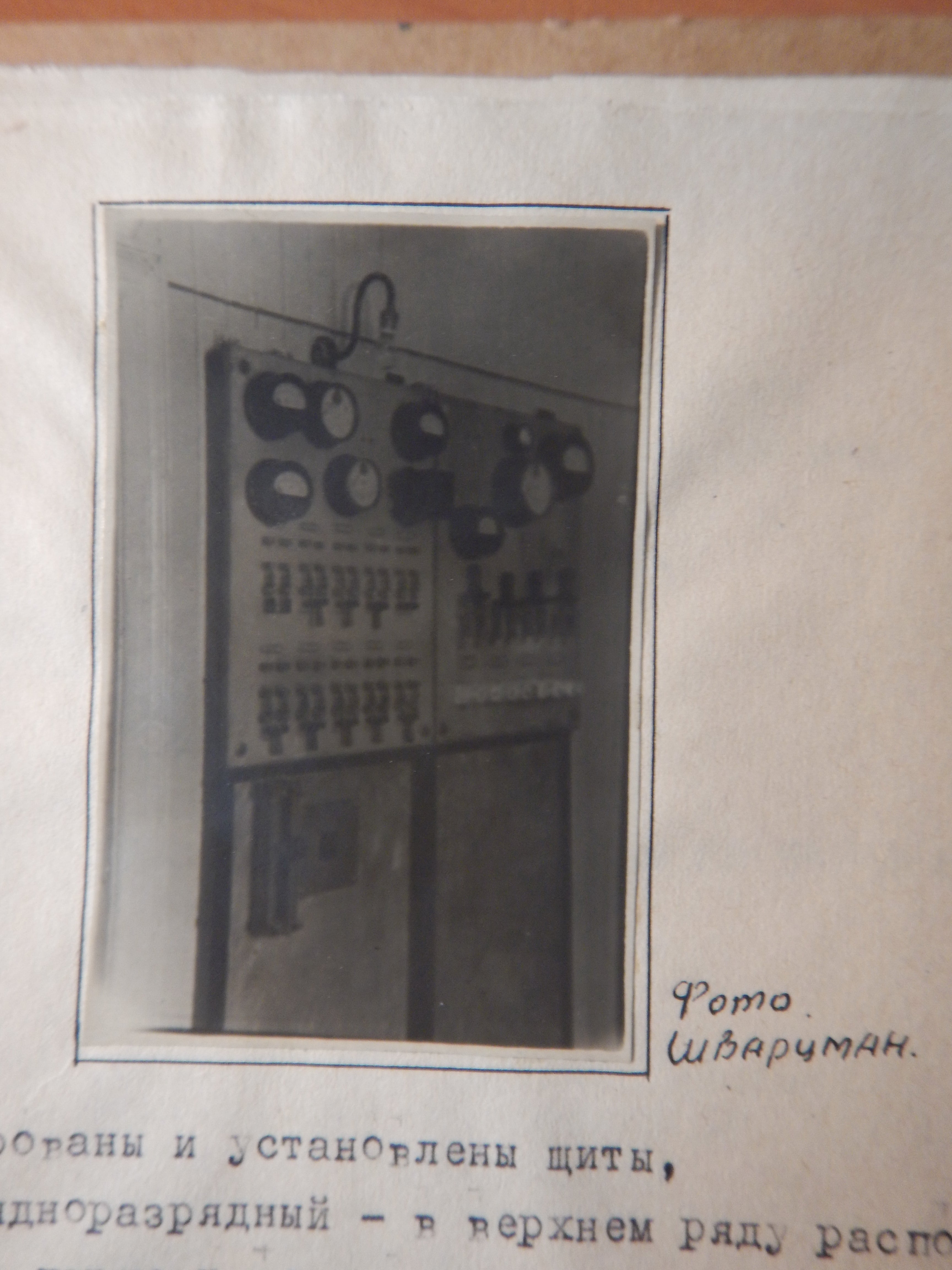
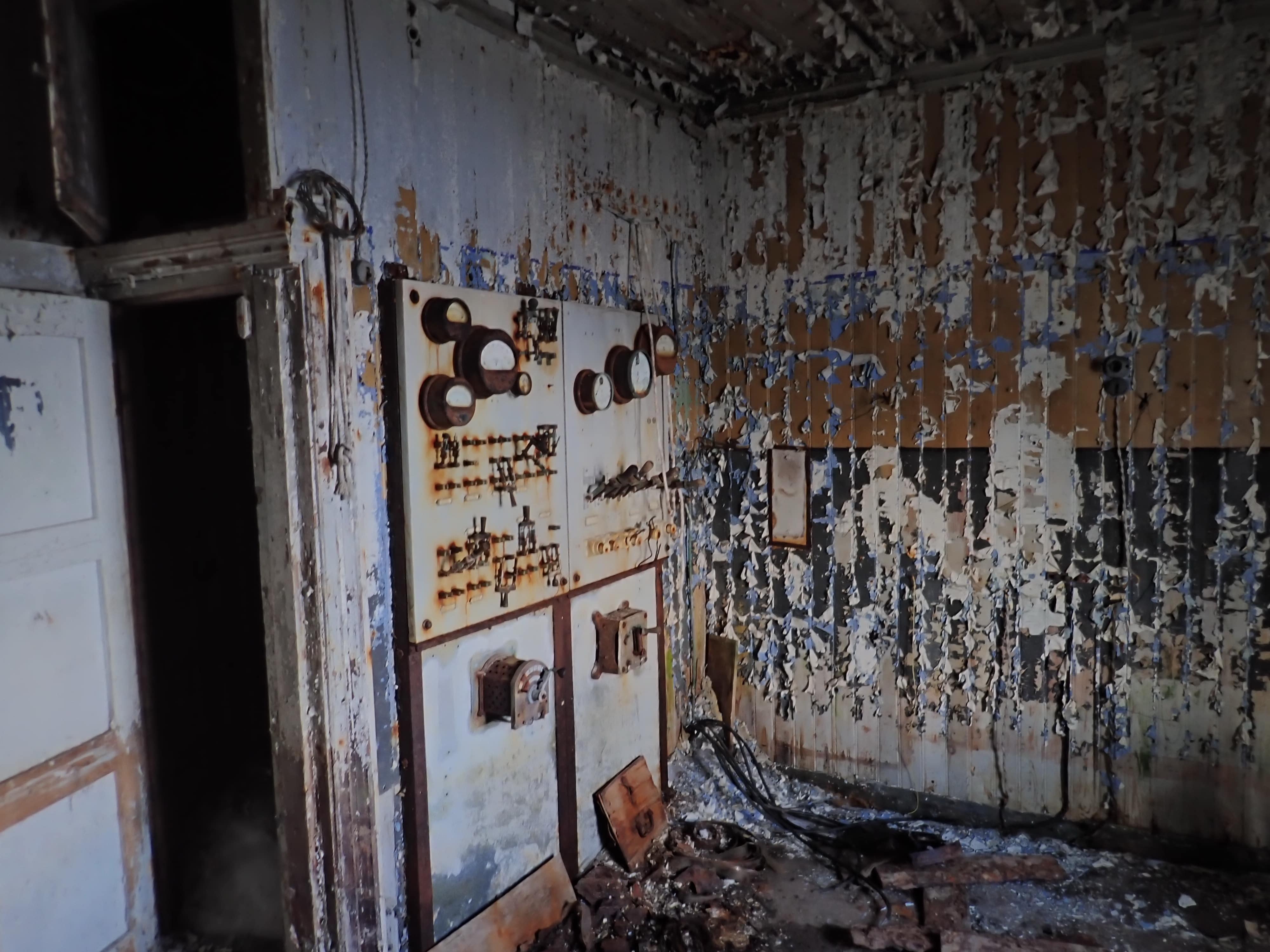
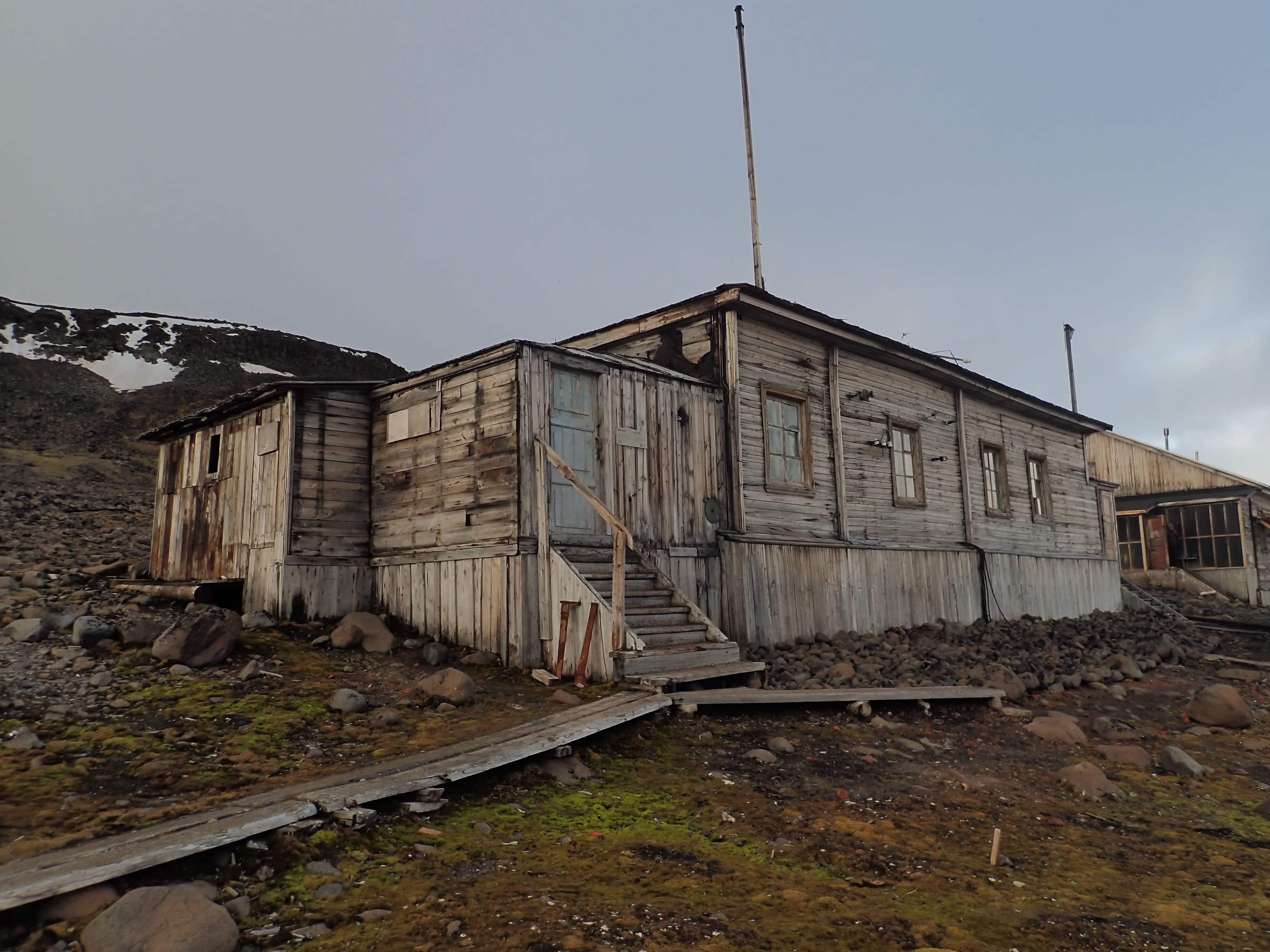
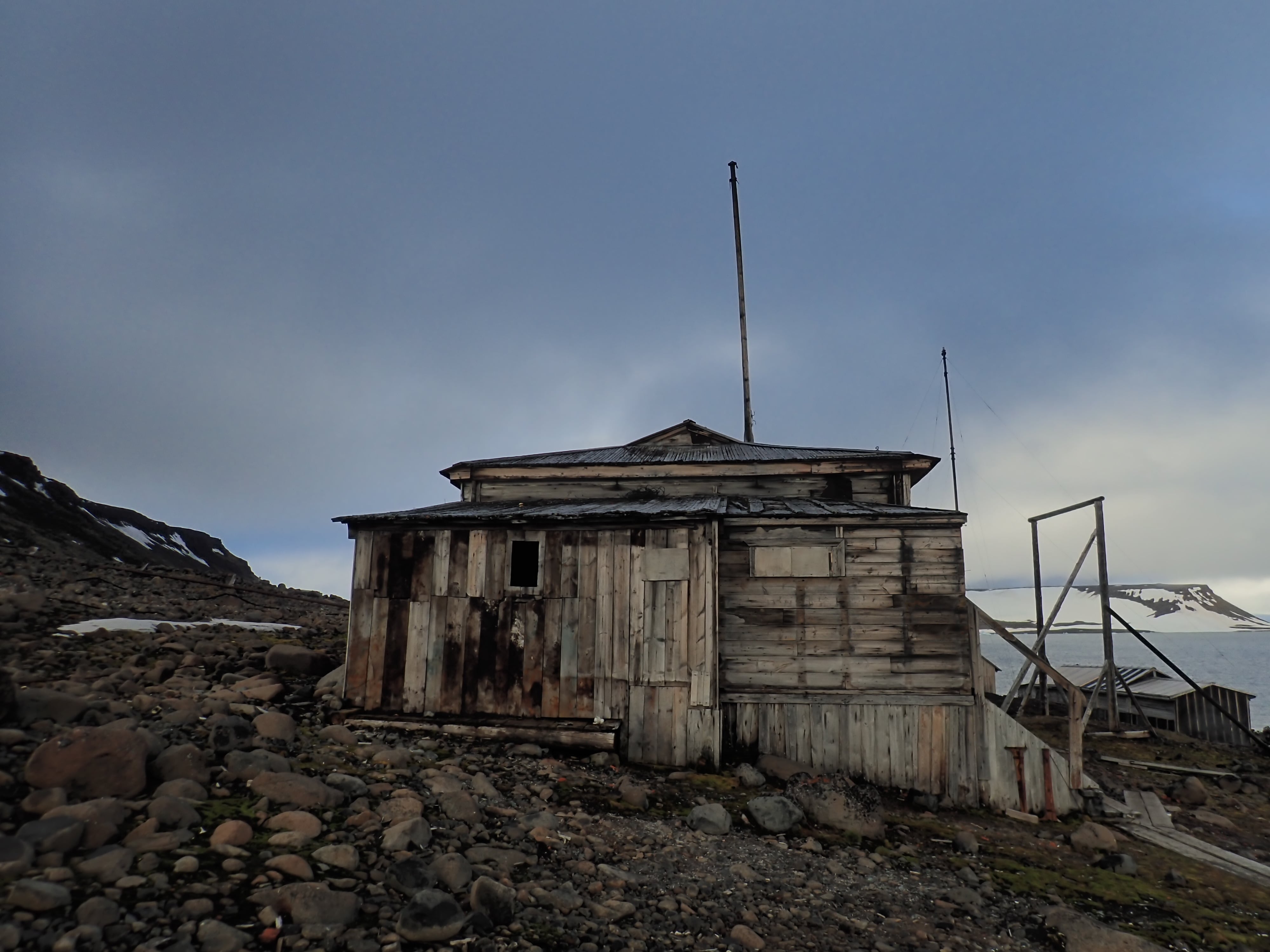
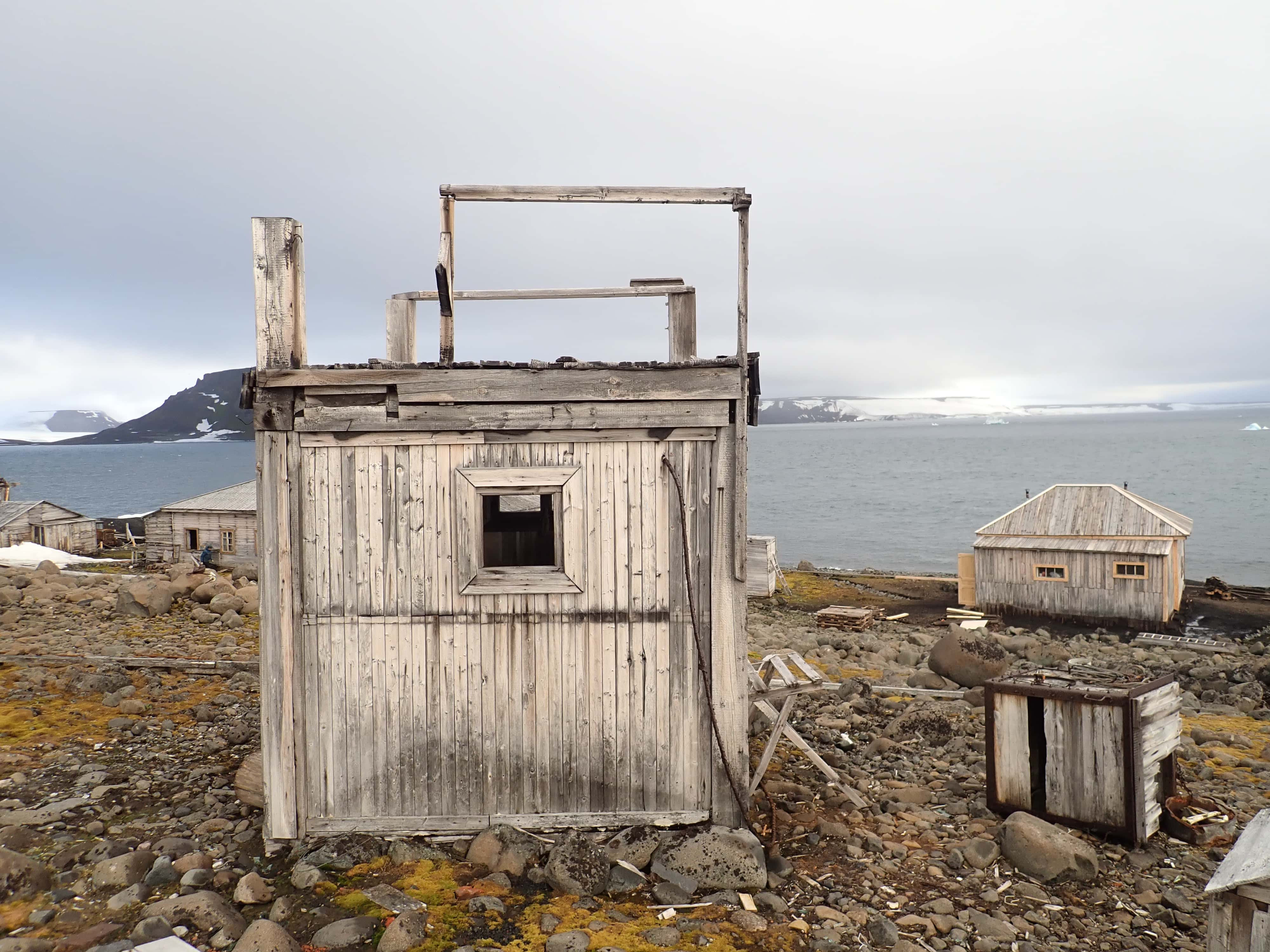
This atmospheric electricity pavilion was built at the station in 1932 during the International Polar Year. This small framed structure was made for Joachim Scholz (1903 - 1937), who was invited from a geophysical laboratory in Potsdam to conduct a series of observations. At the same time, Kurt Woelken, another German geophysicist, conducted his work at Russian Harbor, another polar station on Novaya Zemlya.
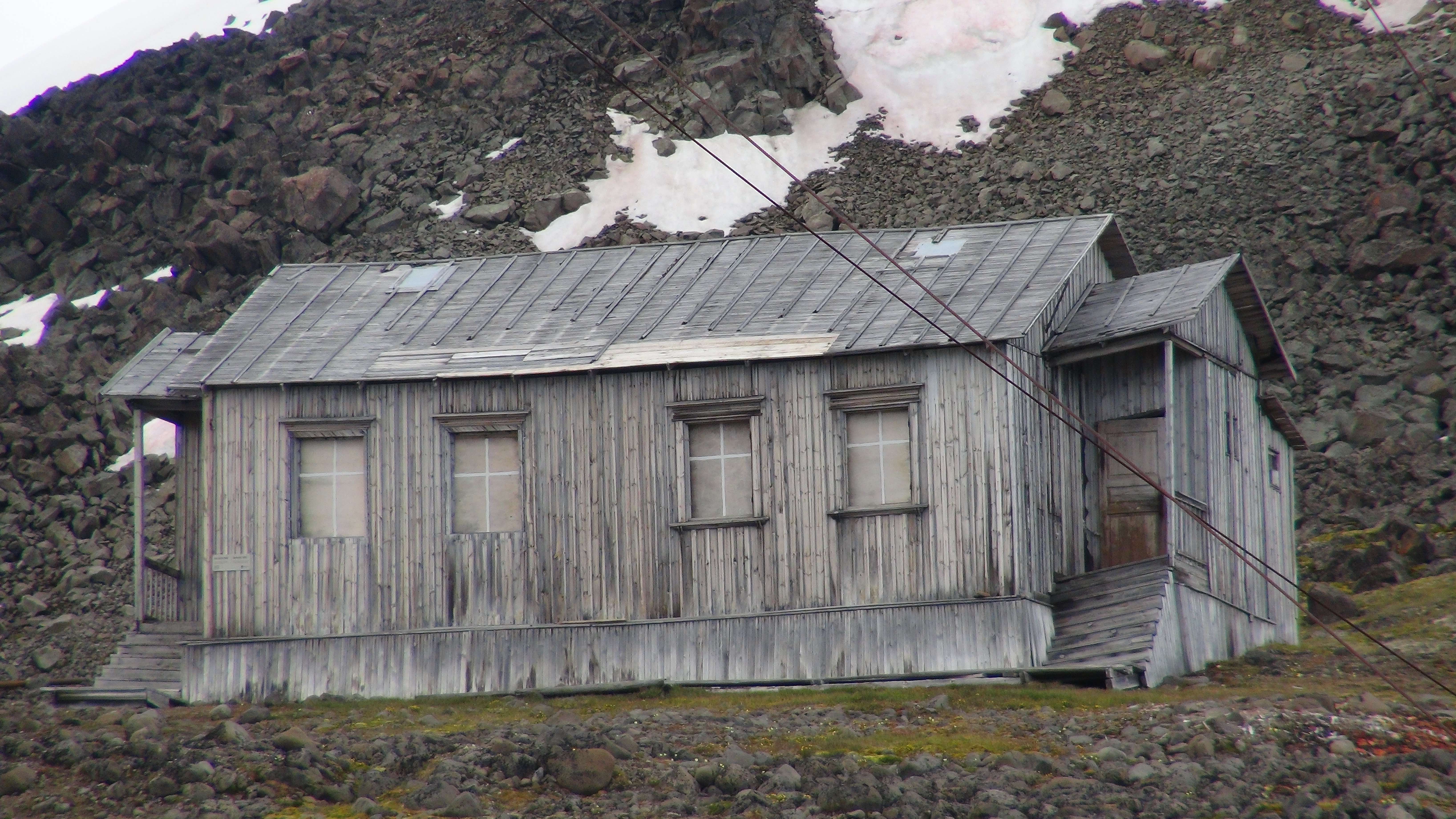
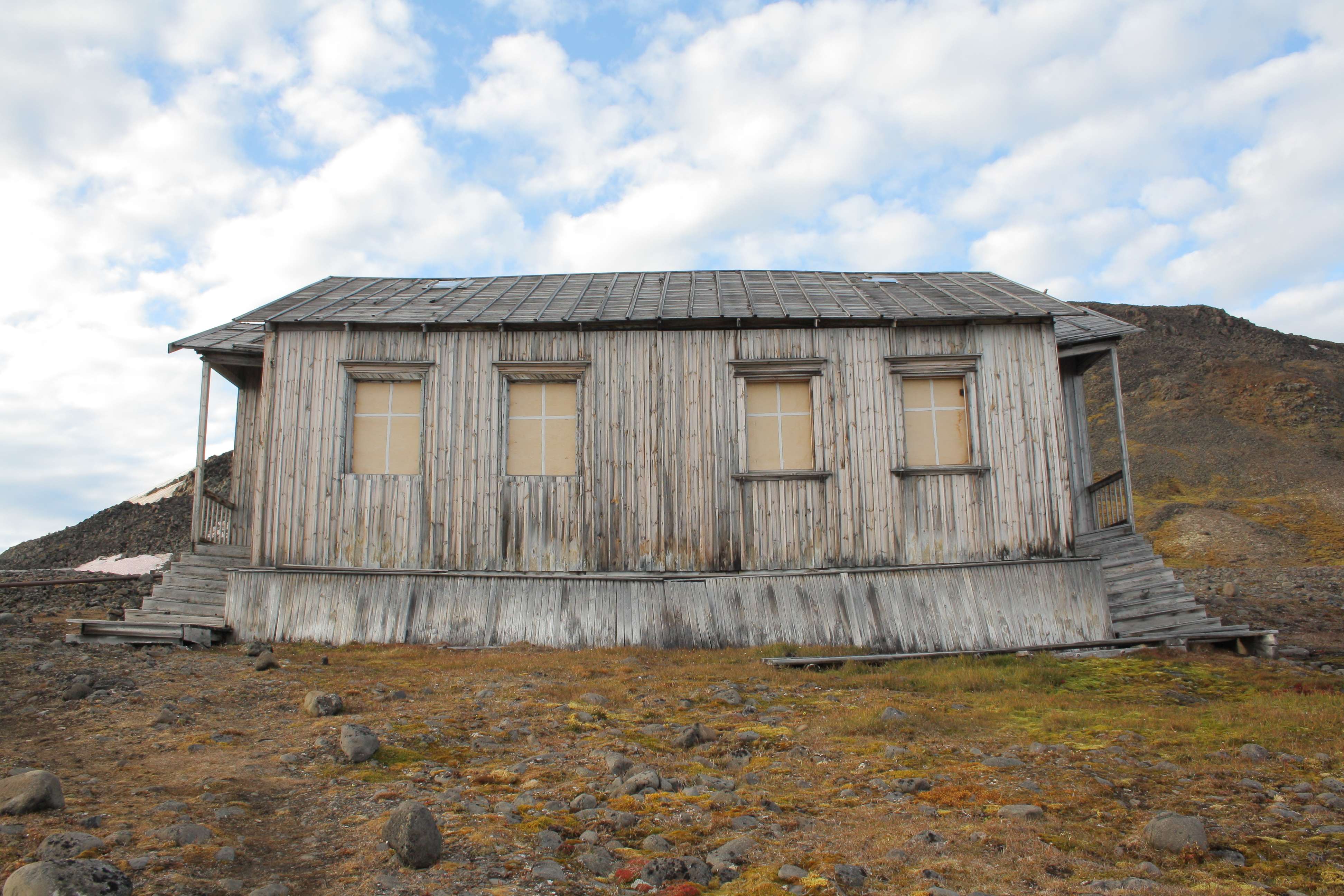
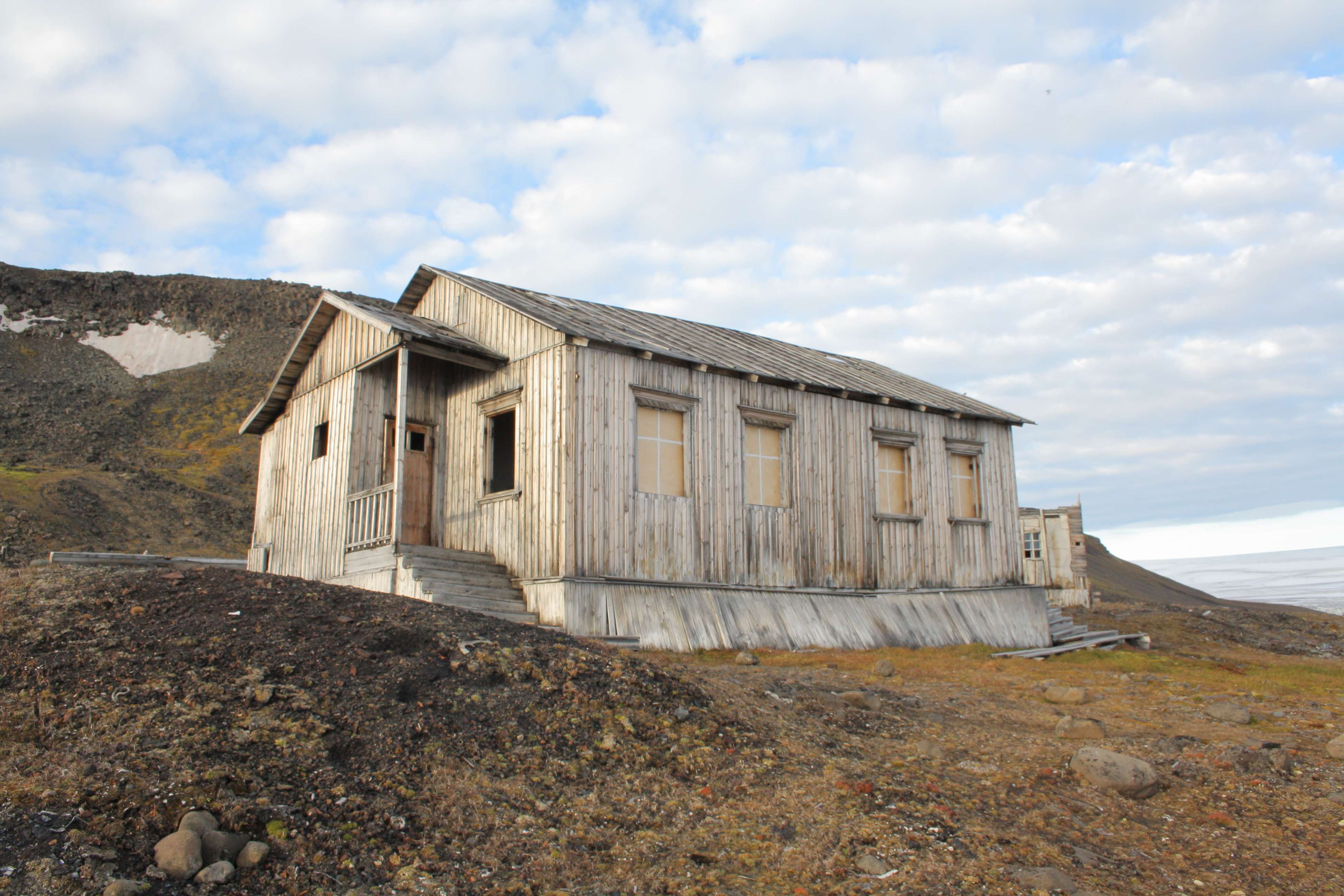
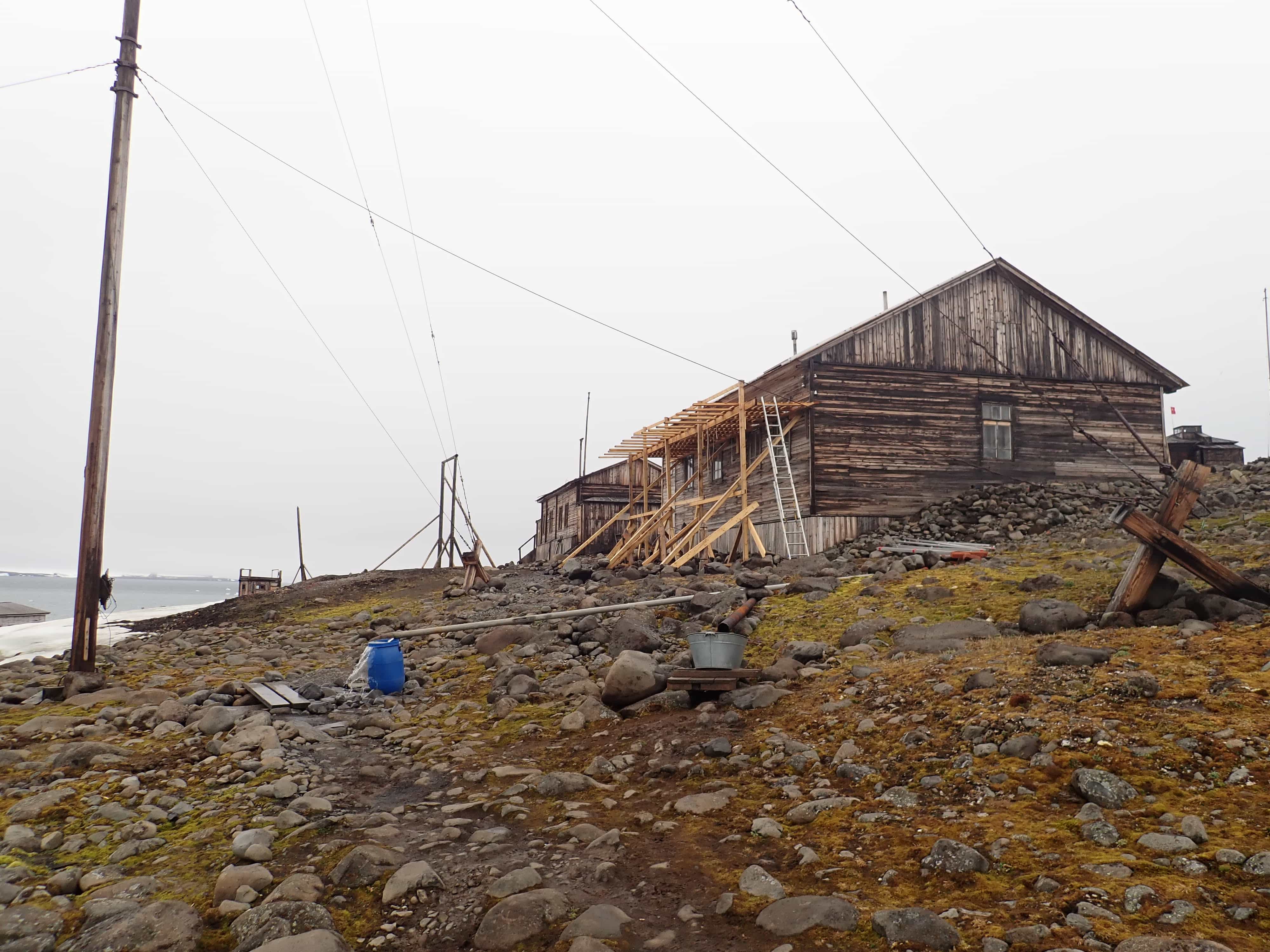
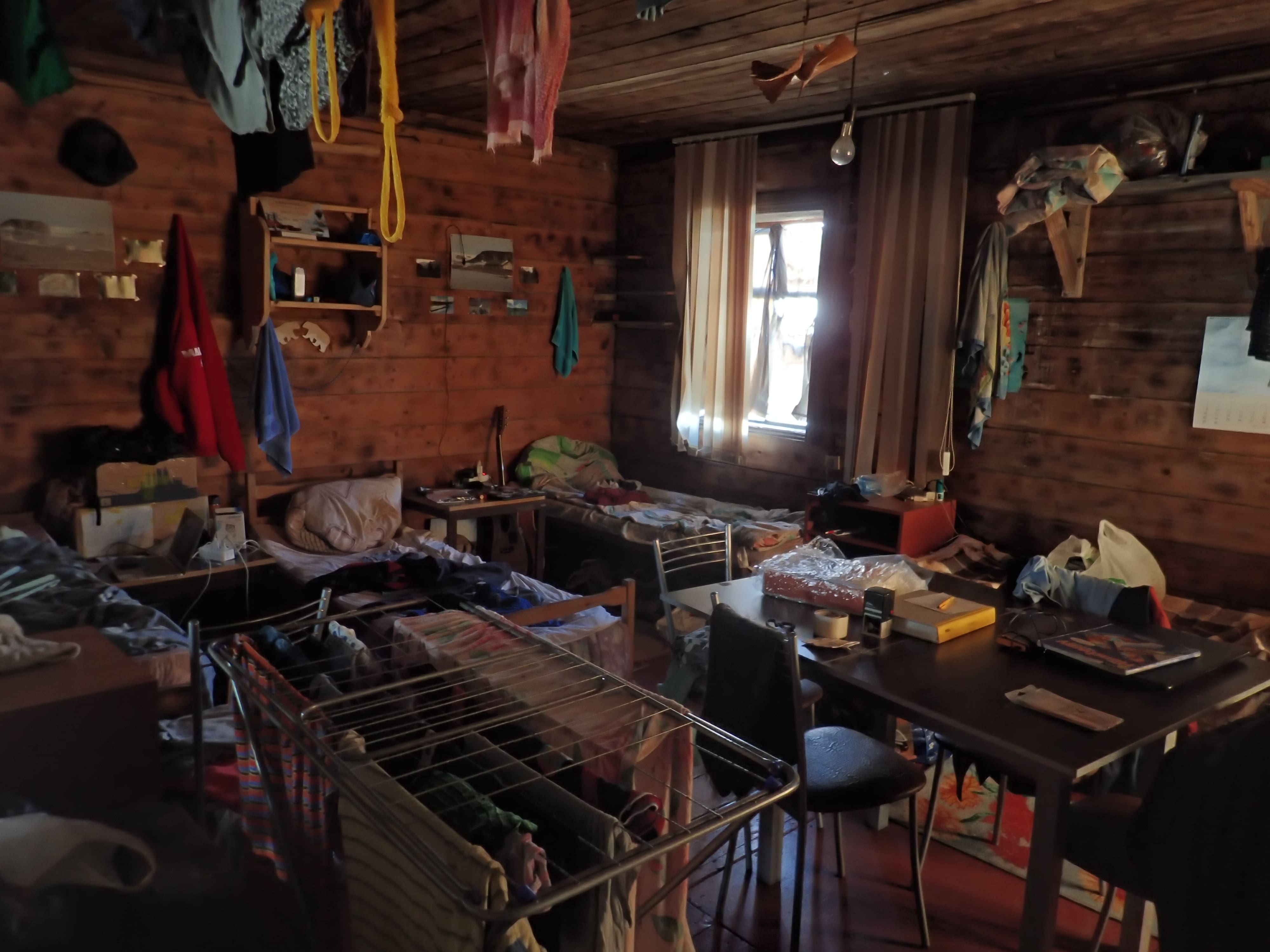
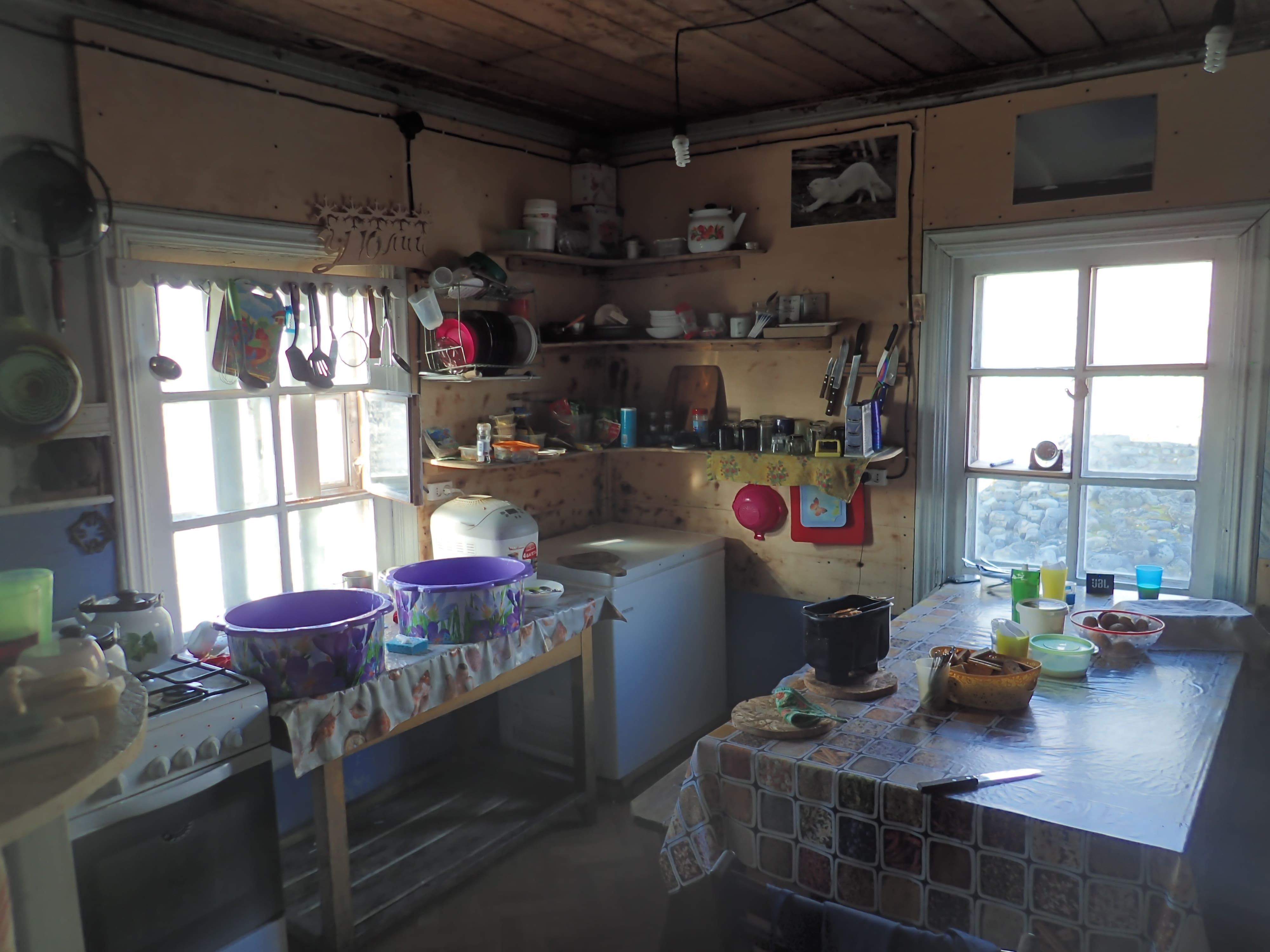
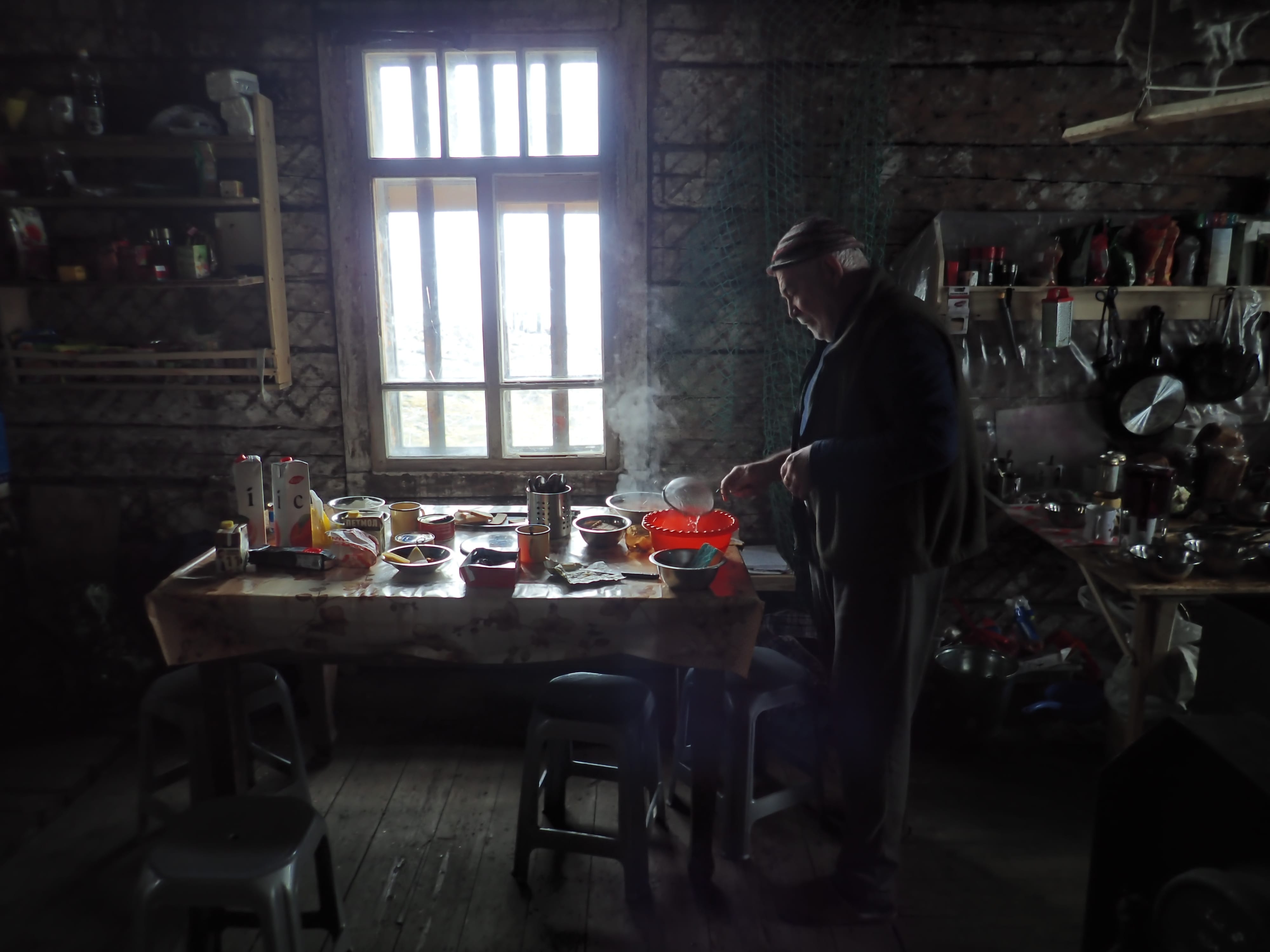
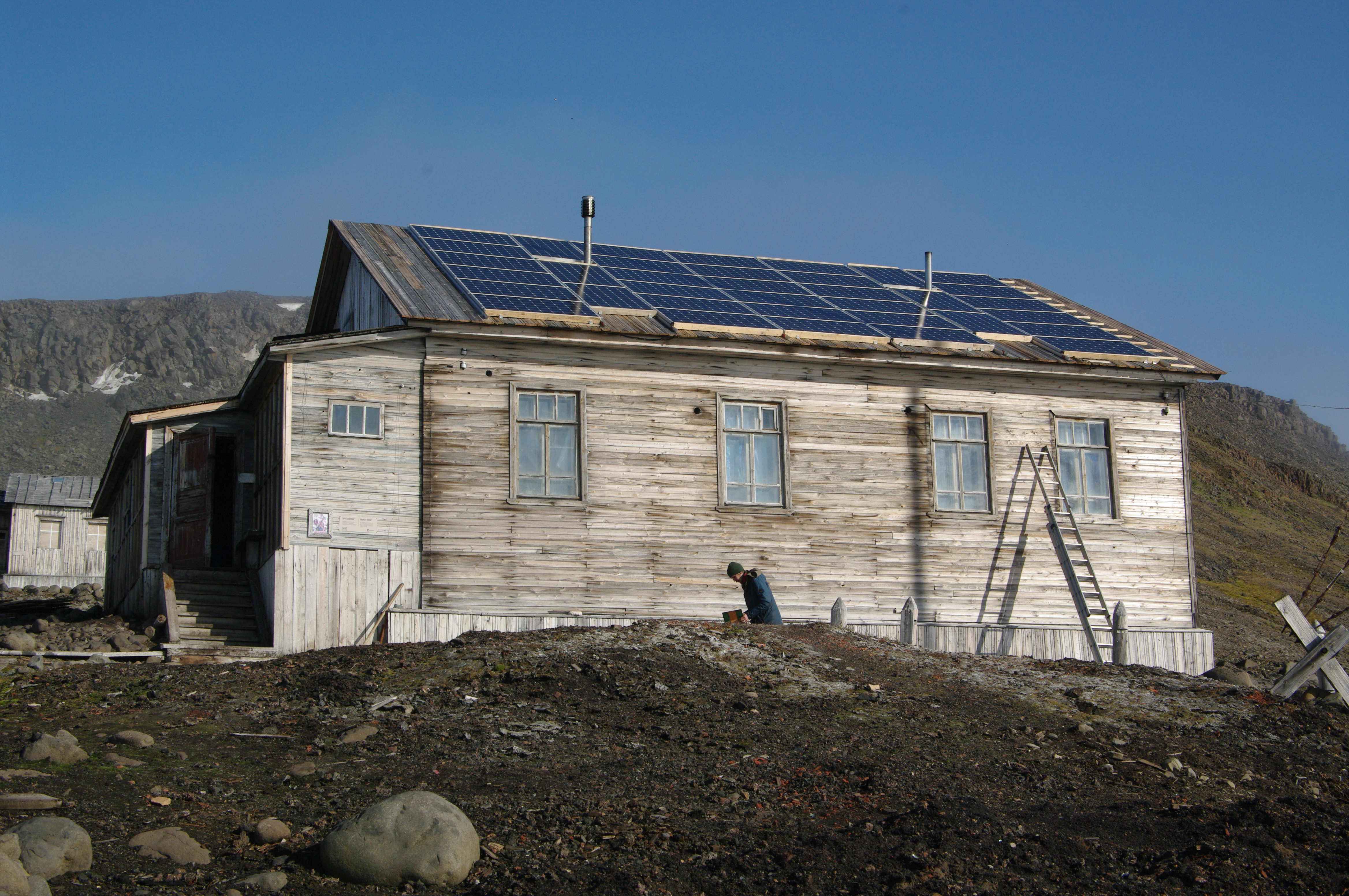
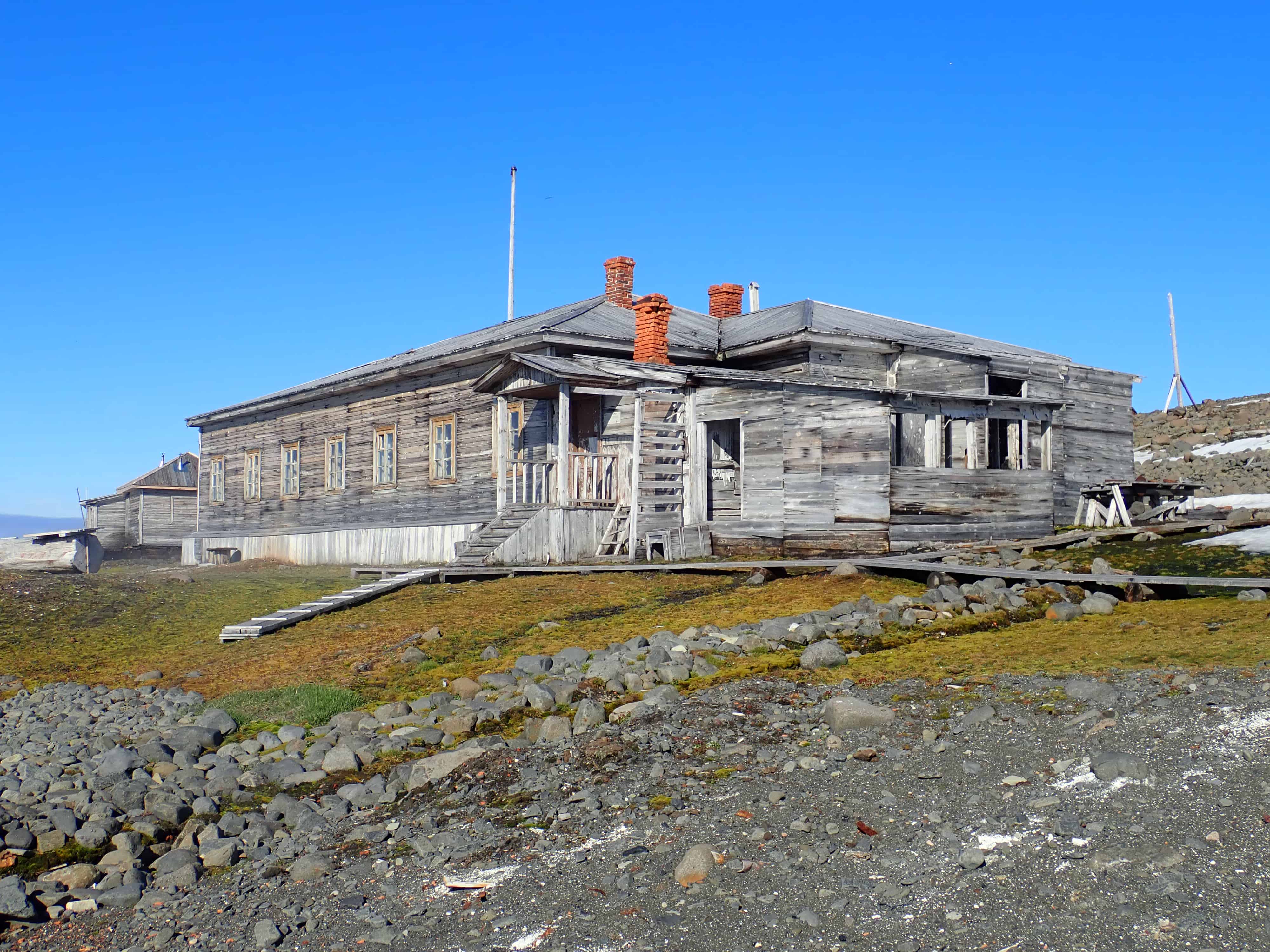
This residential house was designed in Finland and built from 1951 to 1952 for members of an expedition sent by the trust "Arctical reconnaisance" to conduct aerial photography and geological survey on Franz Josef Land. It is one of the most recent buildings at Tikhaya Bay. The house has living quarters, a kitchen and two entrances equipped with tambours. It was heated with Dutch ovens. In the 1950s it was used to accommodate young workers who did not have a family.
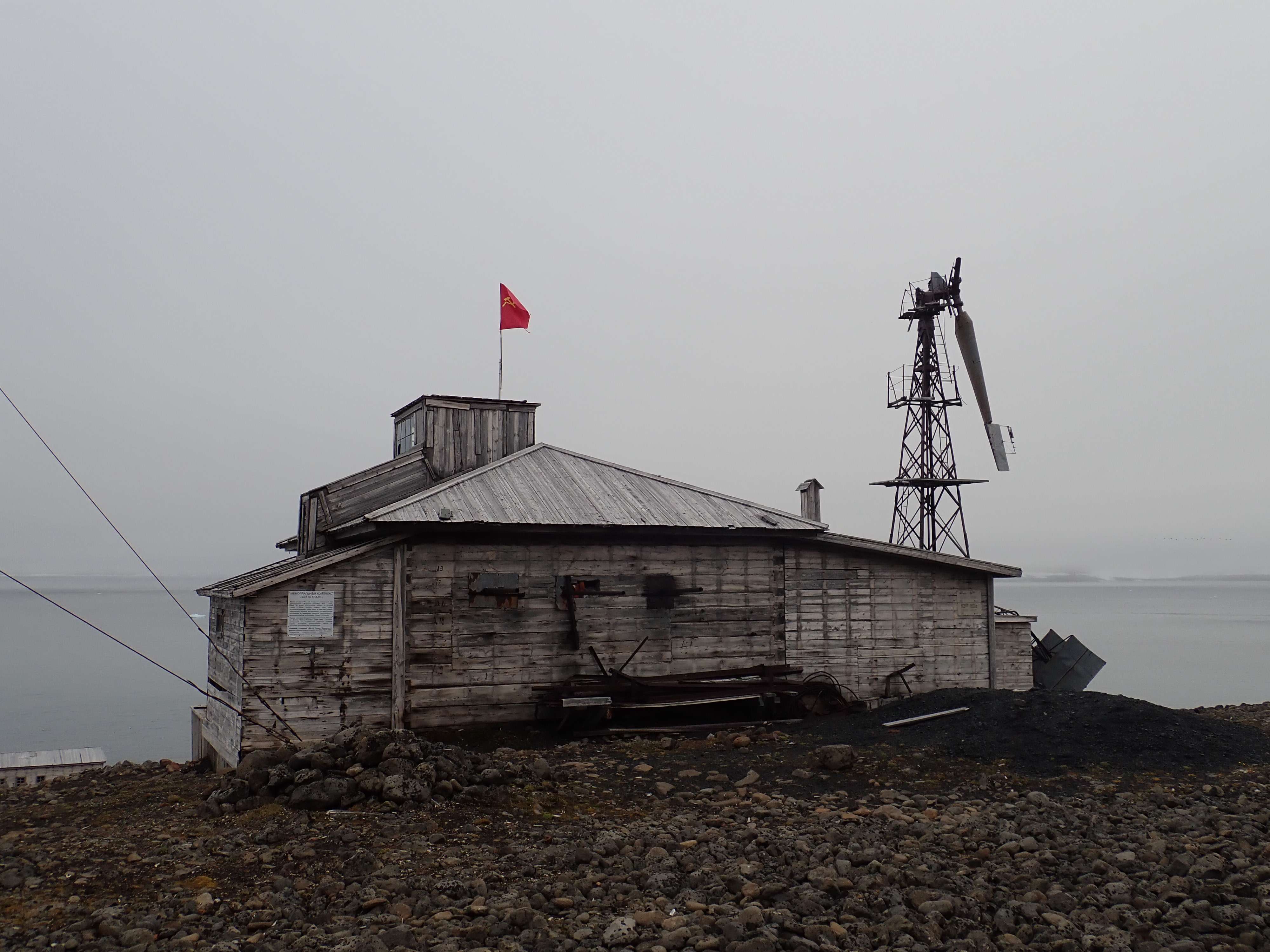
Electric power equipment was necessary for the station to operate properly. From the late 1920s to the early 1930s, electric power plants in the Arctic were a real hi-tech technology. At first, an electric generator and accumulator batteries for a radio transceiver were placed in a radio room. As the station built up, a decision was made to make a new building for the electric power plant. Another important task was to reduce inducing in sensitive equipment of an ionospheric department.
In the 1930s, the Soviet Union actively experimented with alternative sources of energy to supply Arctic polar stations with electricity. The first windmill was built at the station from 1932 to 1933 during the International Polar Year.
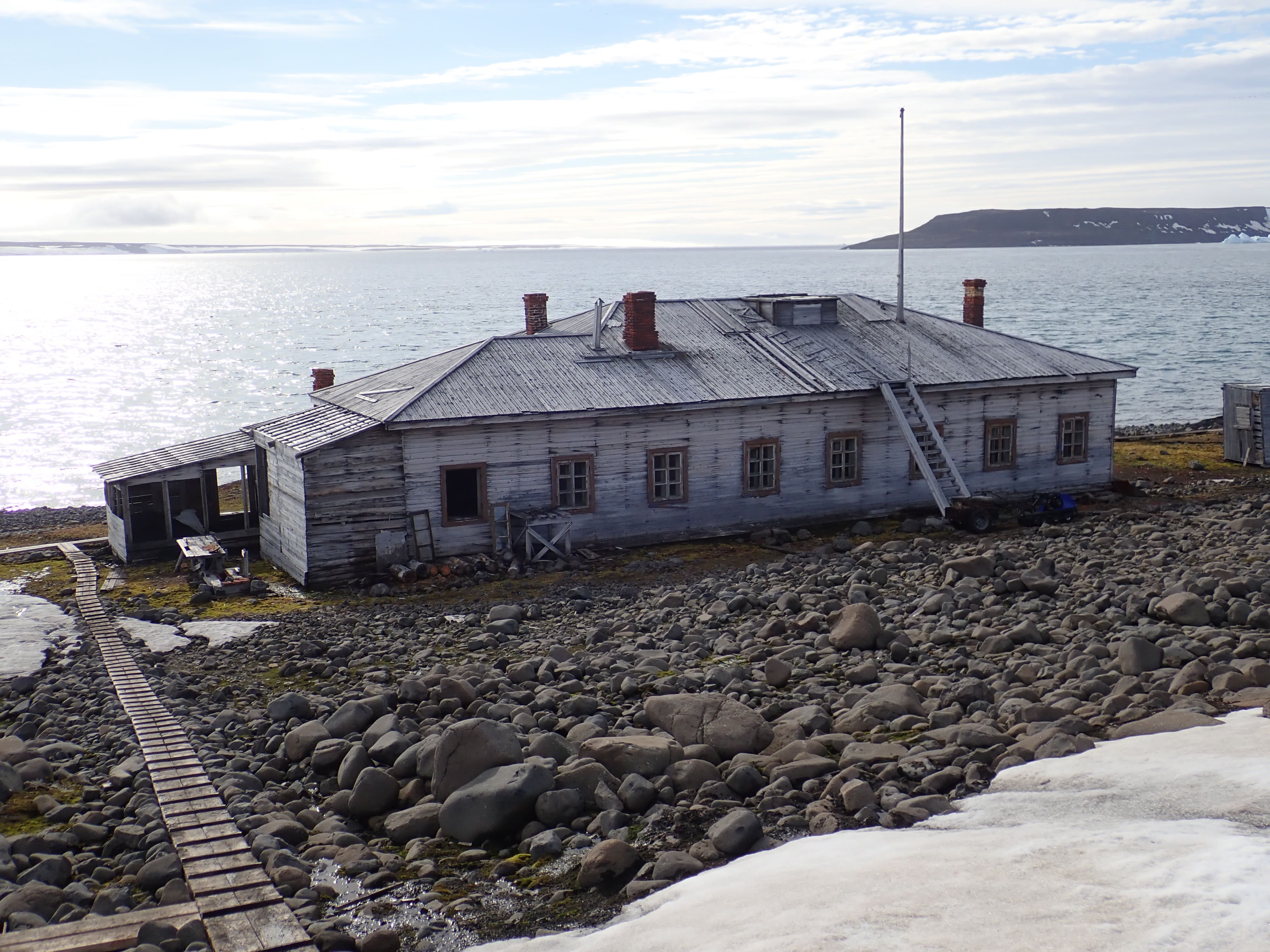
This residential house was built in Arkhangelsk and then shipped in a disassembled state. The destination point was a polar station at Rudolf Island. But this island wasn't reached because of severe ice conditions, and three ships had to winter at Tikhaya Bay from 1937 to 1938.
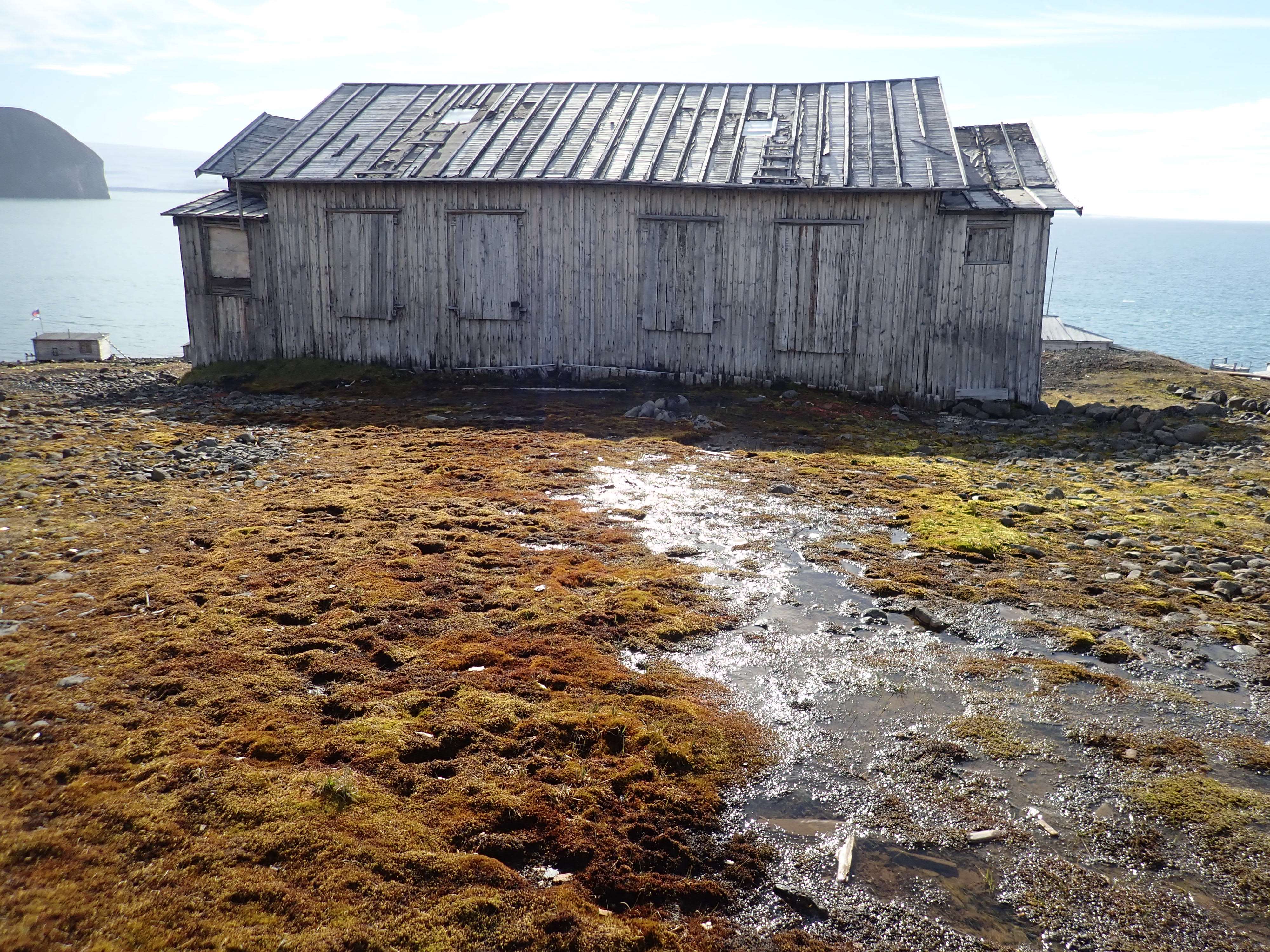
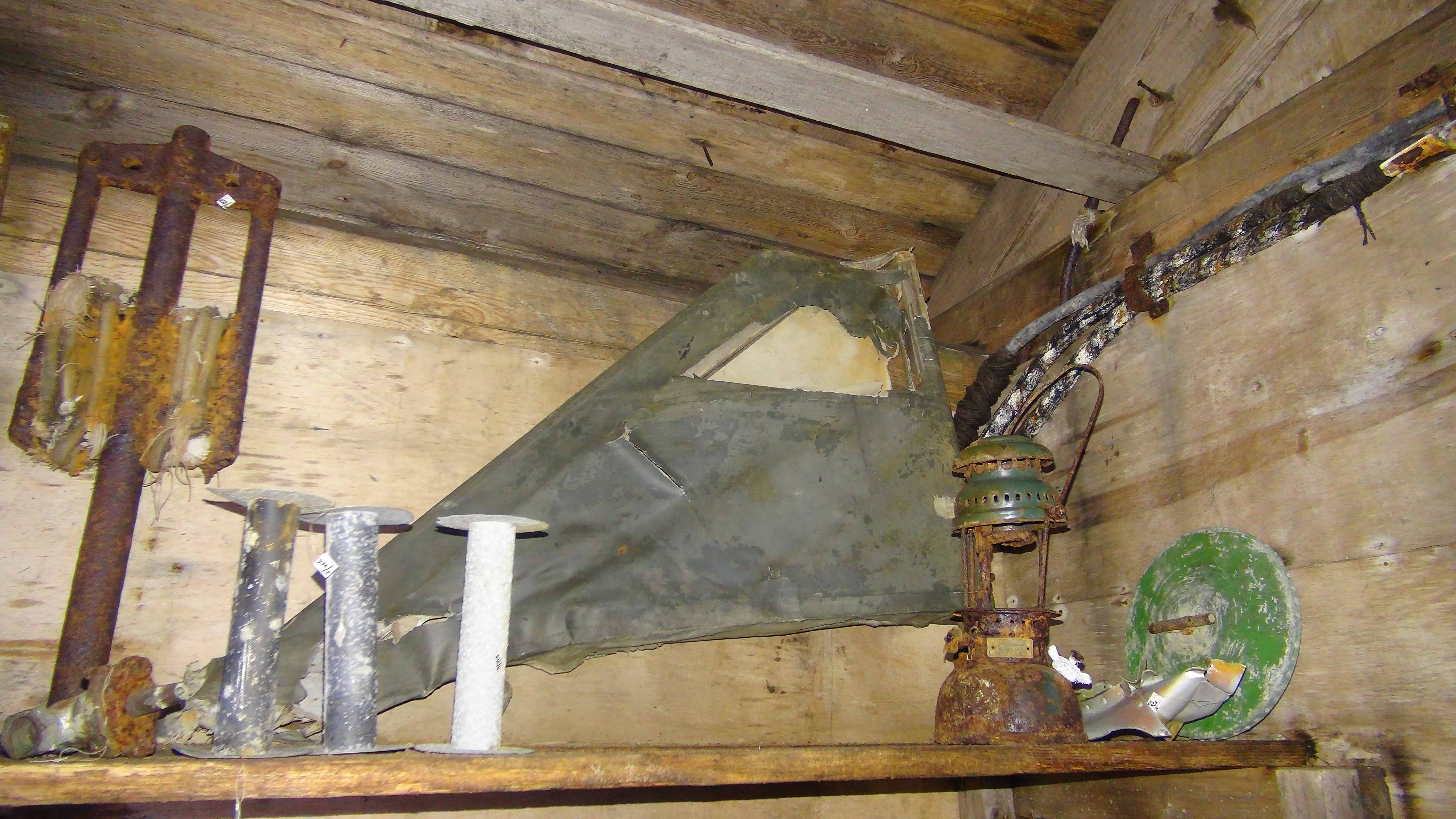
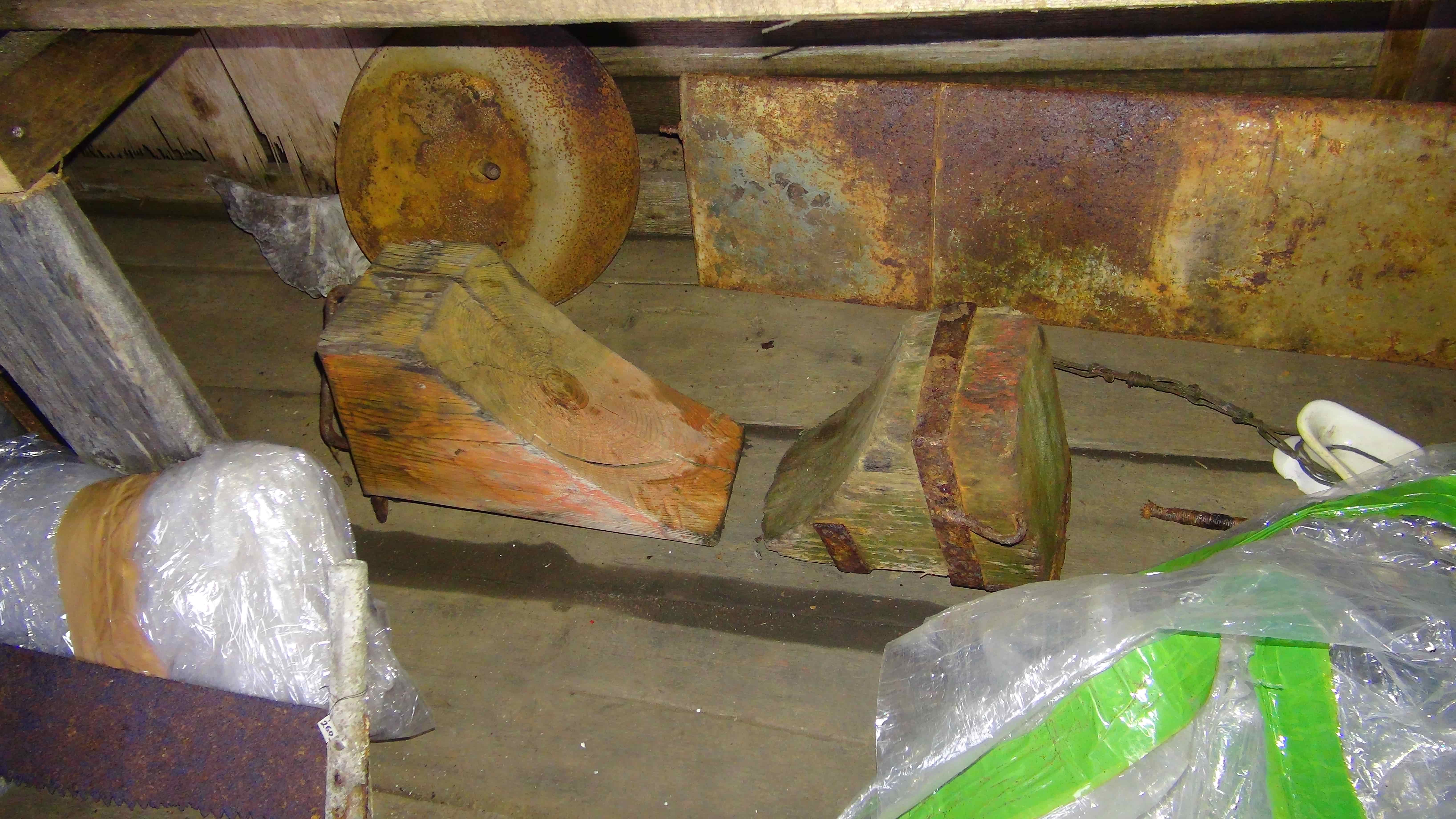
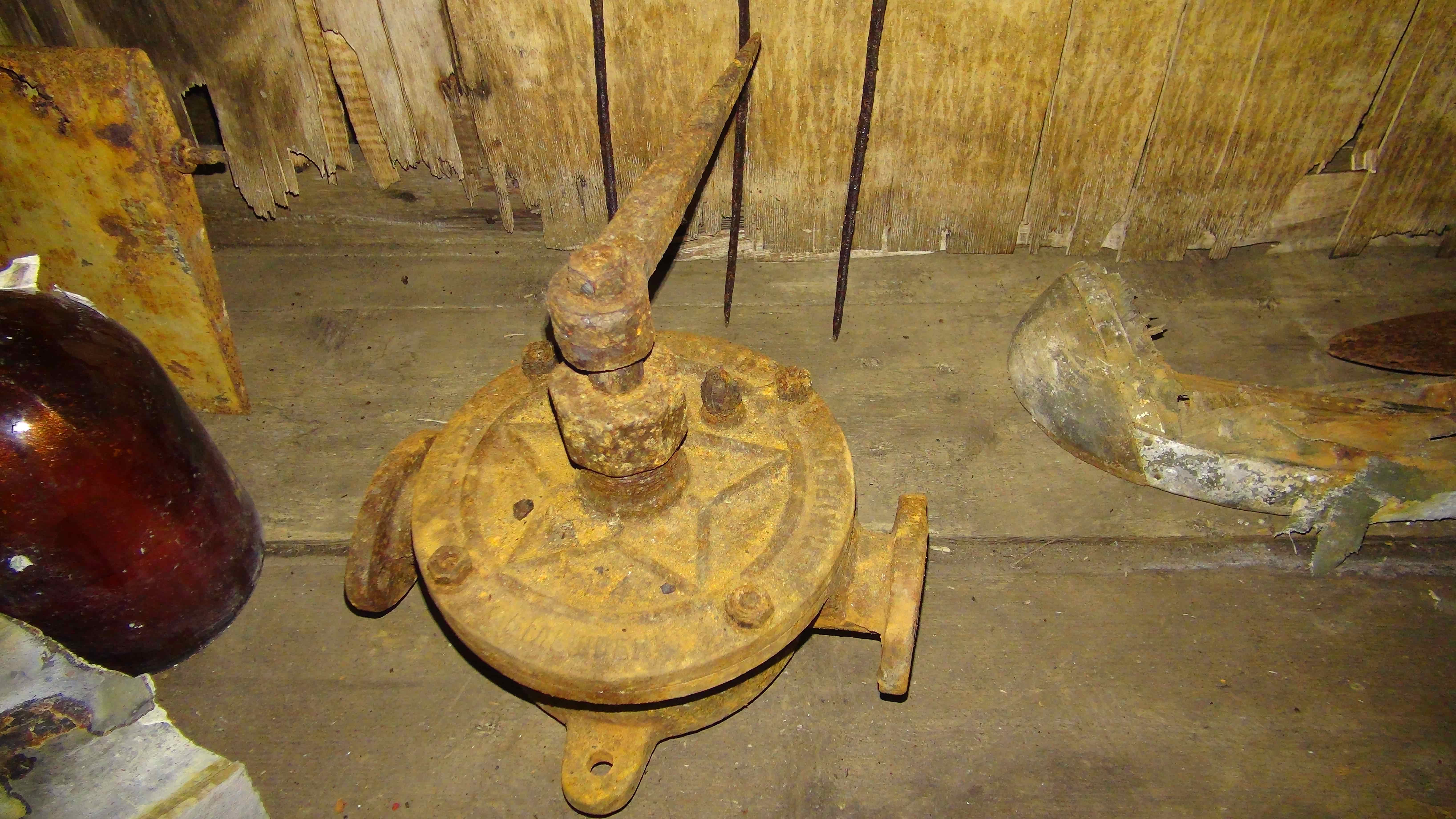
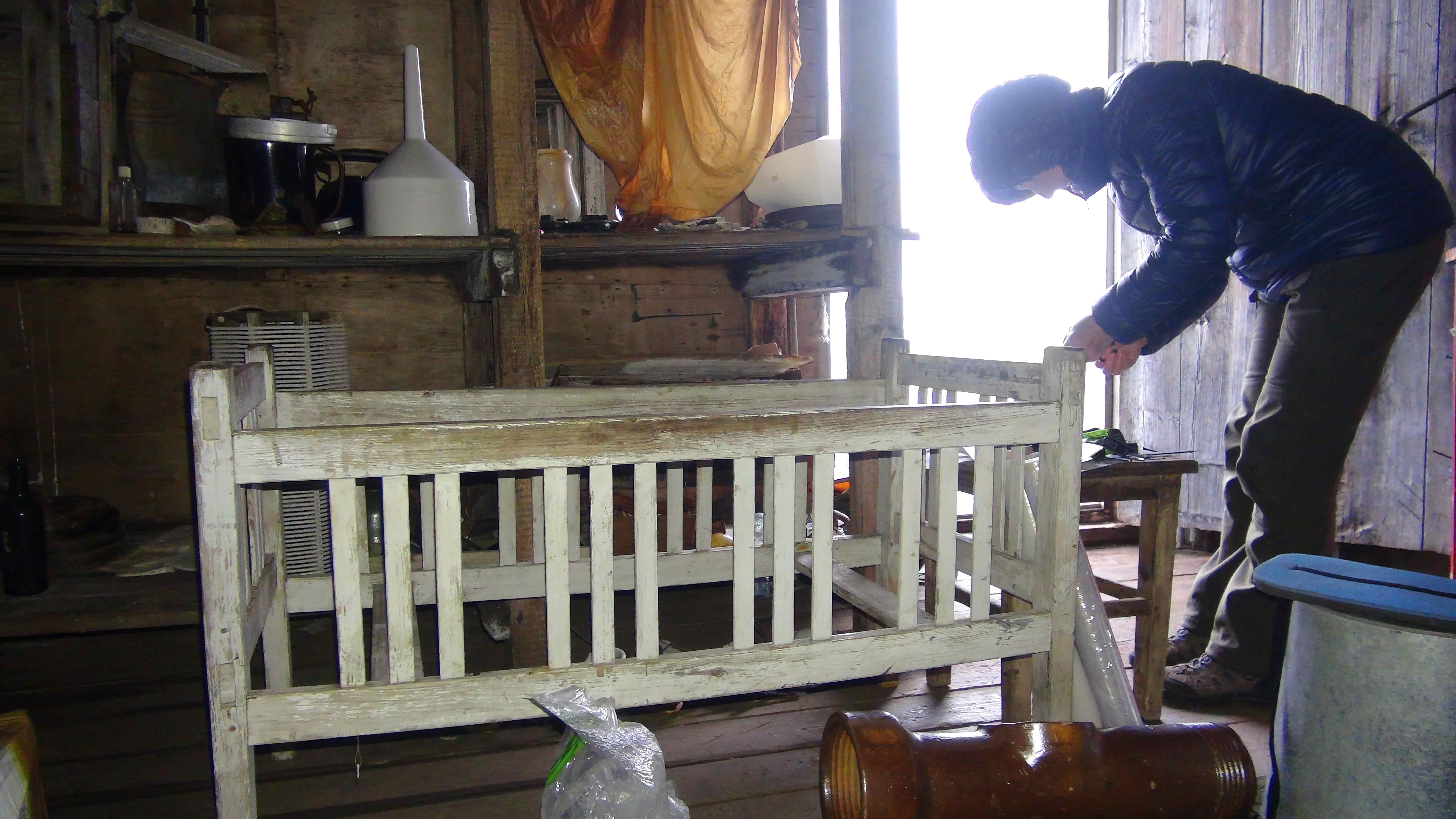
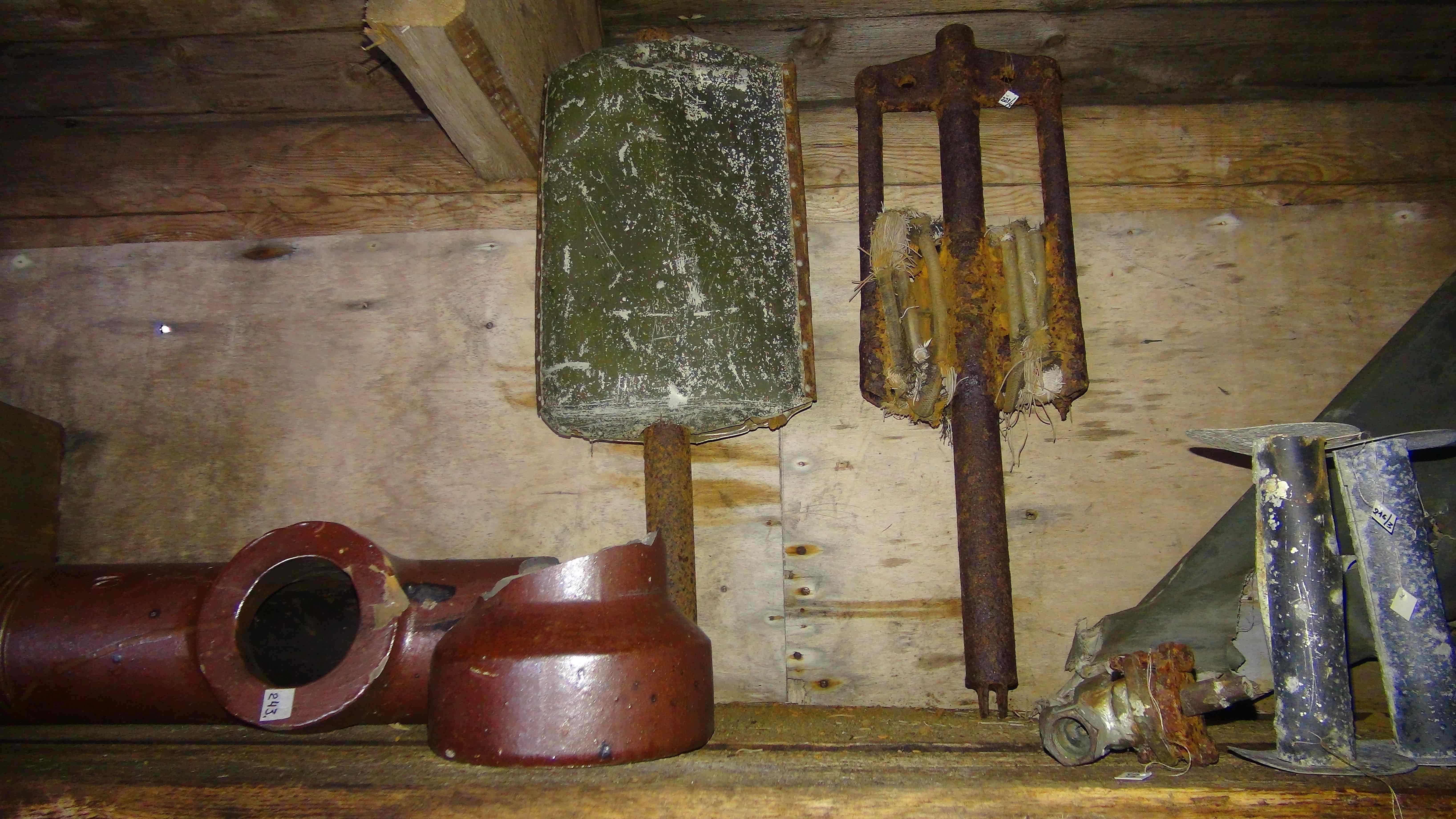
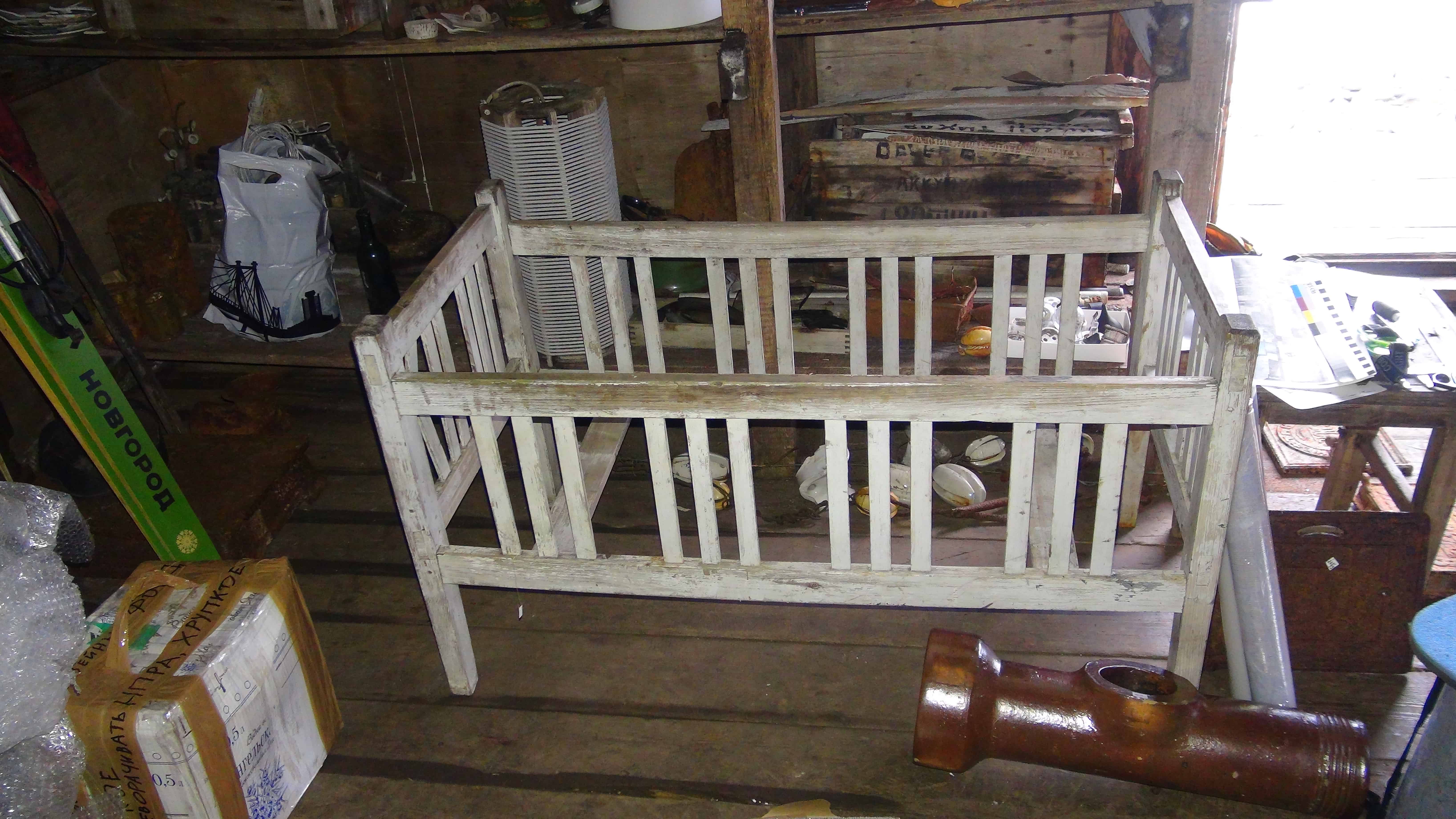
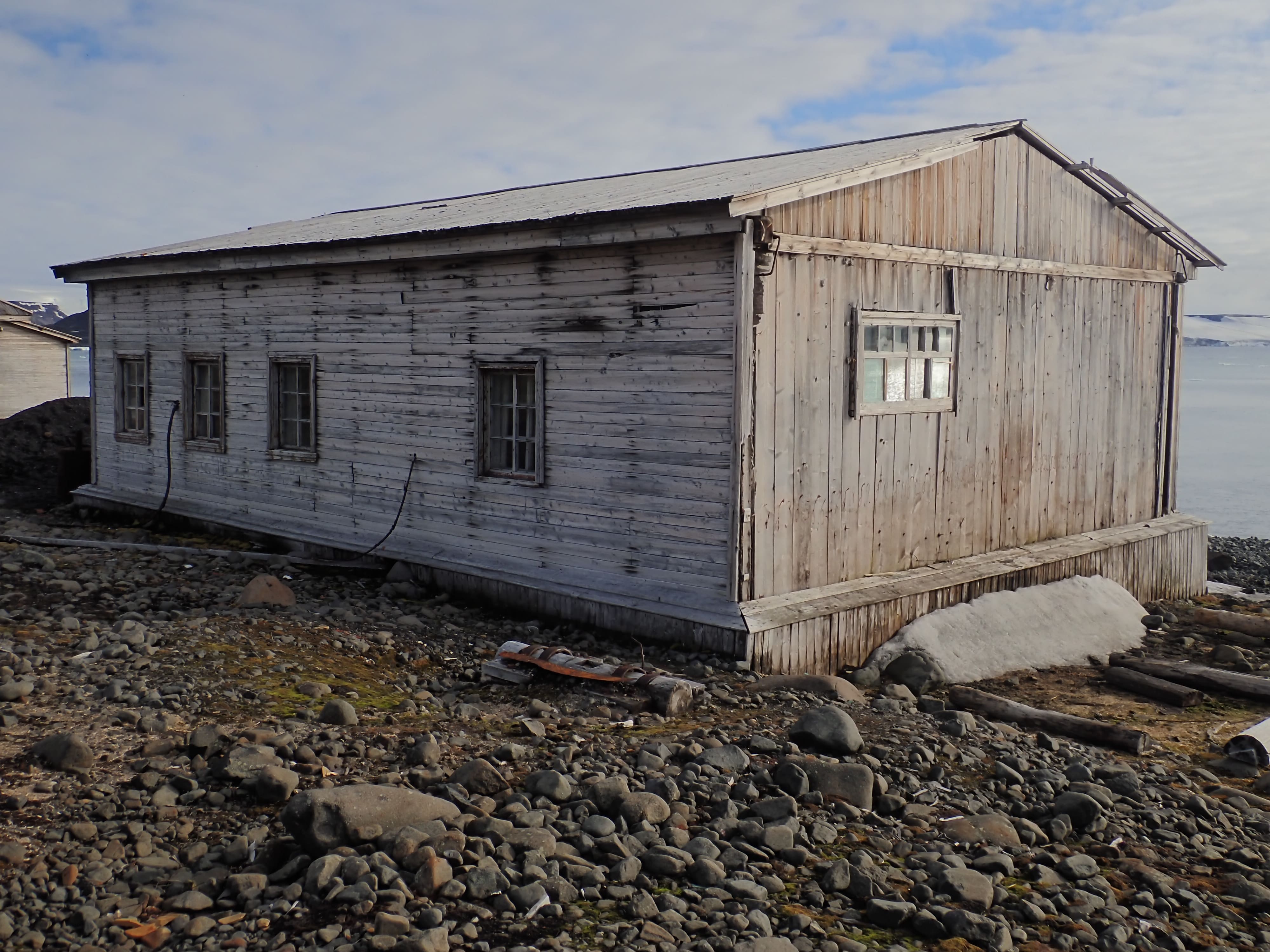
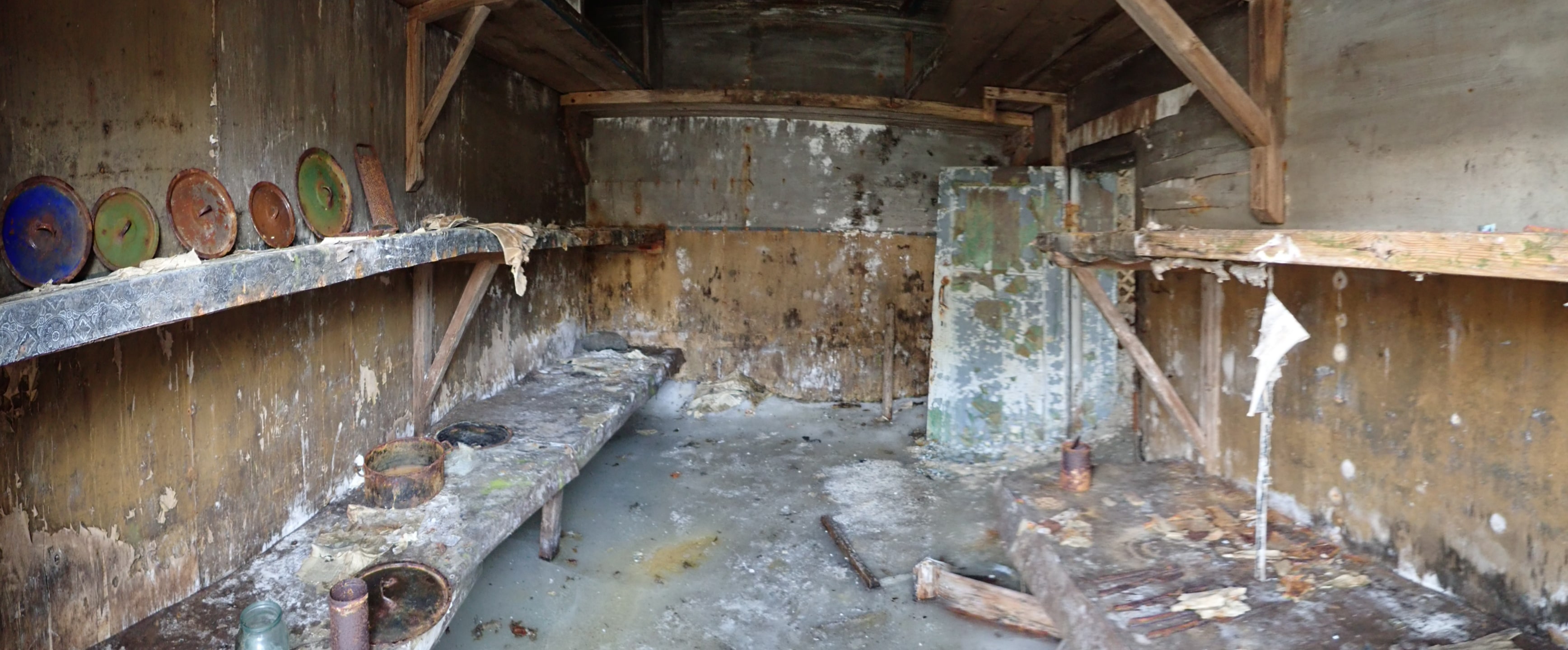
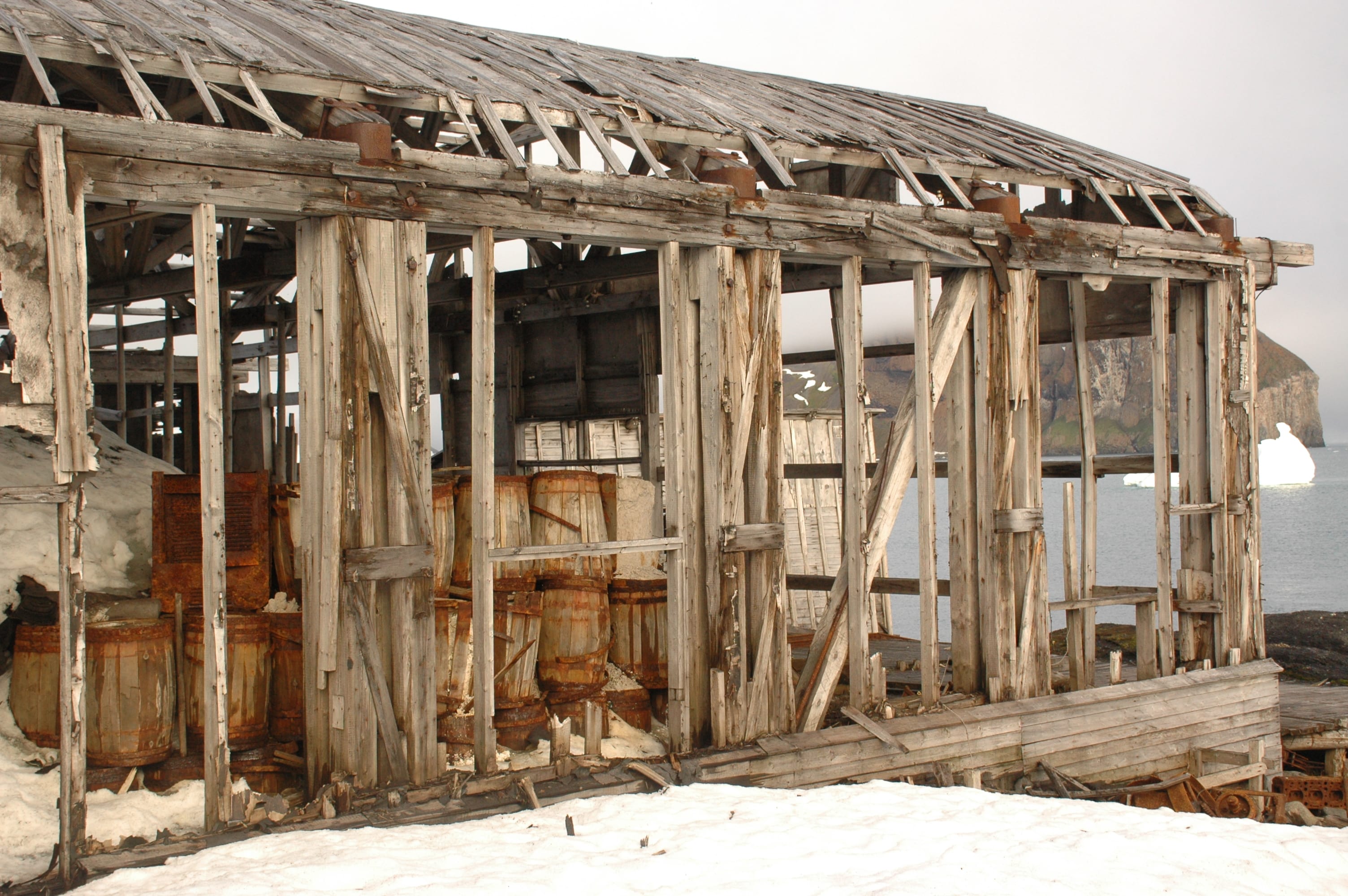
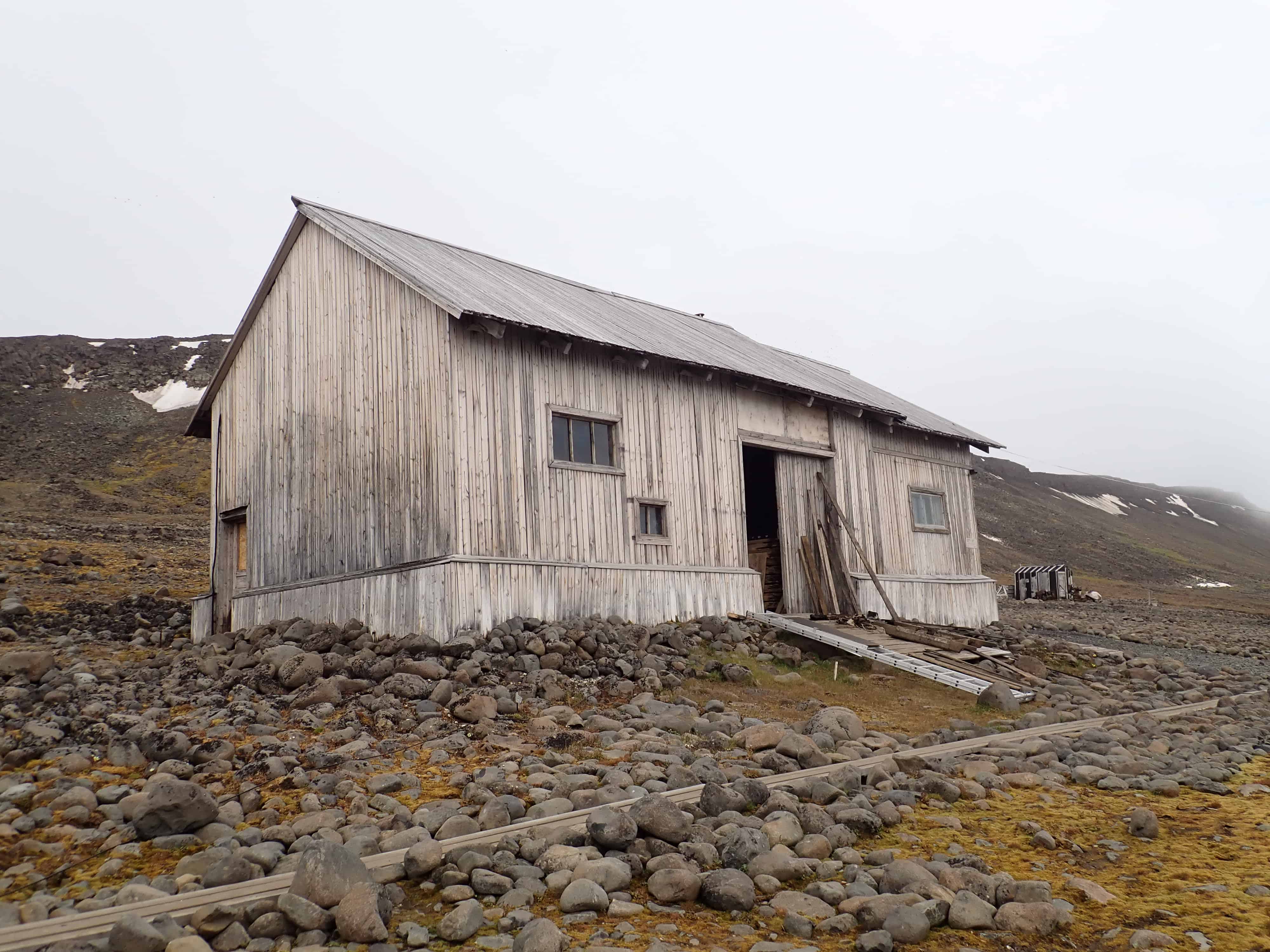
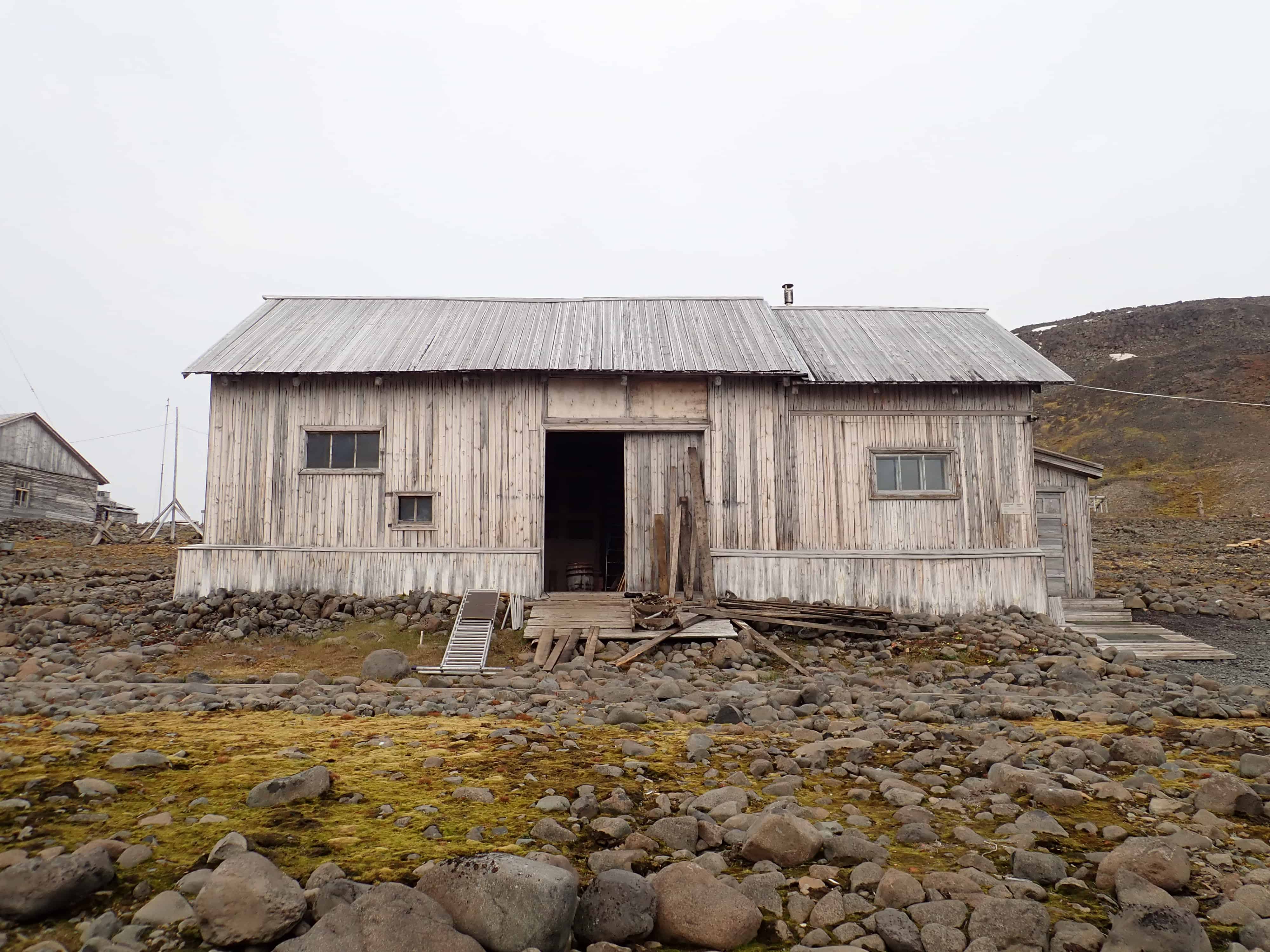
The warehouse building that was built during the first winter in 1929, in recent years has been partially used by workers of the Russian Arctic National Park to keep various items which were found at the station. These items are both valuable pieces of history and evidence of everyday life of Soviet polar explorers from the 1930s to the 1950s.
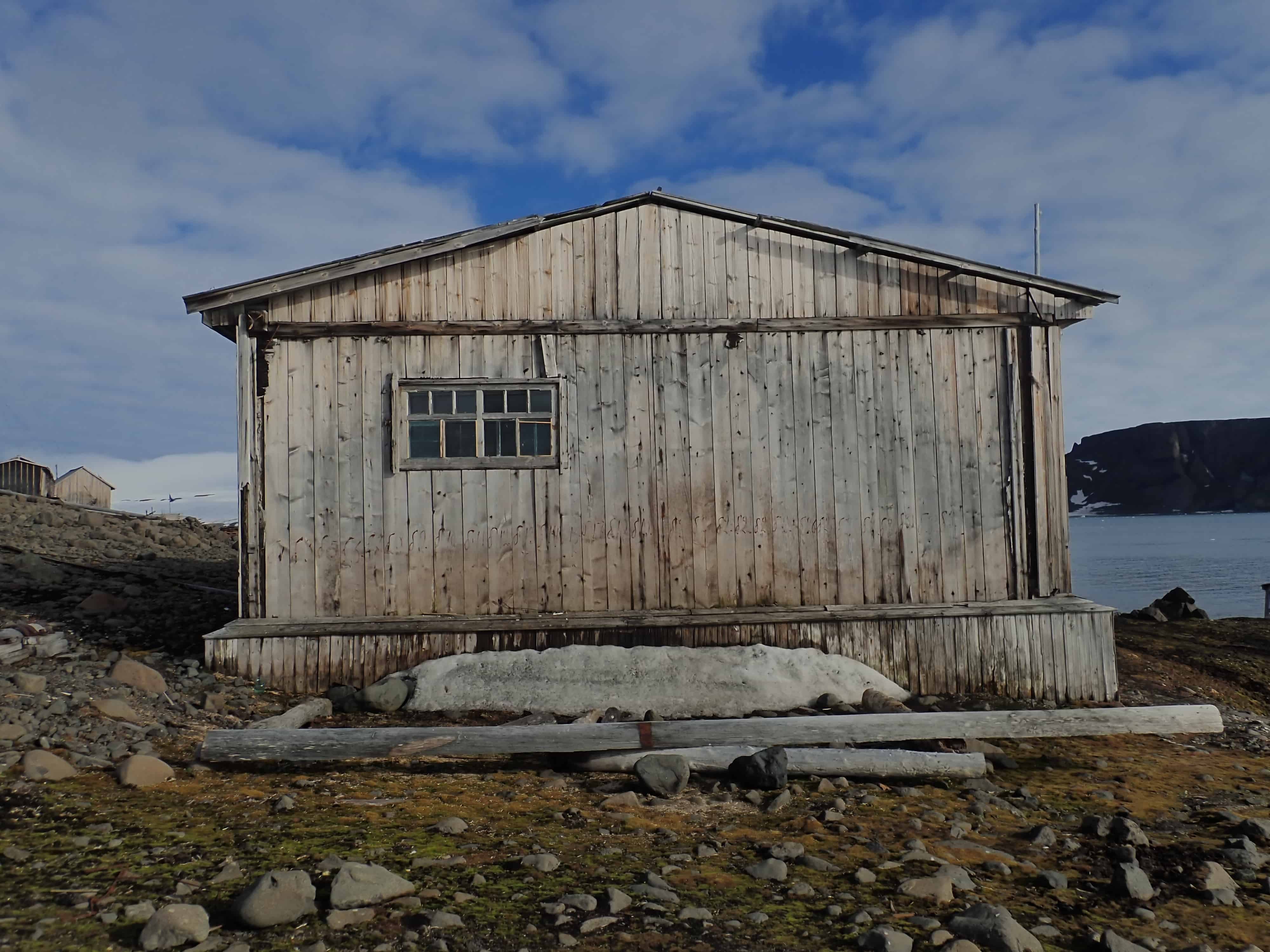
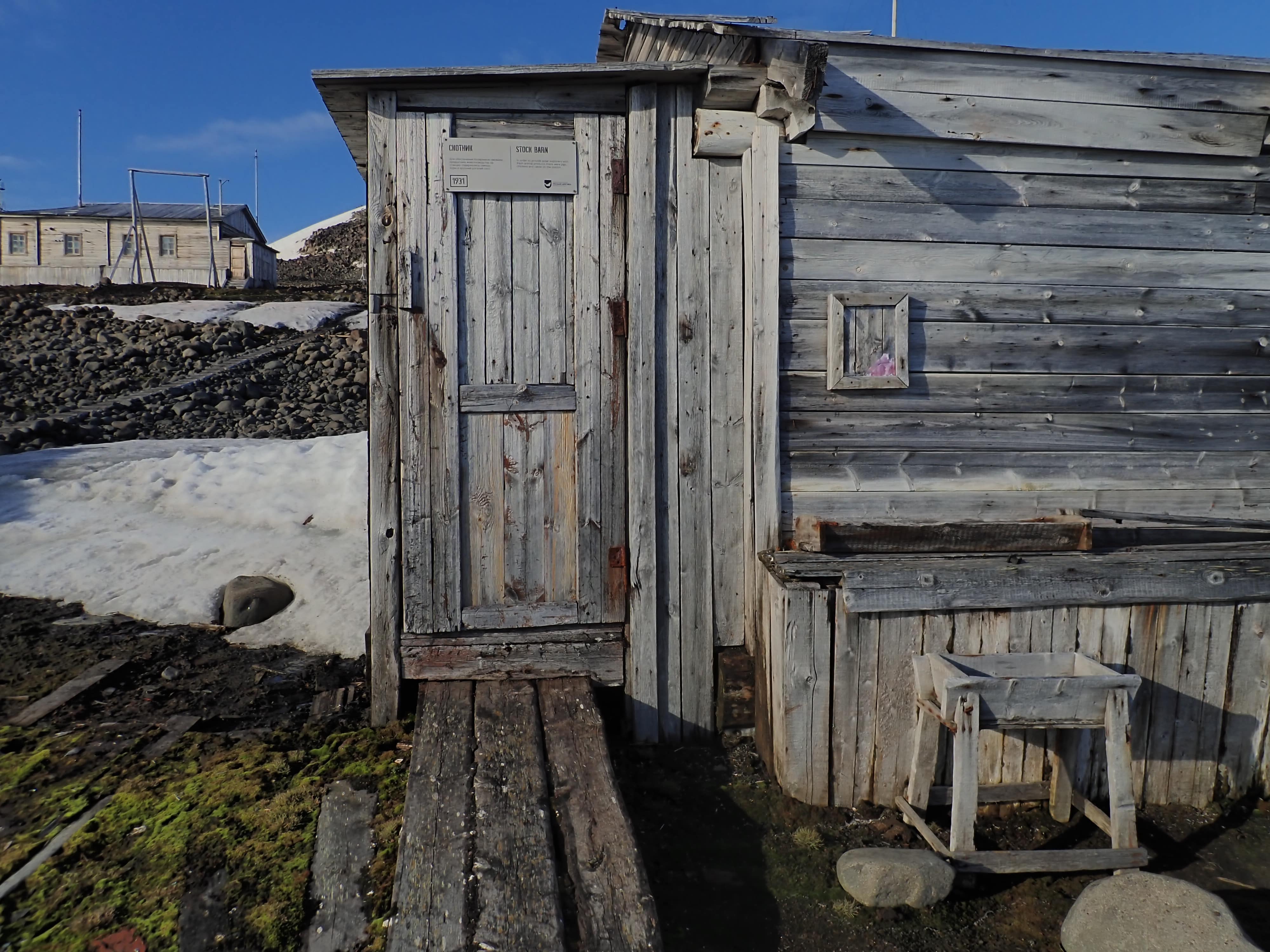
In front of you is a building of a food warehouse that was built in 1929 during the first winter at Tikhaya Bay. The station had always a food stock for several years because of troublesome shipping at high latitudes and a risk of severe ice conditions, in which ships would not come through to the station. For example, in the 1930s a group of winterers led by Aref Ivanovich Mineev had to winter for five years at Wrangel Island located in the east part of the Arctic, because ice made it impossible for ships to come to the island.
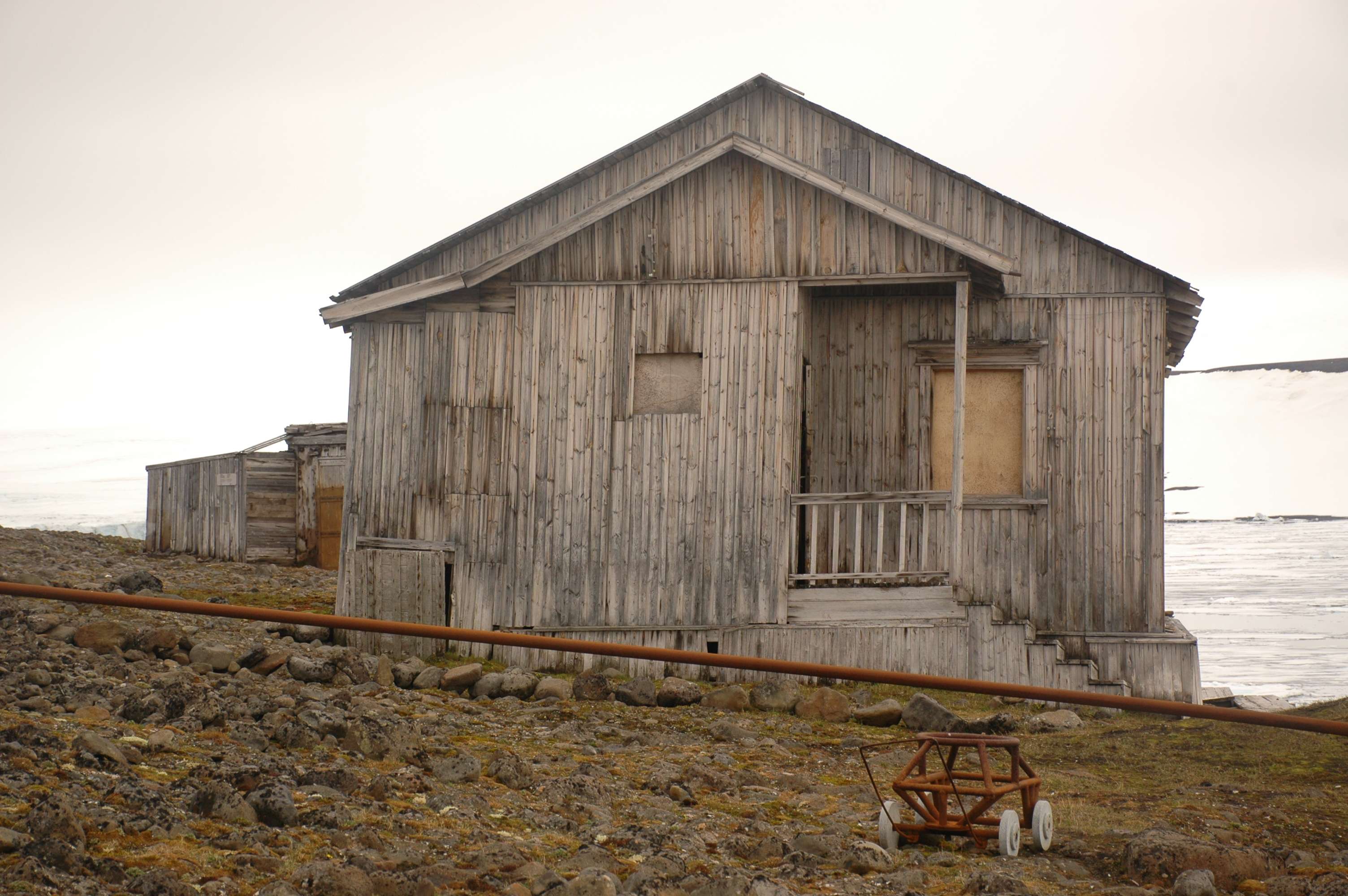
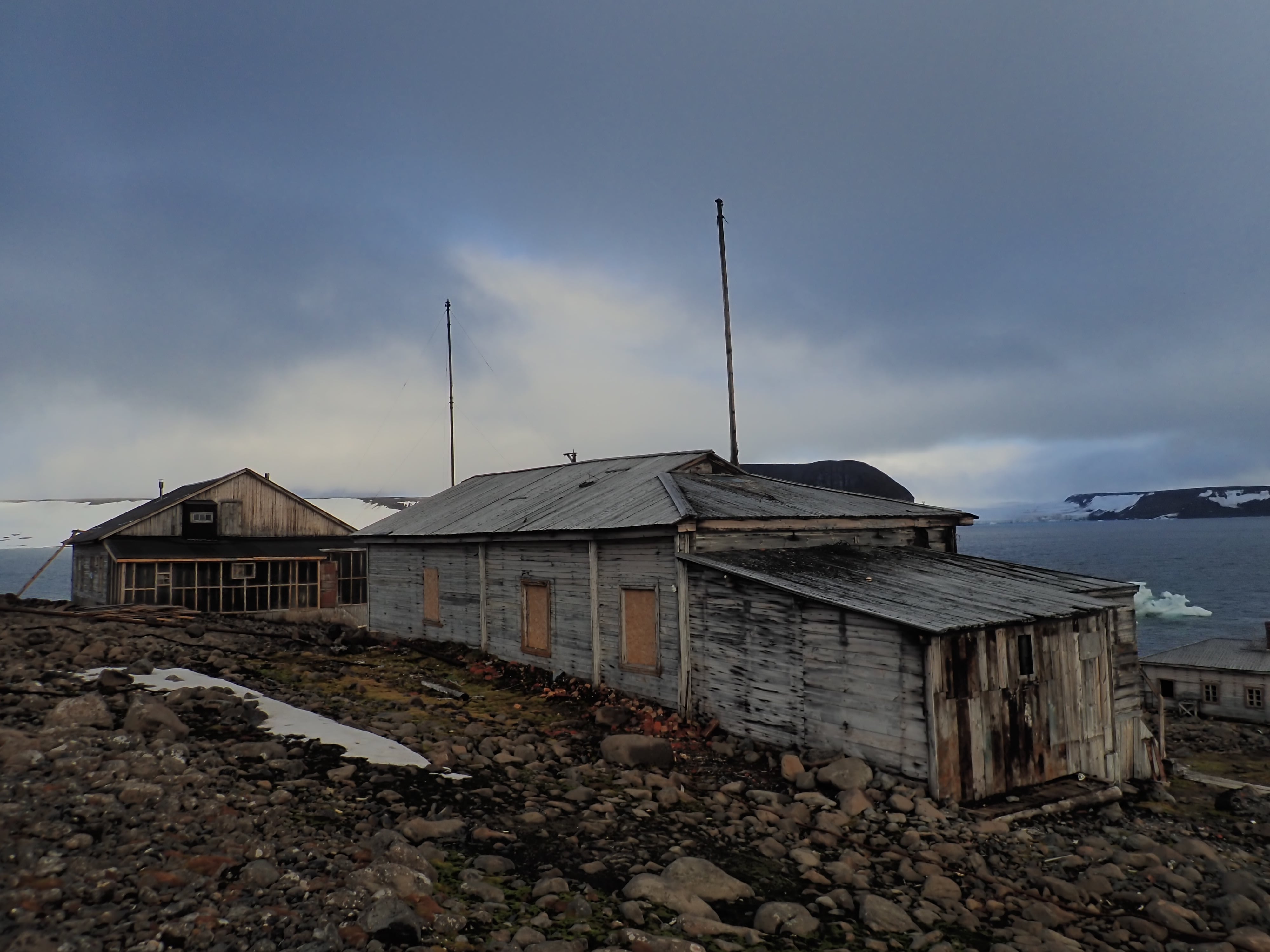
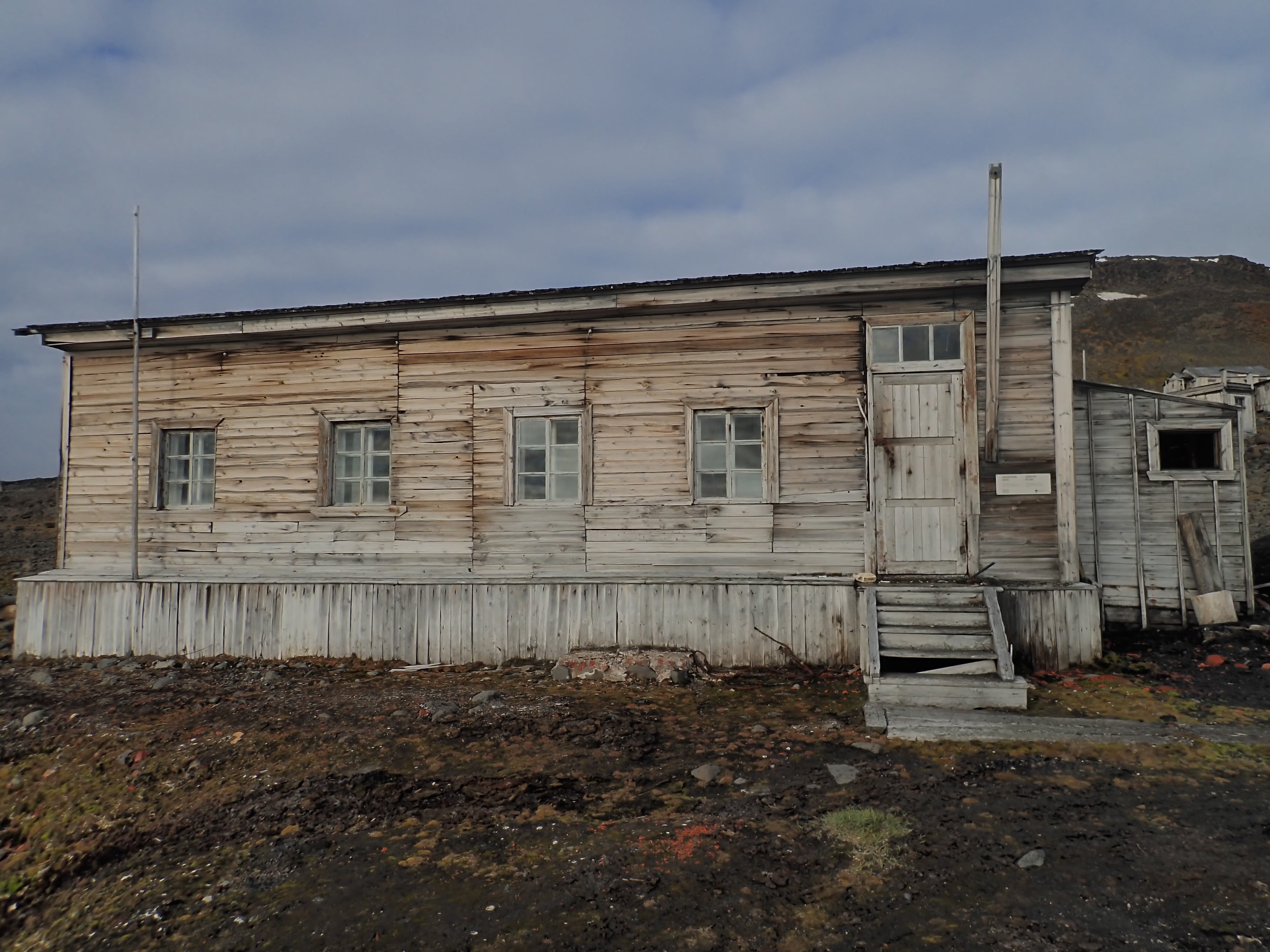
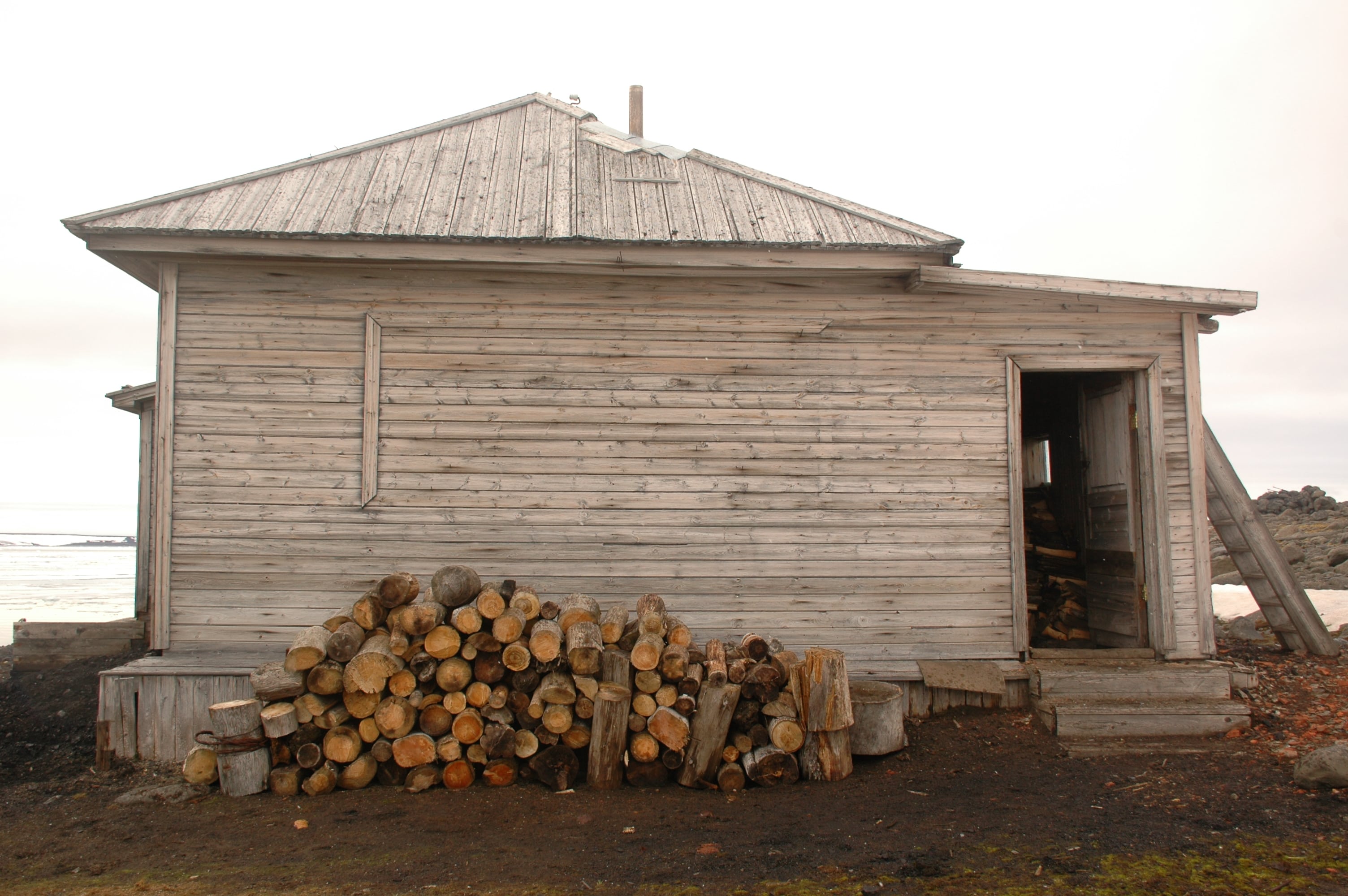
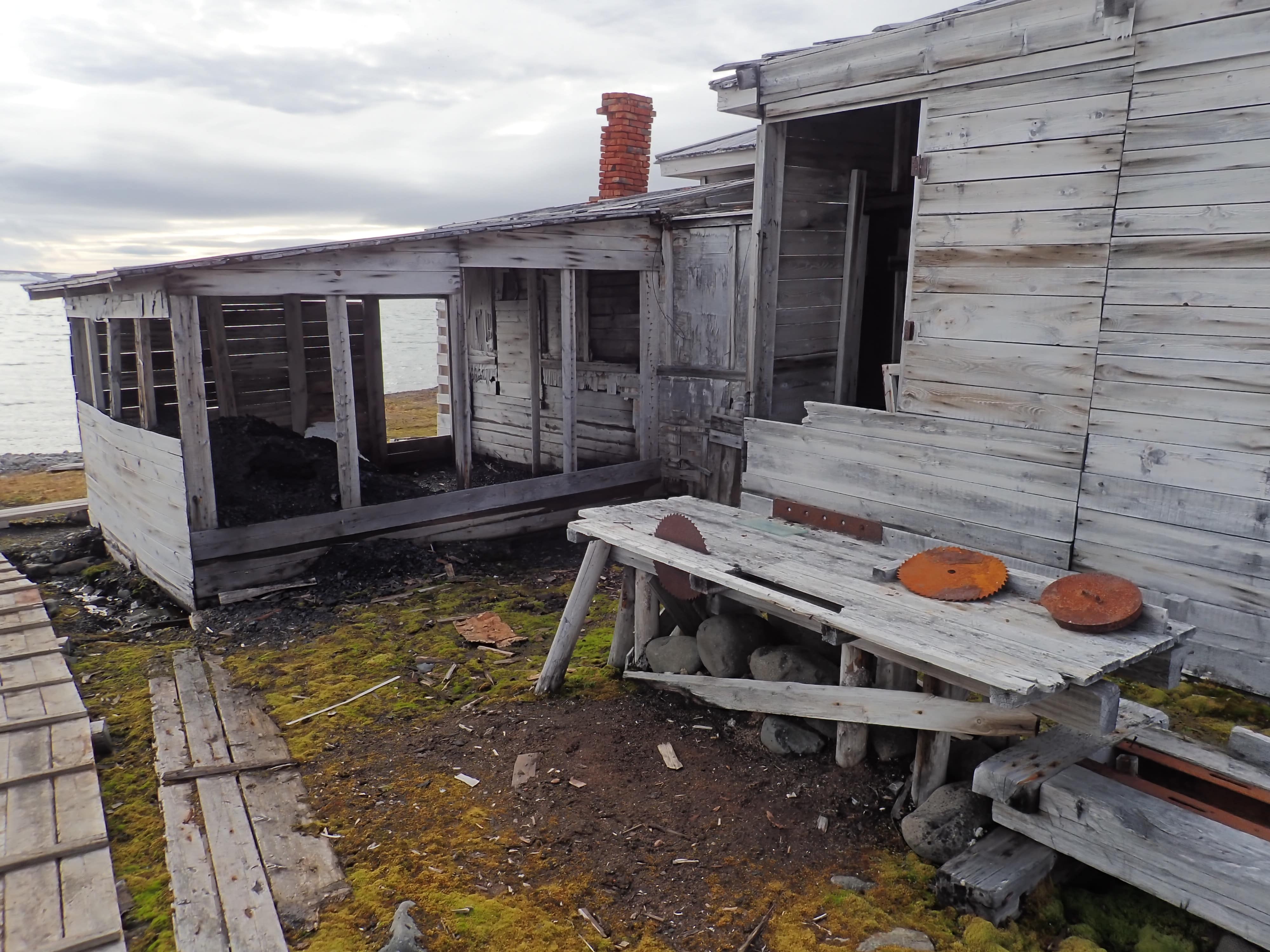
The only facility for the polar station to communicate with the mainland on a regular basis was radio. Winterers used it to learn news and send weather reports. In front of you is a radio station building, which was built during the first winter in 1929. The building was repeatedly expanded and repaired. It accommodated a radio transceiver, electric power equipment, a radio repair shop and living quarters for radio operators and mechanics.
This actinometric pavilion was built at the station during the International Polar Year. Its building was repaired and rebuilt several times until the middle of the 1950s. The term "Actinometry" goes back to Greek "Actinos", which means "Ray".
From the 1930s to the 1950s dog sleds were irreplaceable means of ground transportation. They were used for polar expeditions to explore islands, as well as bringing observers to assigned points, including ice domes.
In 1932 the Second International Polar Year took place, a coordinated international scientific program of researching polar regions of our planet. To meet the requirements of this extended international program, the staff of winterers at the Tikhaya Bay polar station had to be substantially supplemented. The process of transforming a little weather station into a large geophysical laboratory was led by the famous Soviet polar explorer Ivan Dmitrievich Papanin, who was also in charge of a winter shift from 1932 to 1933.
Now we are at a meteorological site of the Tikhaya Bay polar station. Meteorology is a science concerned with the processes in the lower atmosphere. Every polar station is built upon meteorological observations of temperature, relative air humidity, atmospheric pressure, precipitation amounts, wind speed and directions. The first event in a history of any polar station is its first weather report. From Tikhaya Bay, this report was sent on August 30, 1929.
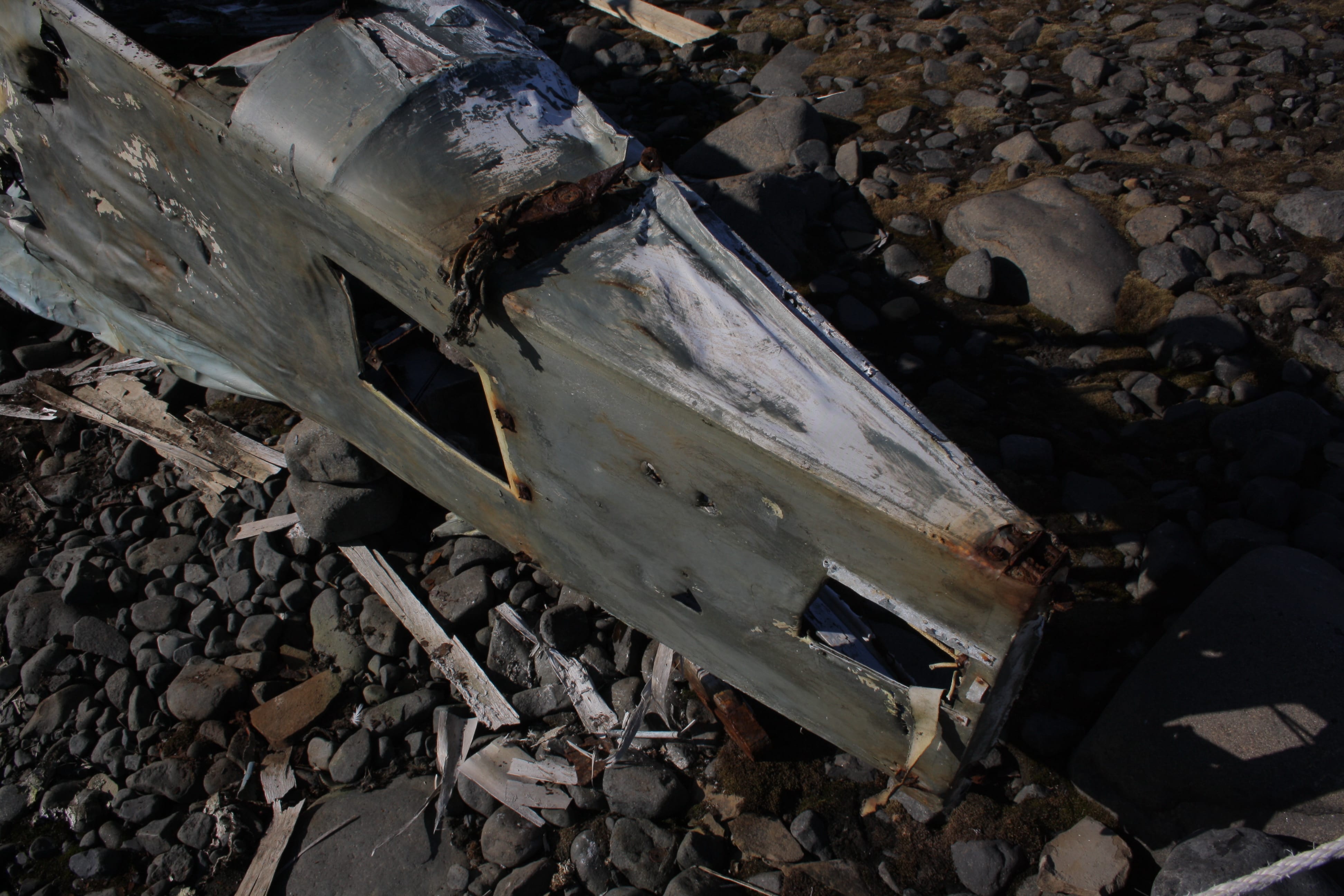
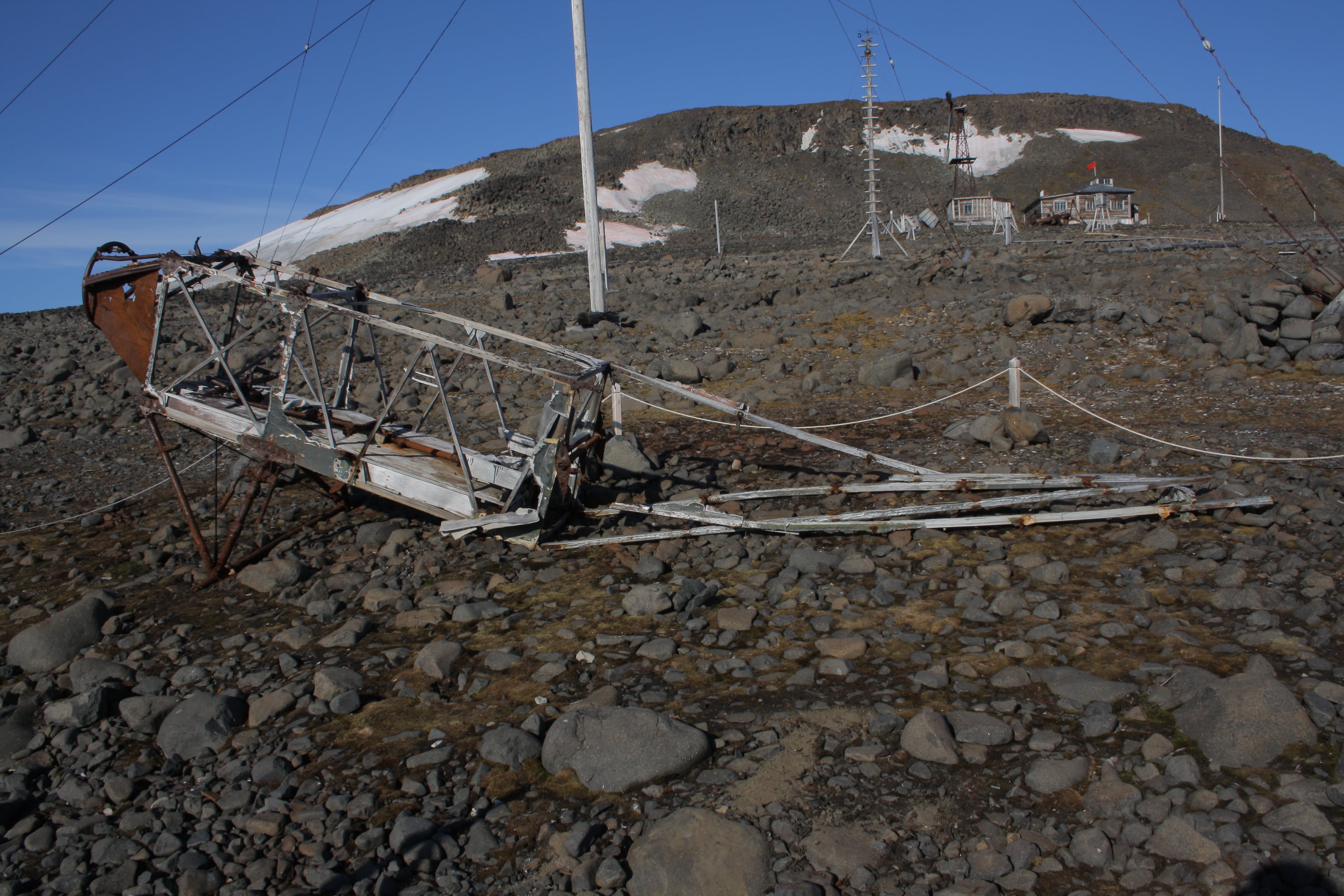
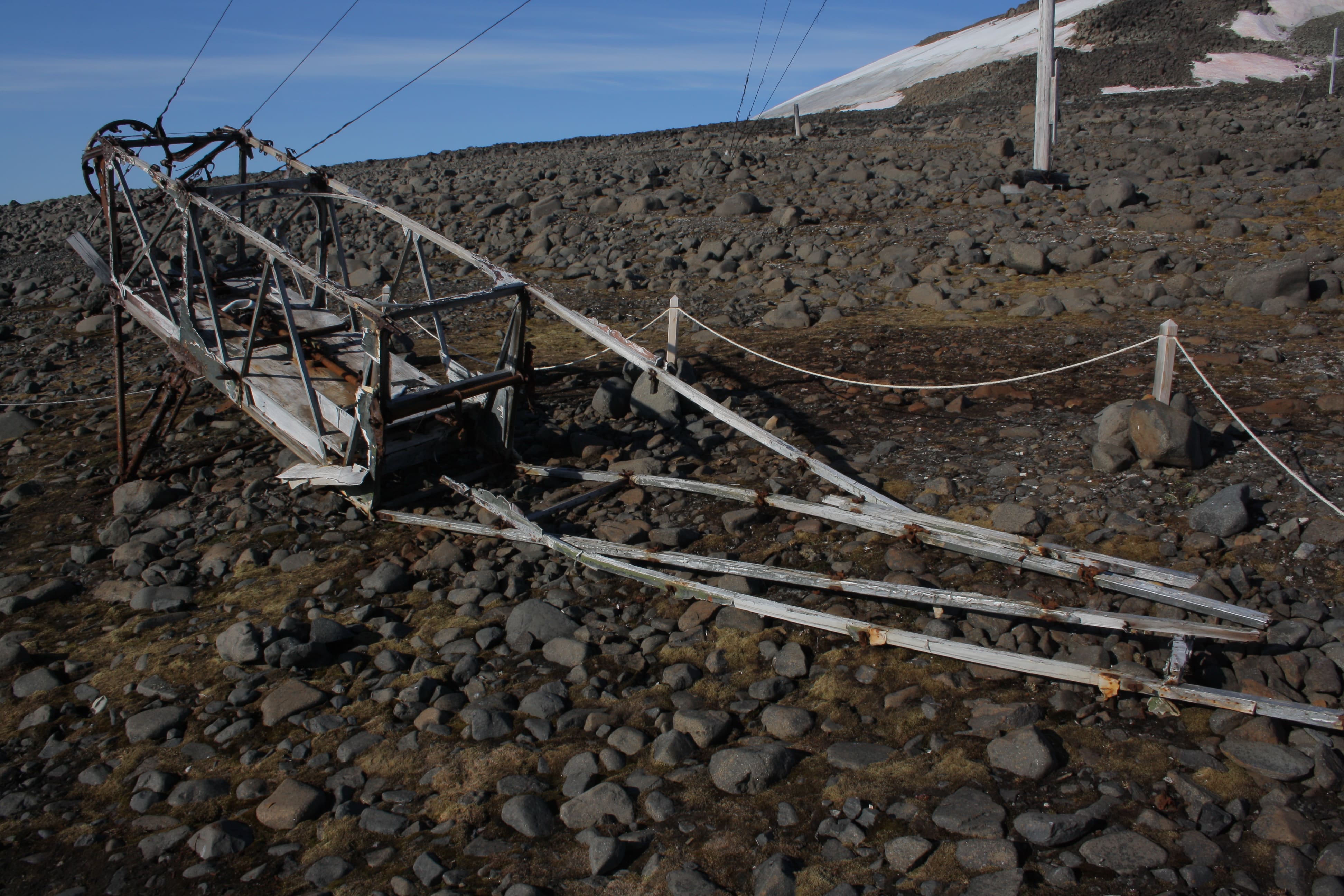
At the Tikhaya Bay polar station, some parts of two Po-2 airplanes remained. These planes were used at the station after the end of the war.
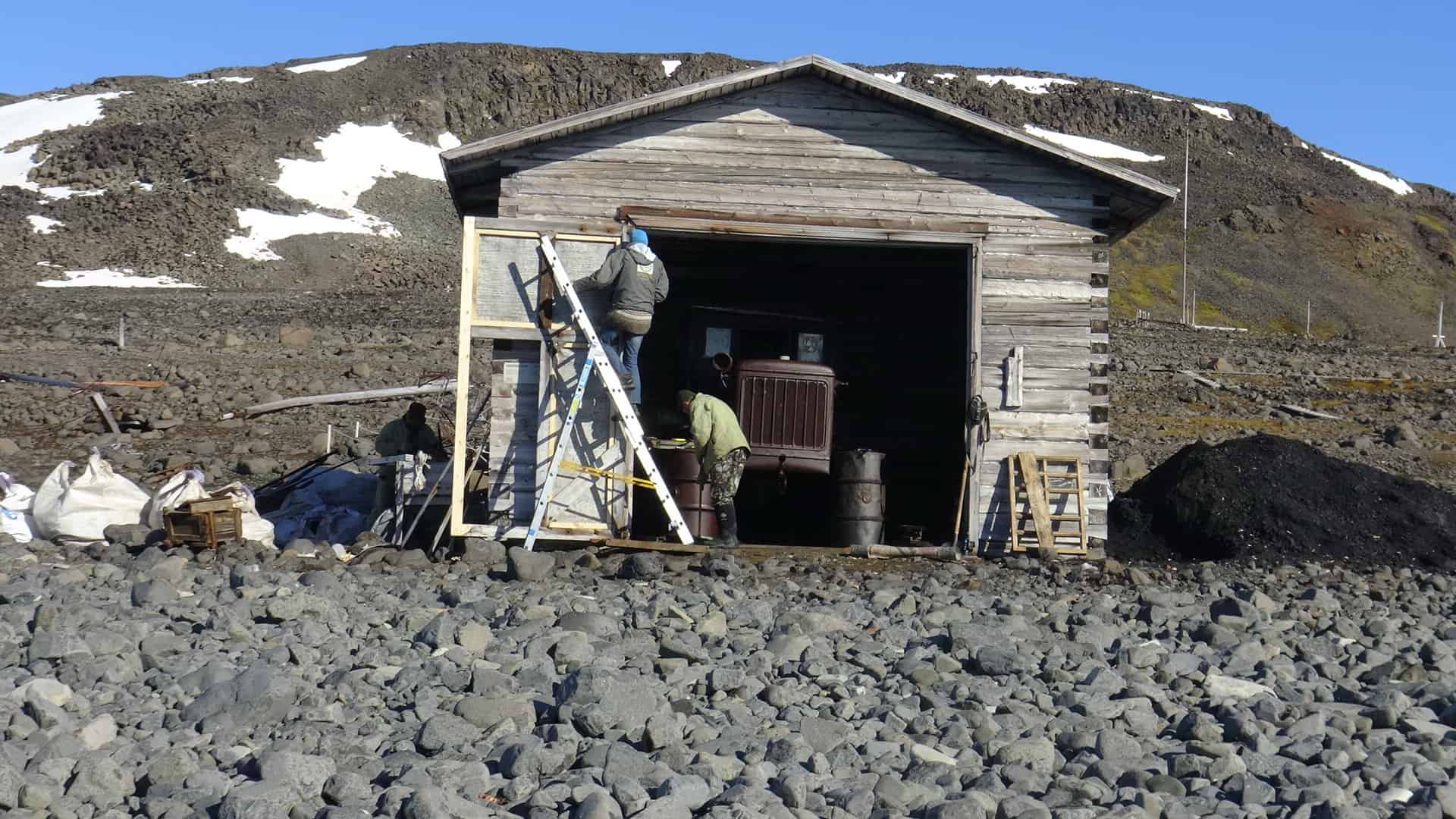
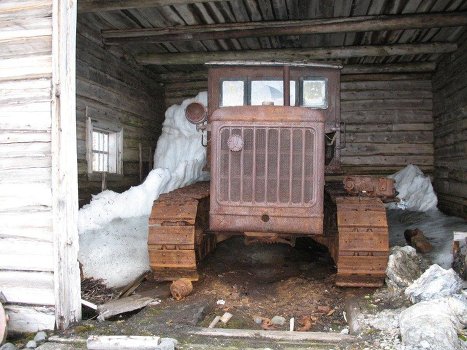
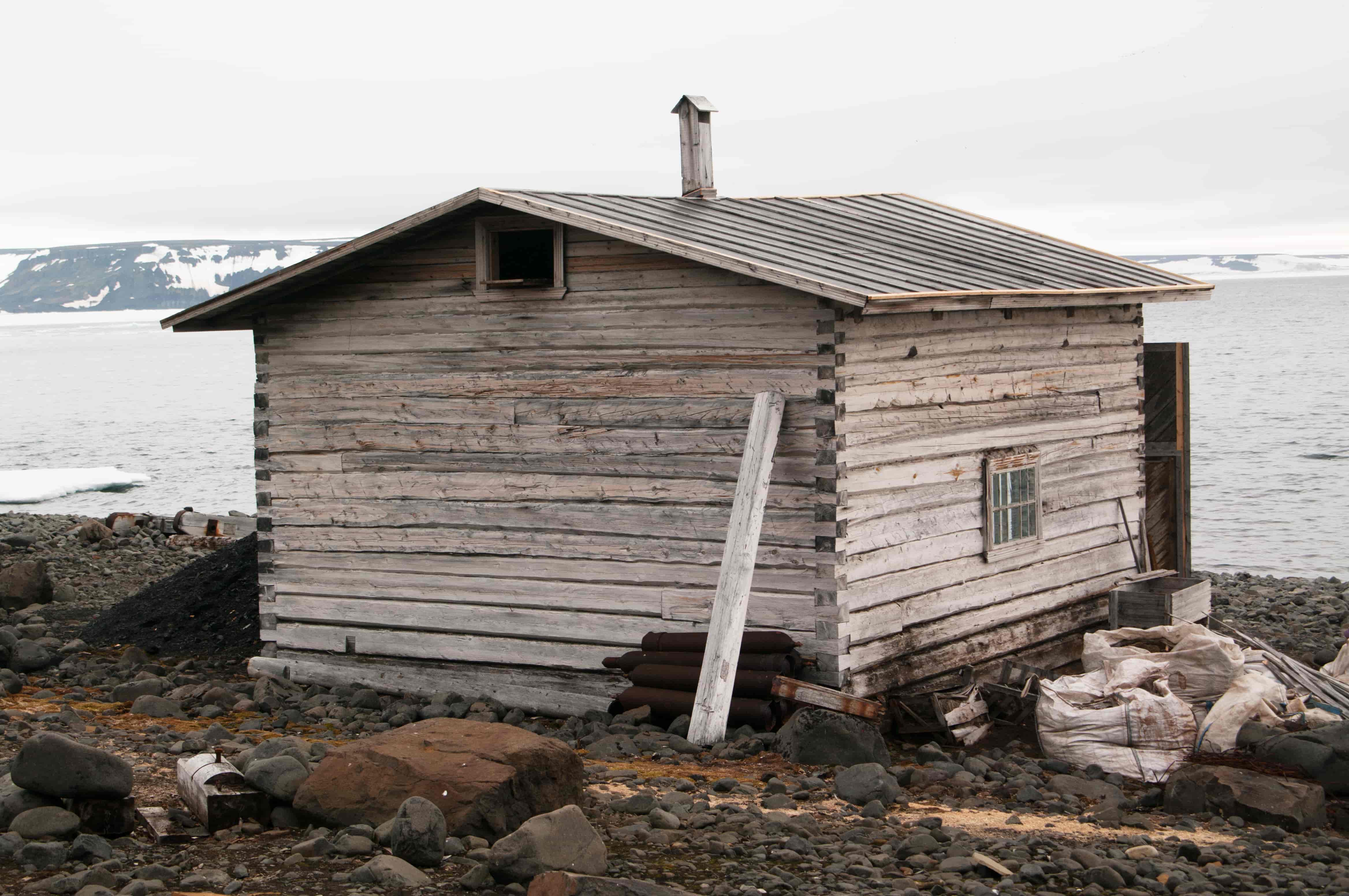
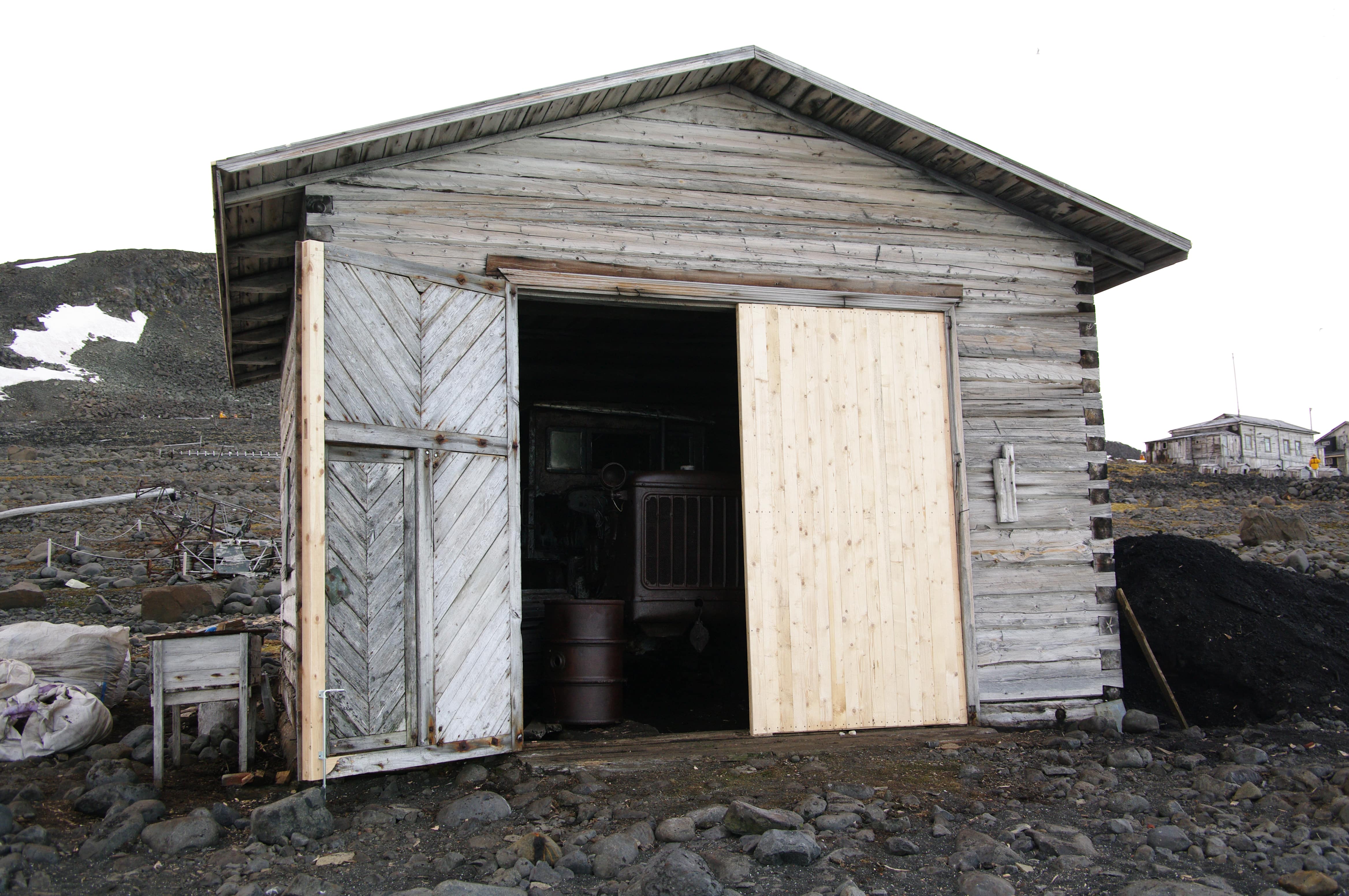
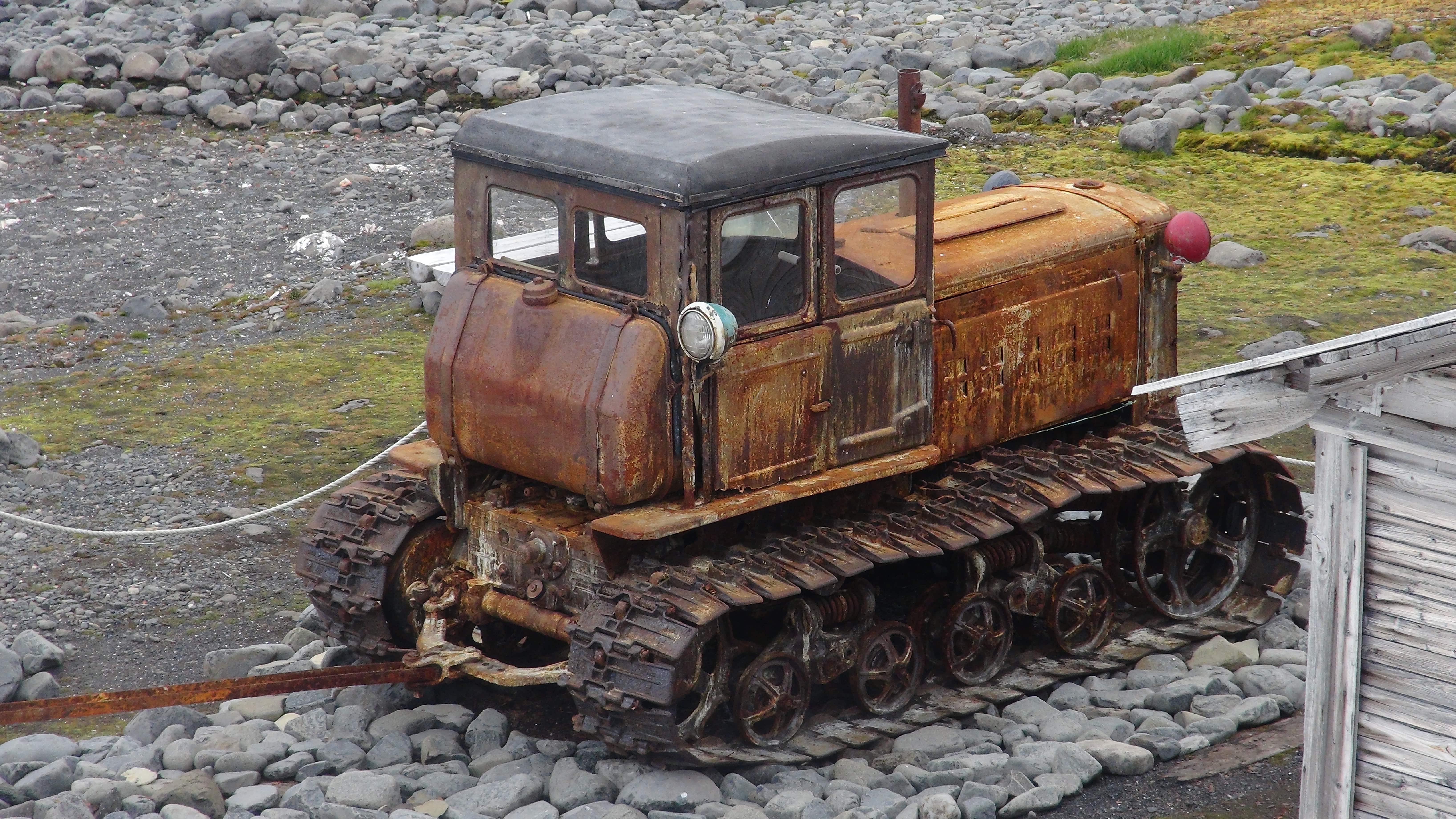
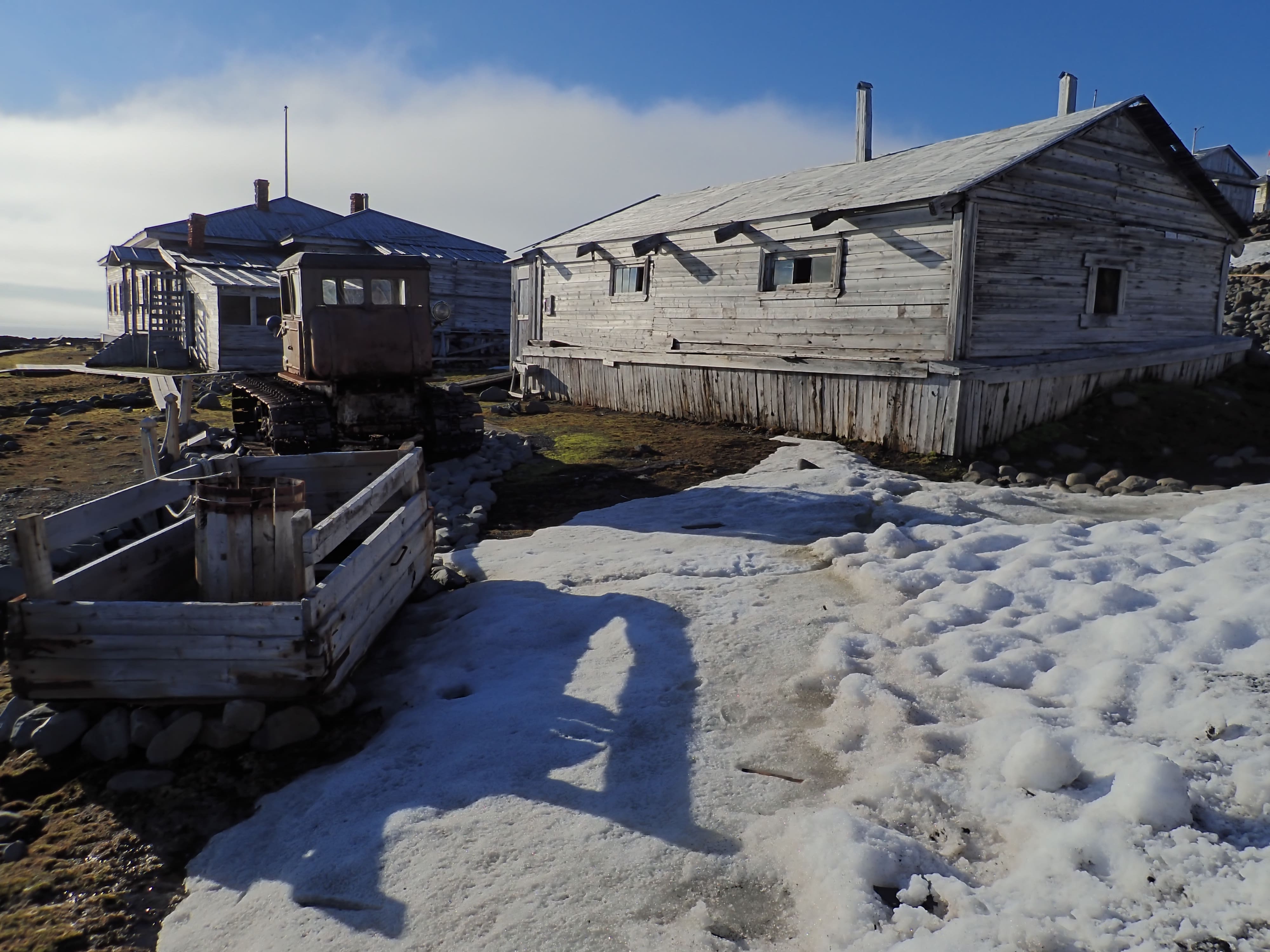
In front of you is a tractor garage of the polar station which accommodates a tractor of "Stalinets-80" model, or S-80. This machine was brought to the Arctic in the late 1940s for an expedition named A-70, where researchers of the Arctic Research Institute studied glaciers of Franz Josef Land.
Just as the first big residential house was unofficially labeled as "The House No. 1", a laboratory building in front of you was nicknamed "The House No. 2". It was built in 1931 during the preparation of the Tikhaya Bay polar station to the Second International Polar Year. The building accommodated scientific laboratories and apartments for scientists.
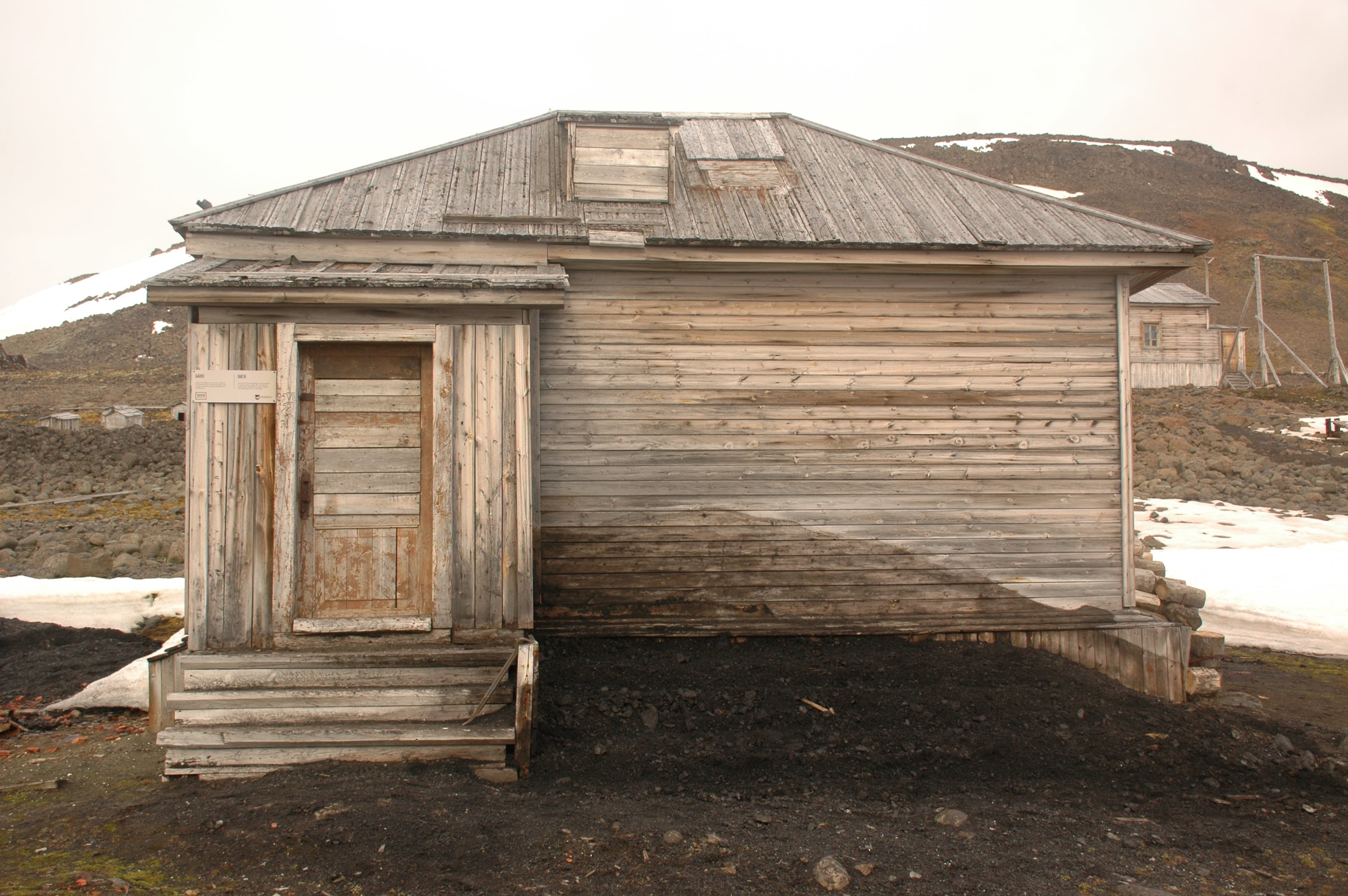
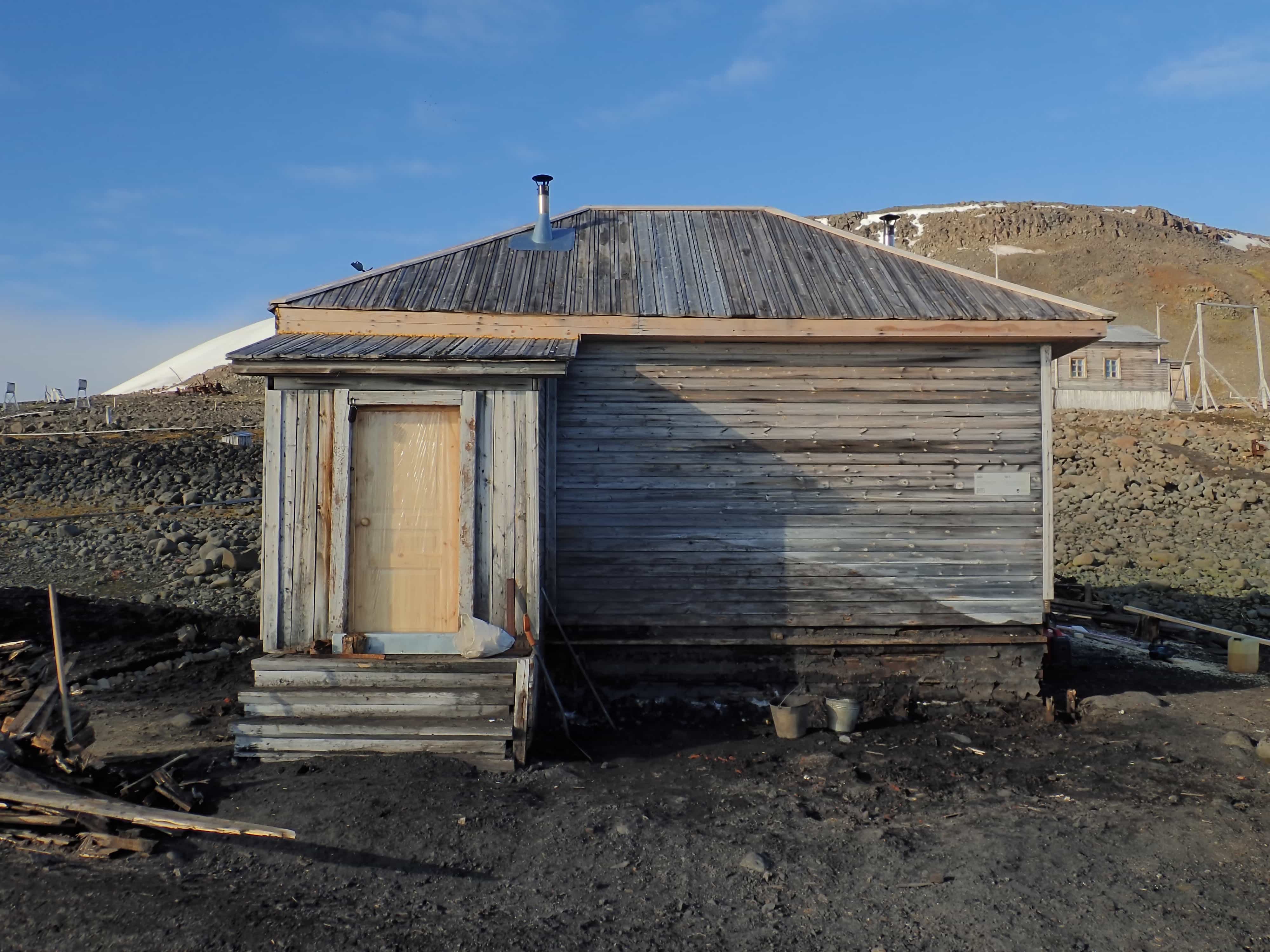
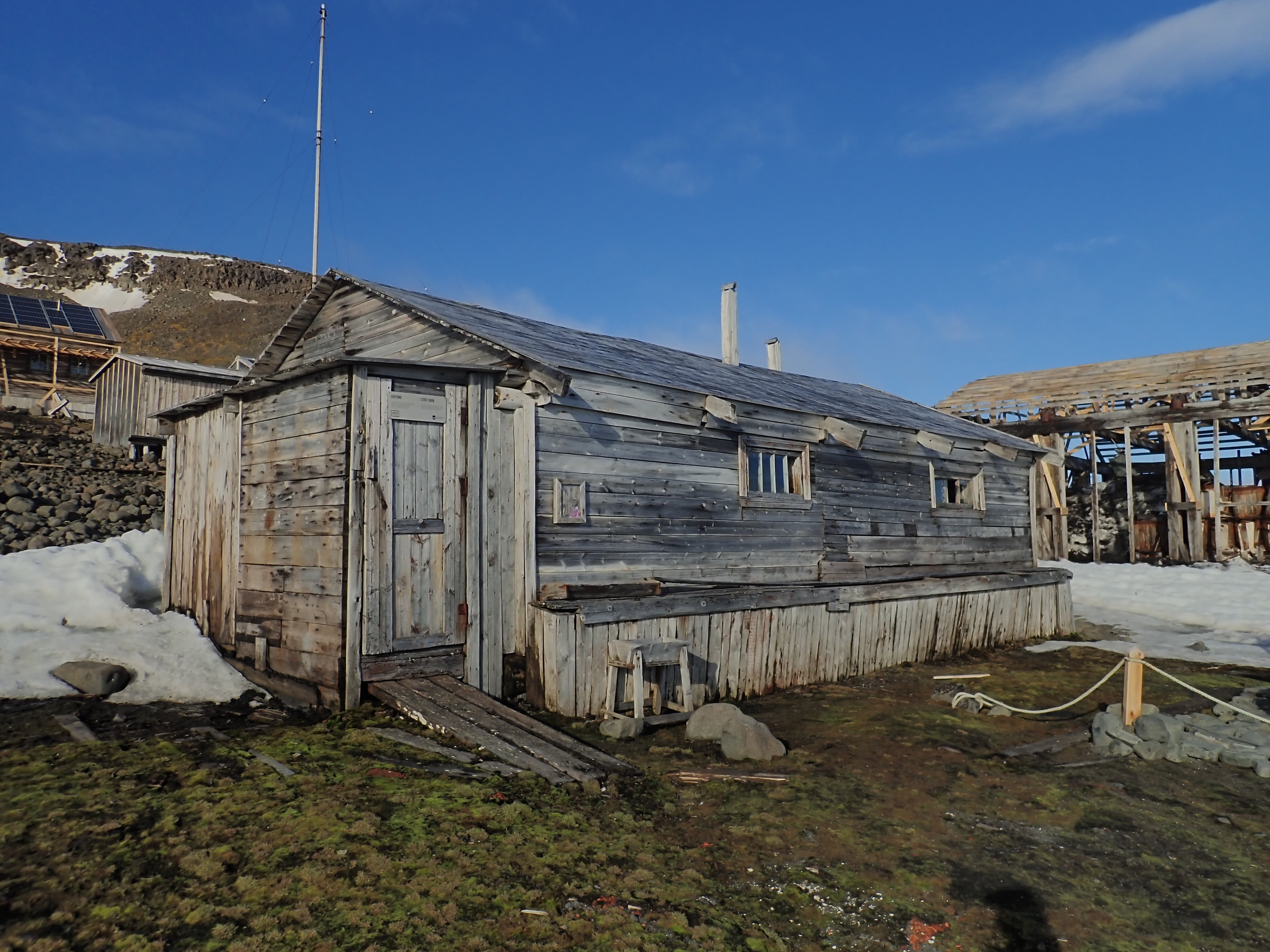
A small square-shaped building with a pyramidal roof, located between the big residential "The House No. 1" and a laboratory building is actually a bathhouse of the Tikhaya Bay polar station. It was built in 1929, at around the same time as the residential house and the warehouse, to become one of the first structures of the historic station.
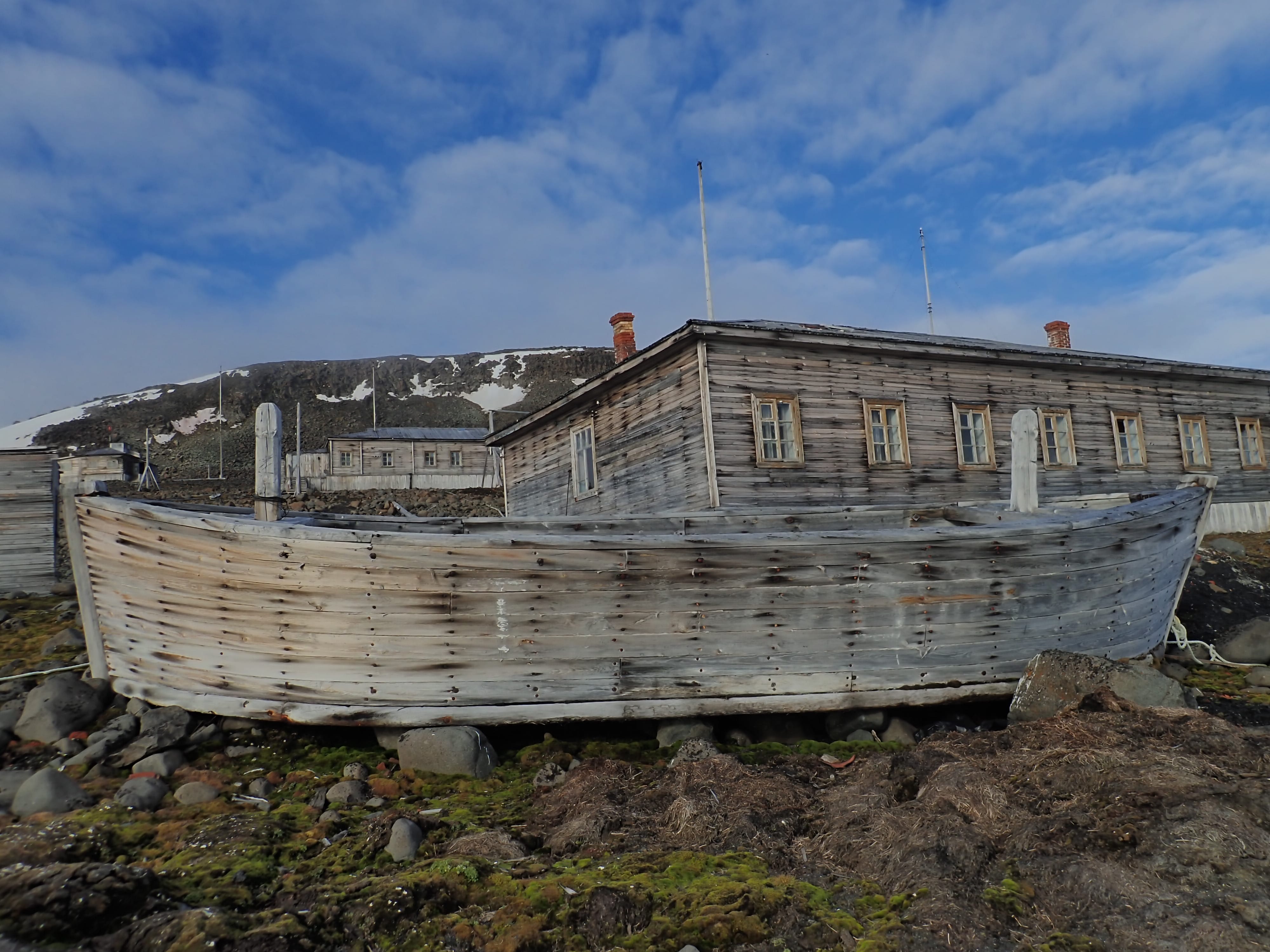
At the shore of Tikhaya Bay in front of "The House No. 1" you can see a kungas - a big undecked wooden vessel which was used to carry goods.
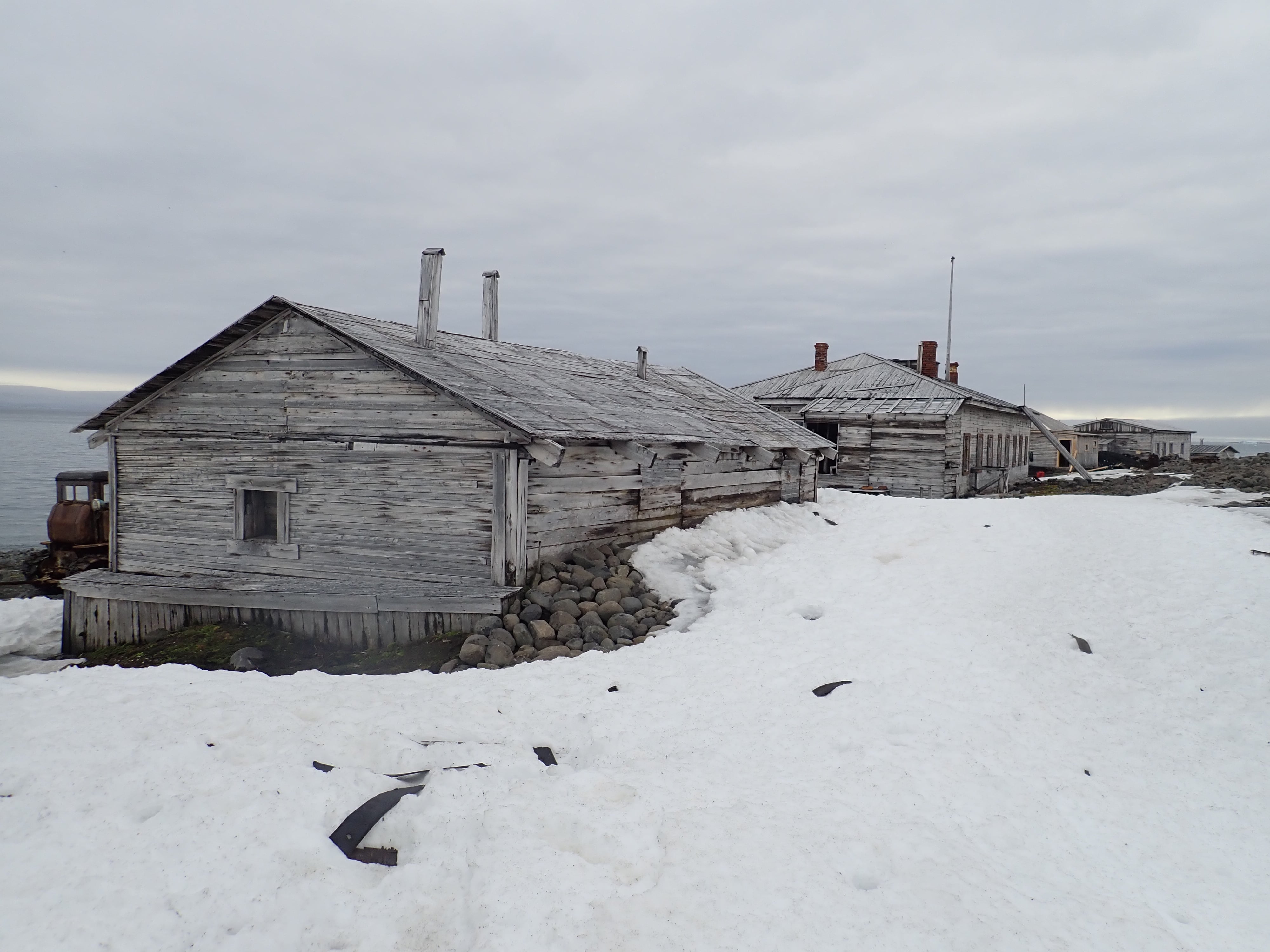
In front of you is a big residential house. It was nicknamed "The House No. 1" because at the time, it became the first building at the Tikhaya Bay polar station.
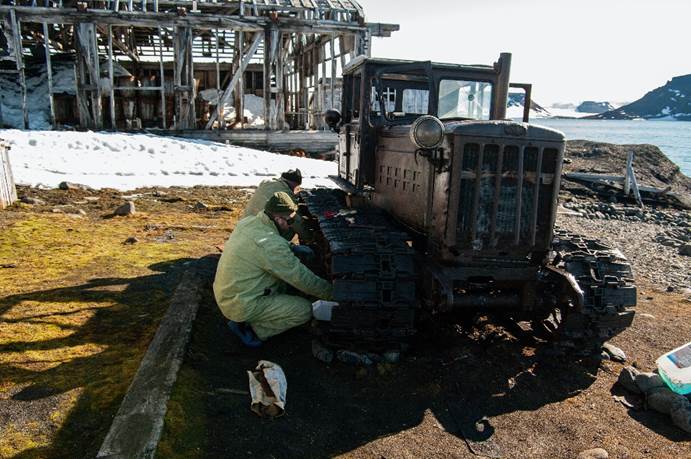
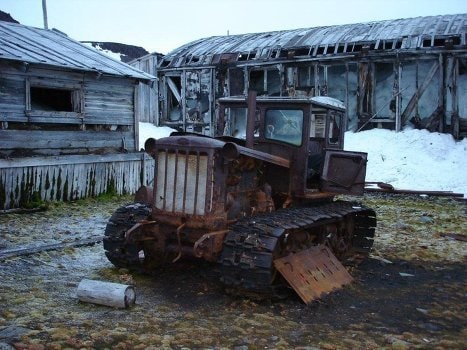
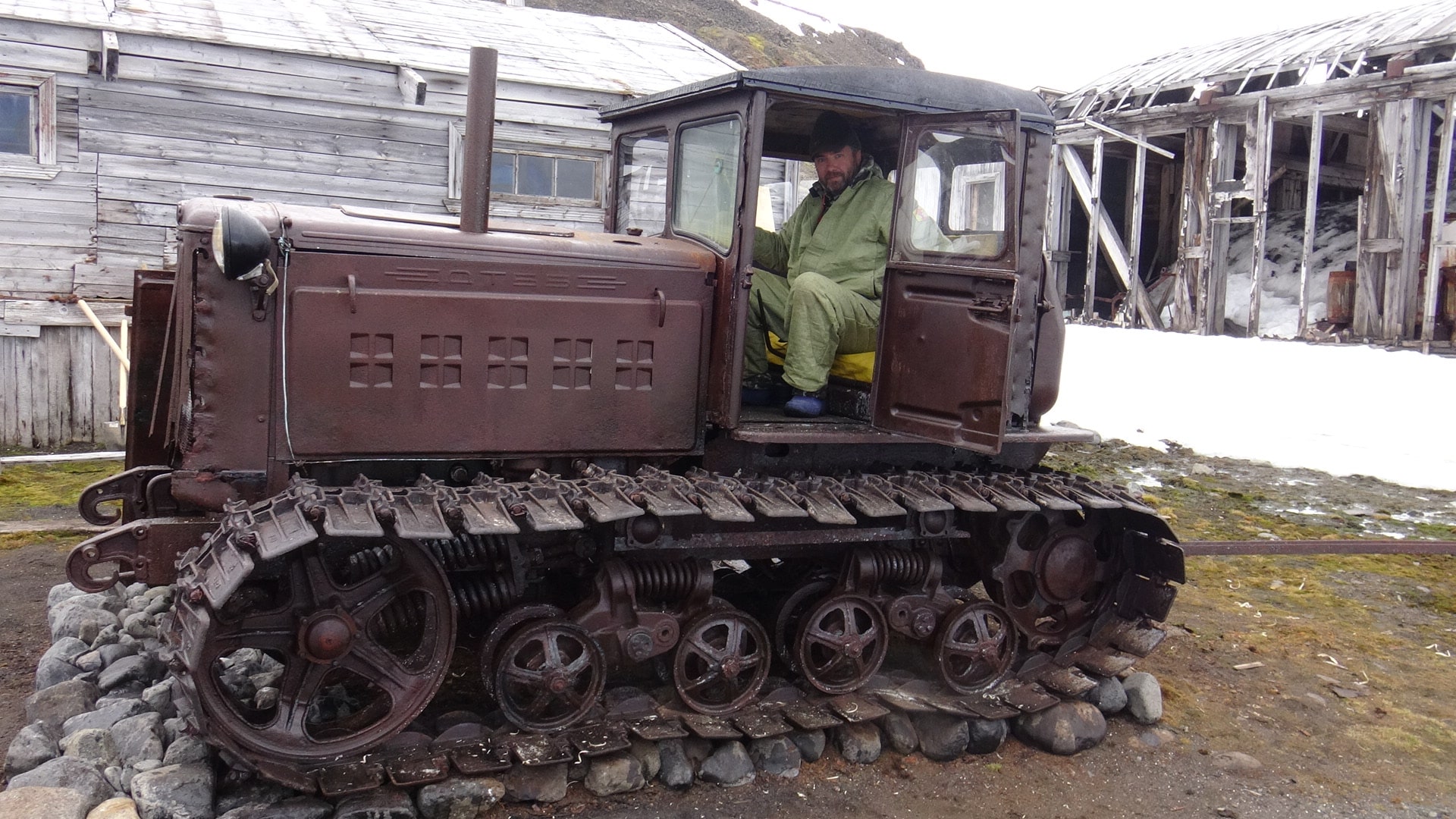
There is a tractor of DT-55 model at Tikhaya Bay, which now serves as a memorial on its shore. It was used at the polar station in the late 1950s, shortly before it was closed down.
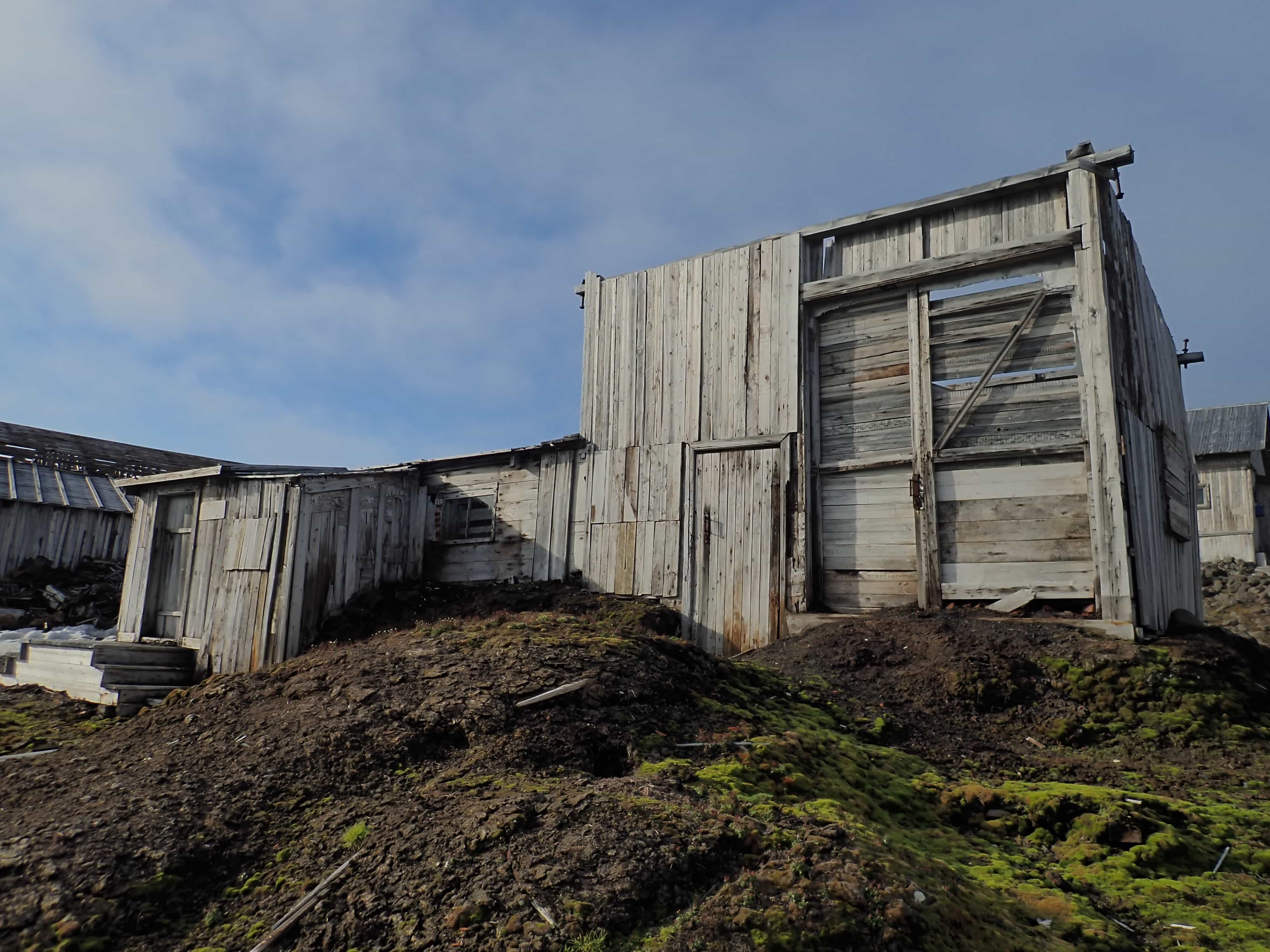
As you can see, there is a little building between the hangar and "The House No. 1". This is a cattle house, one of the utility structures of the station. It was used to keep cows and pigs that served as living provision.
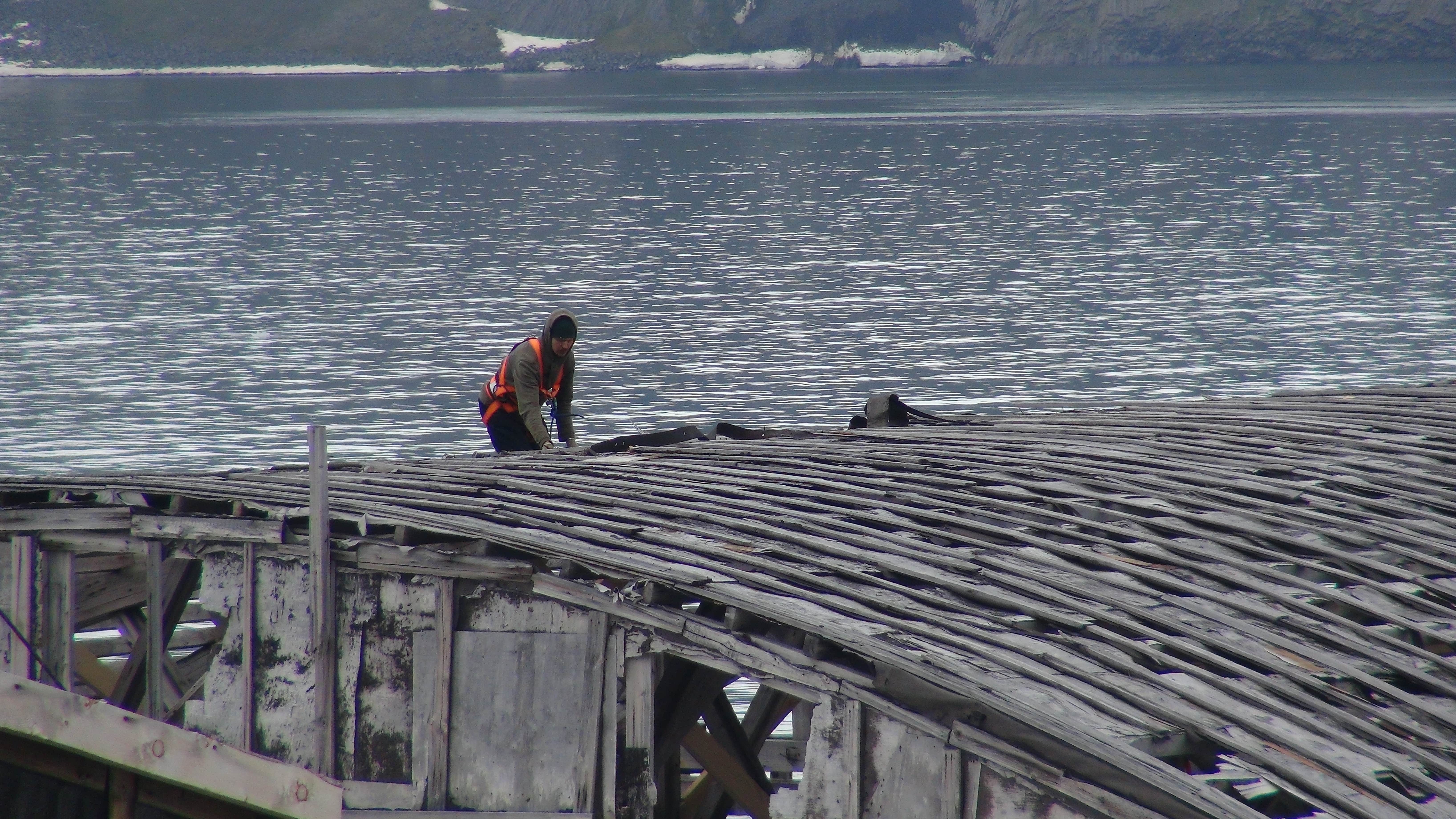
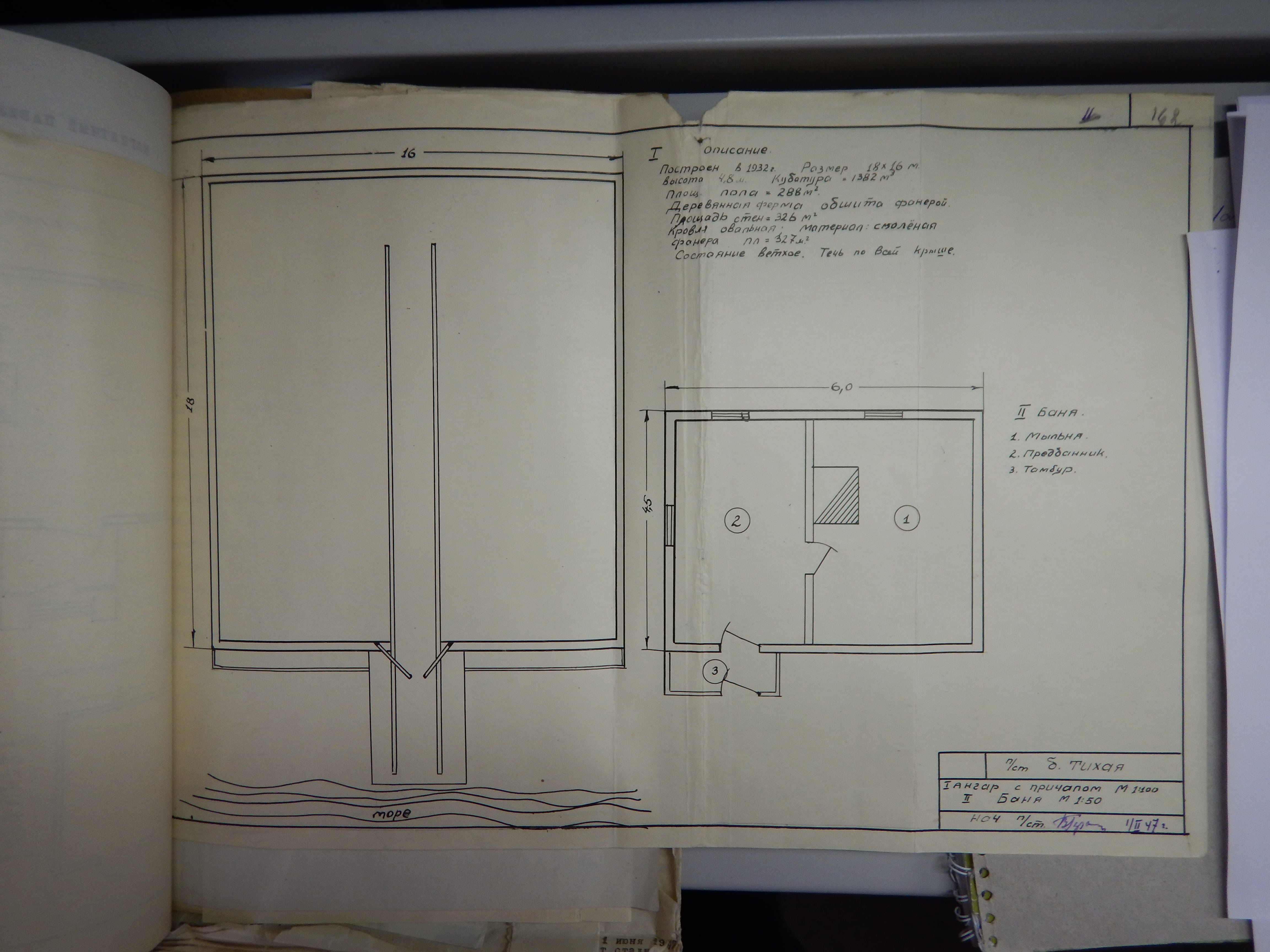
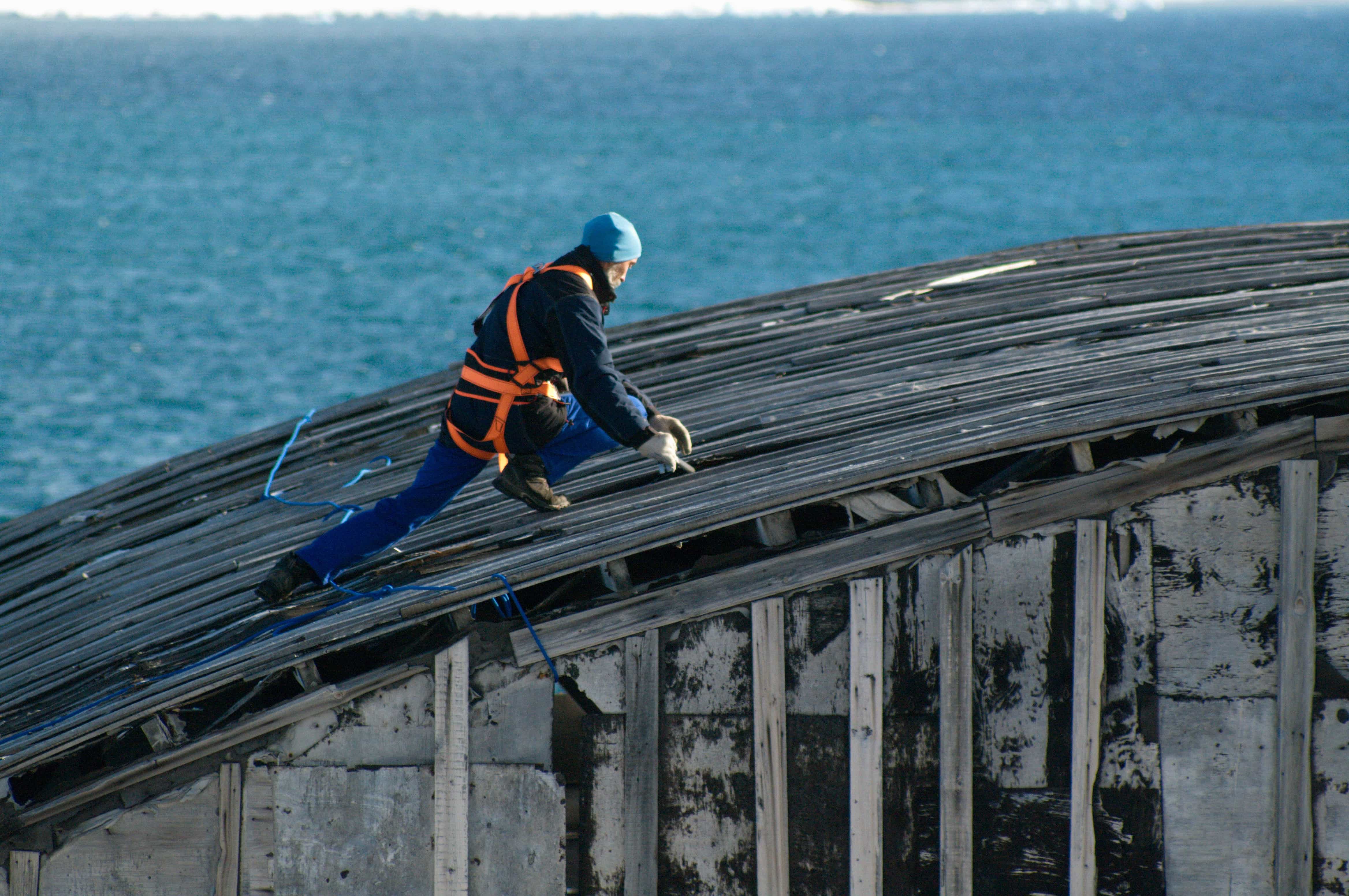
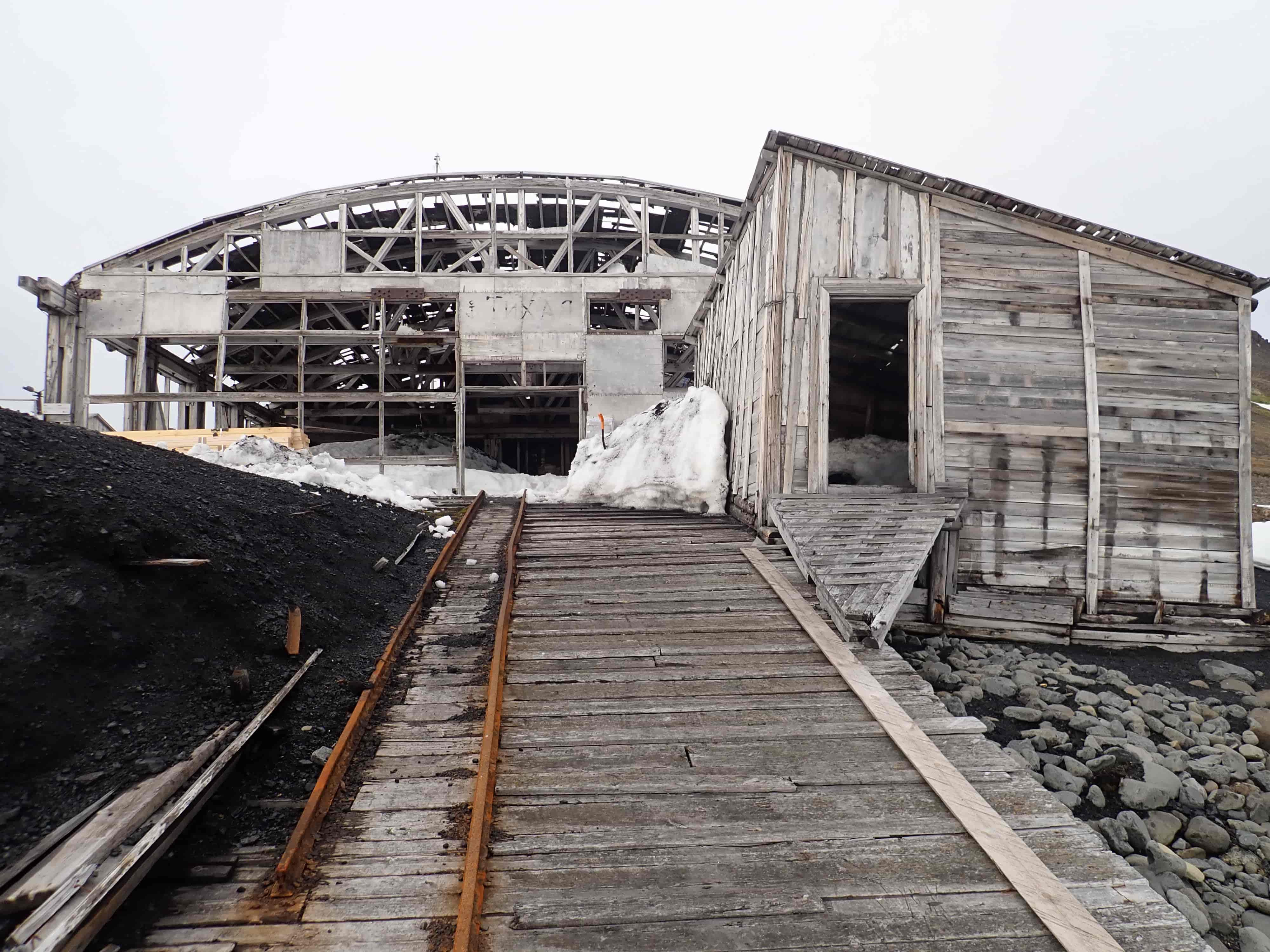
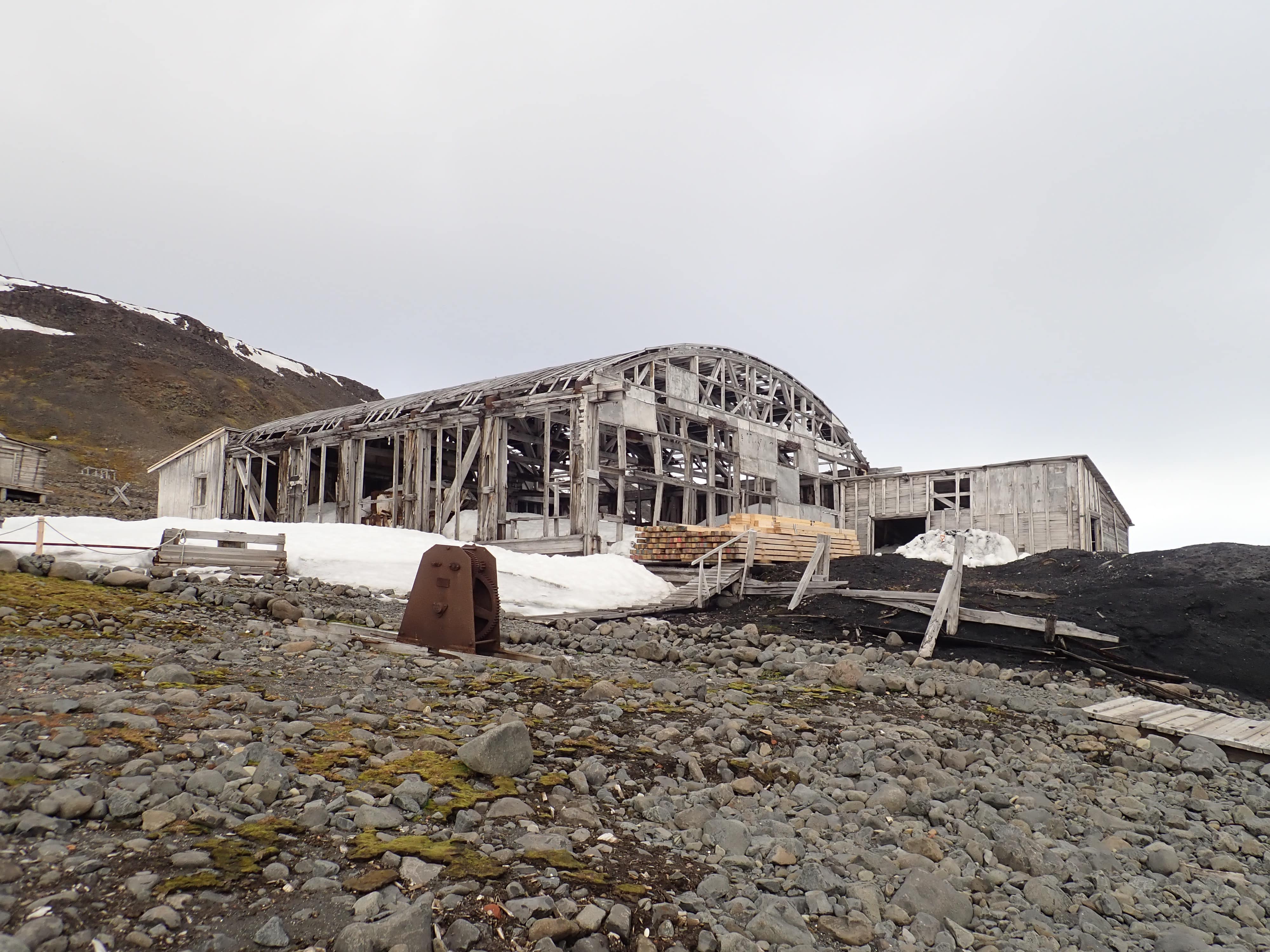
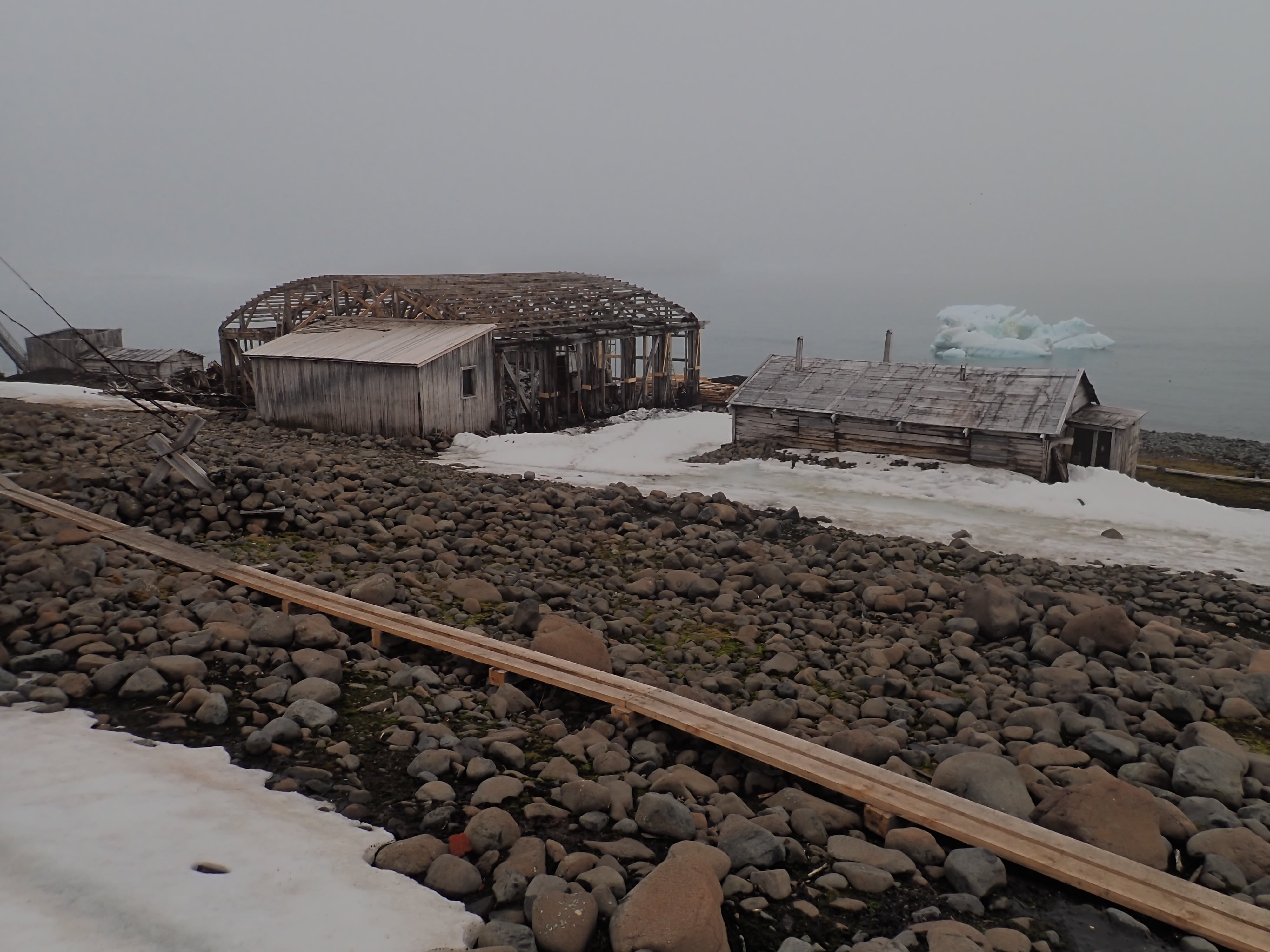
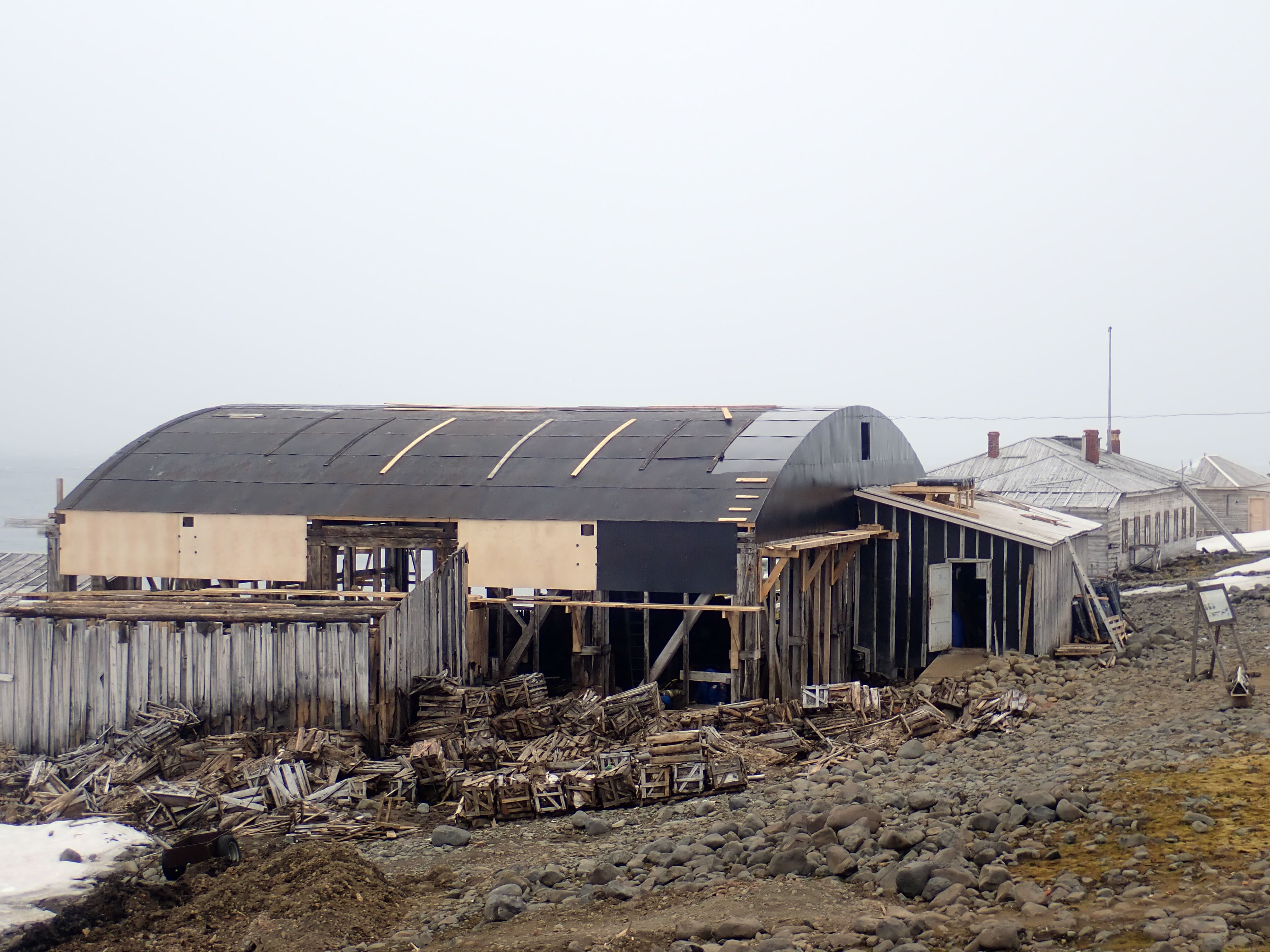
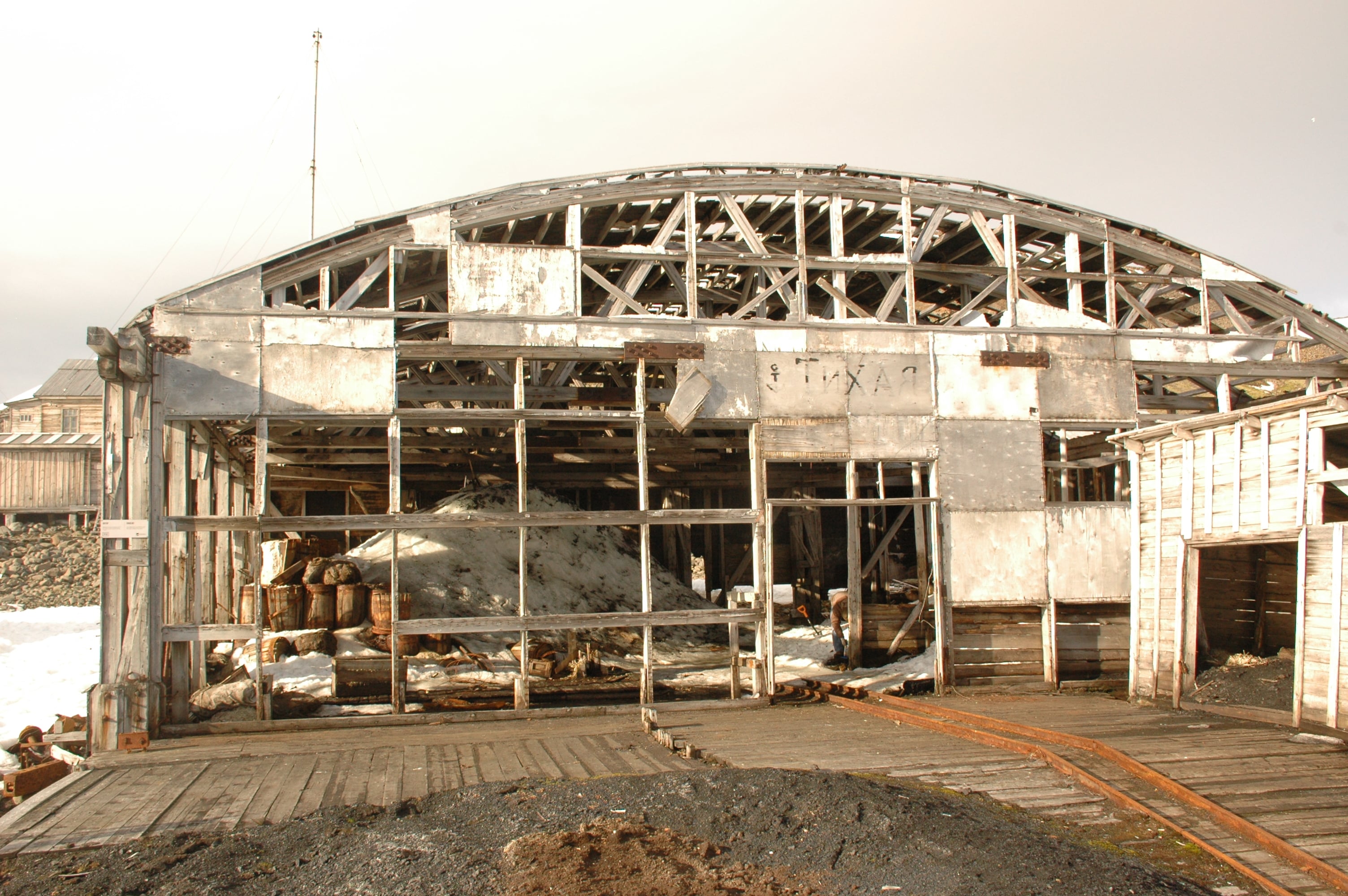
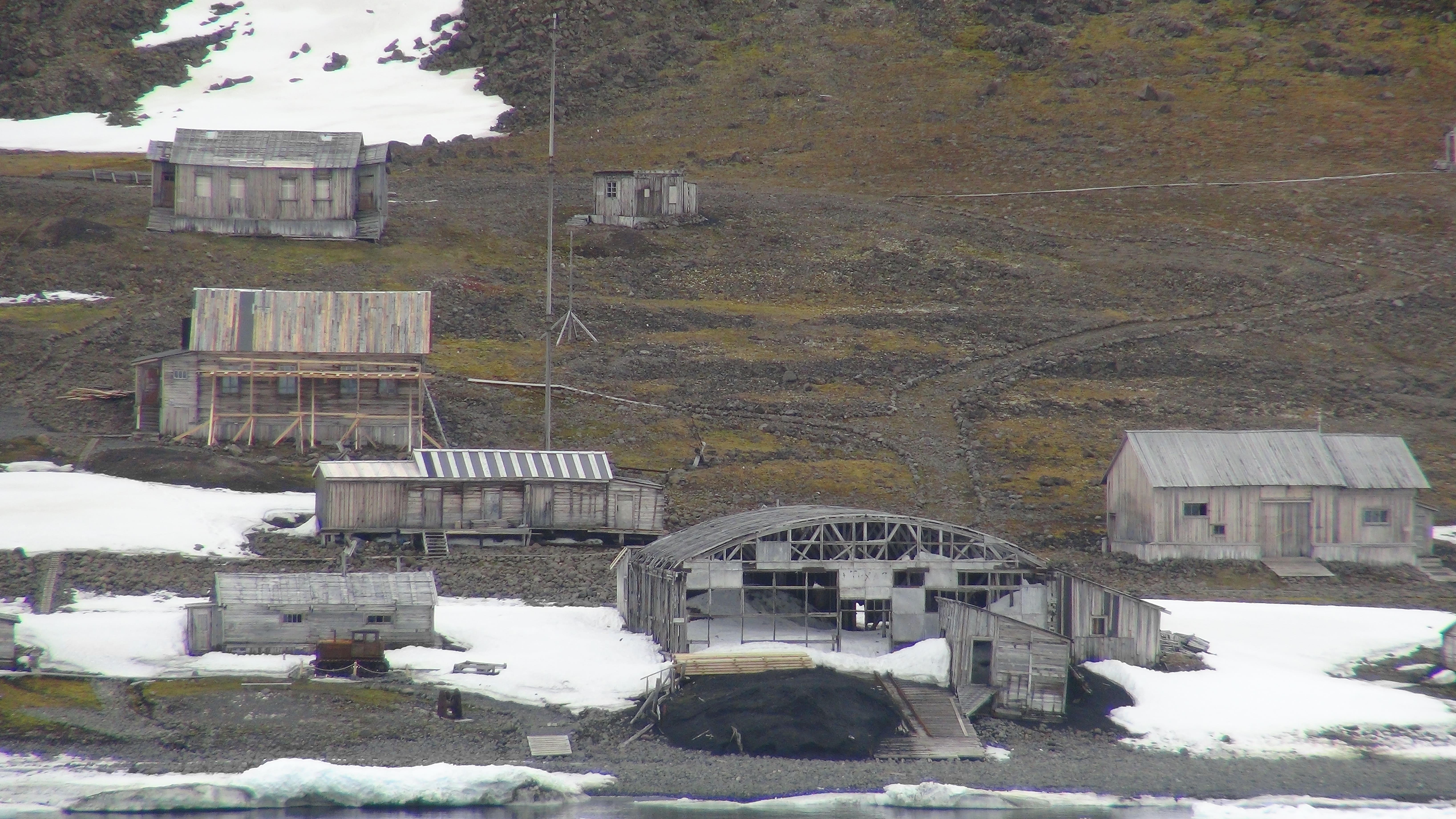
This aircraft hangar was constructed from 1932 to 1933 as the station was built up during preparations for the International Polar Year. Neither Tikhaya Bay nor other Soviet polar stations had ever seen such a big structure before. A framework of the hangar was manufactured in Arkhangelsk, then disassembled and transported to the station in 1932.
Opposite the aerological room you can see an aerological pavilion, built in 1954. This is the last big building erected at Tikhaya Bay.
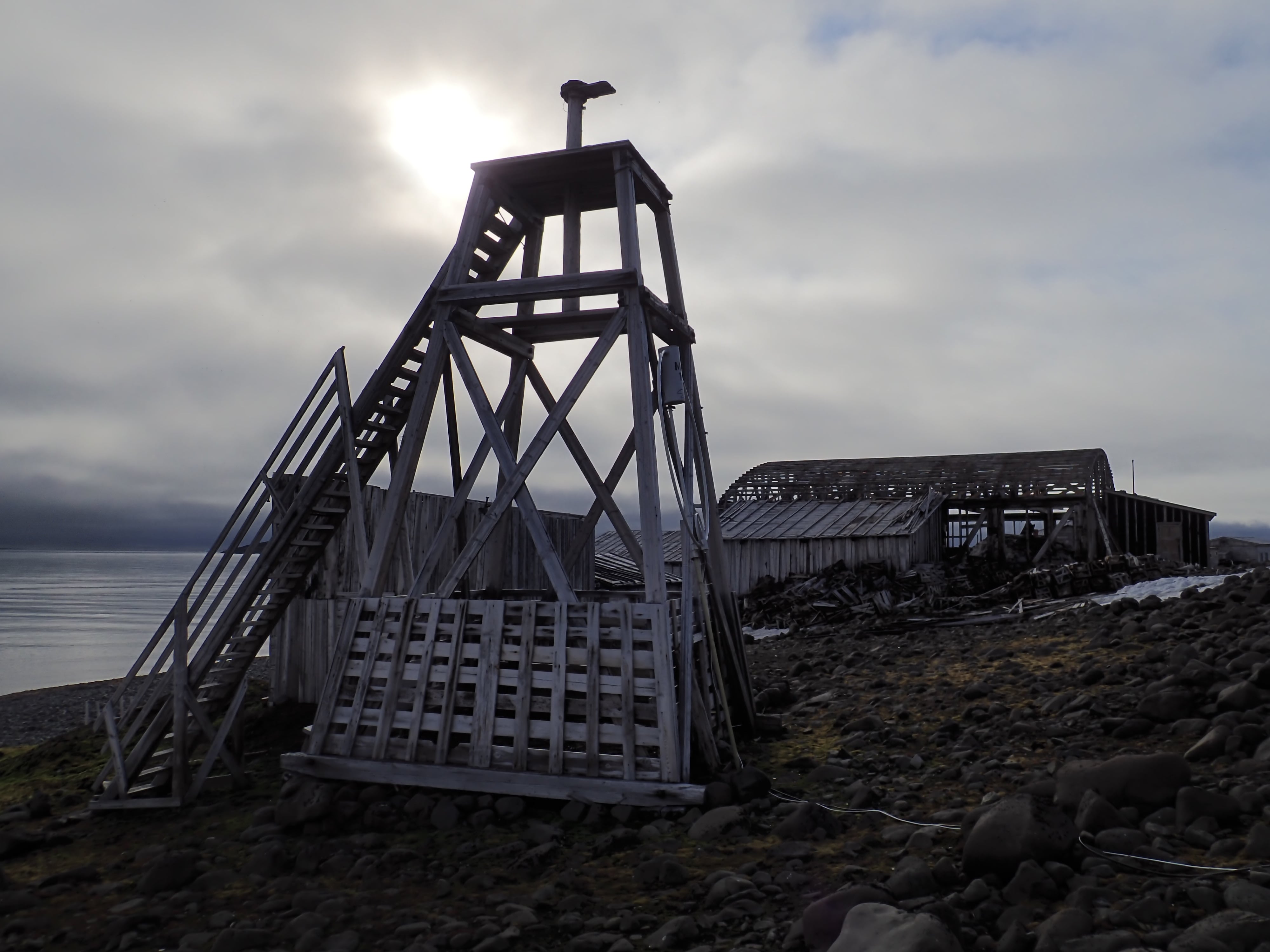
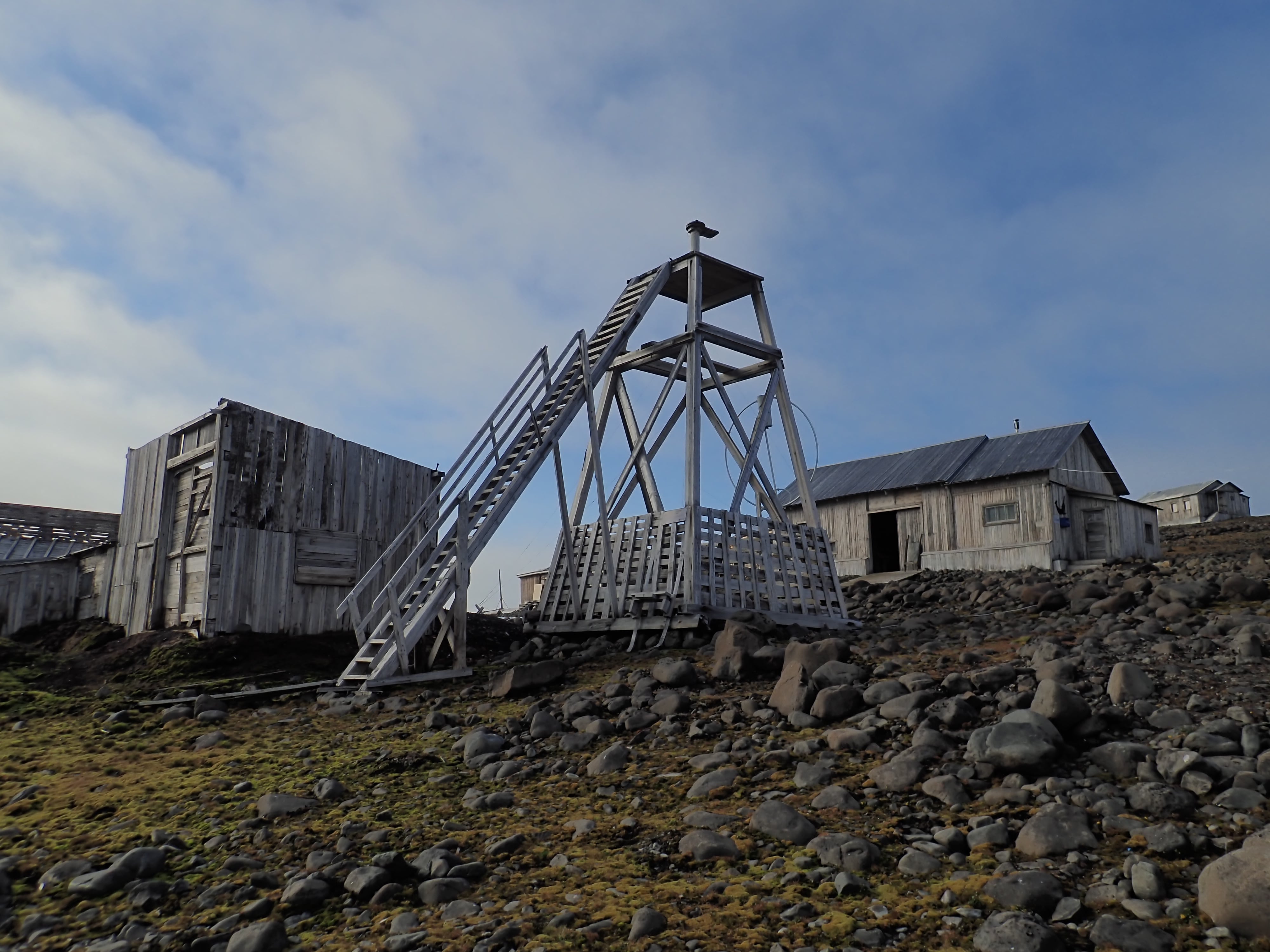
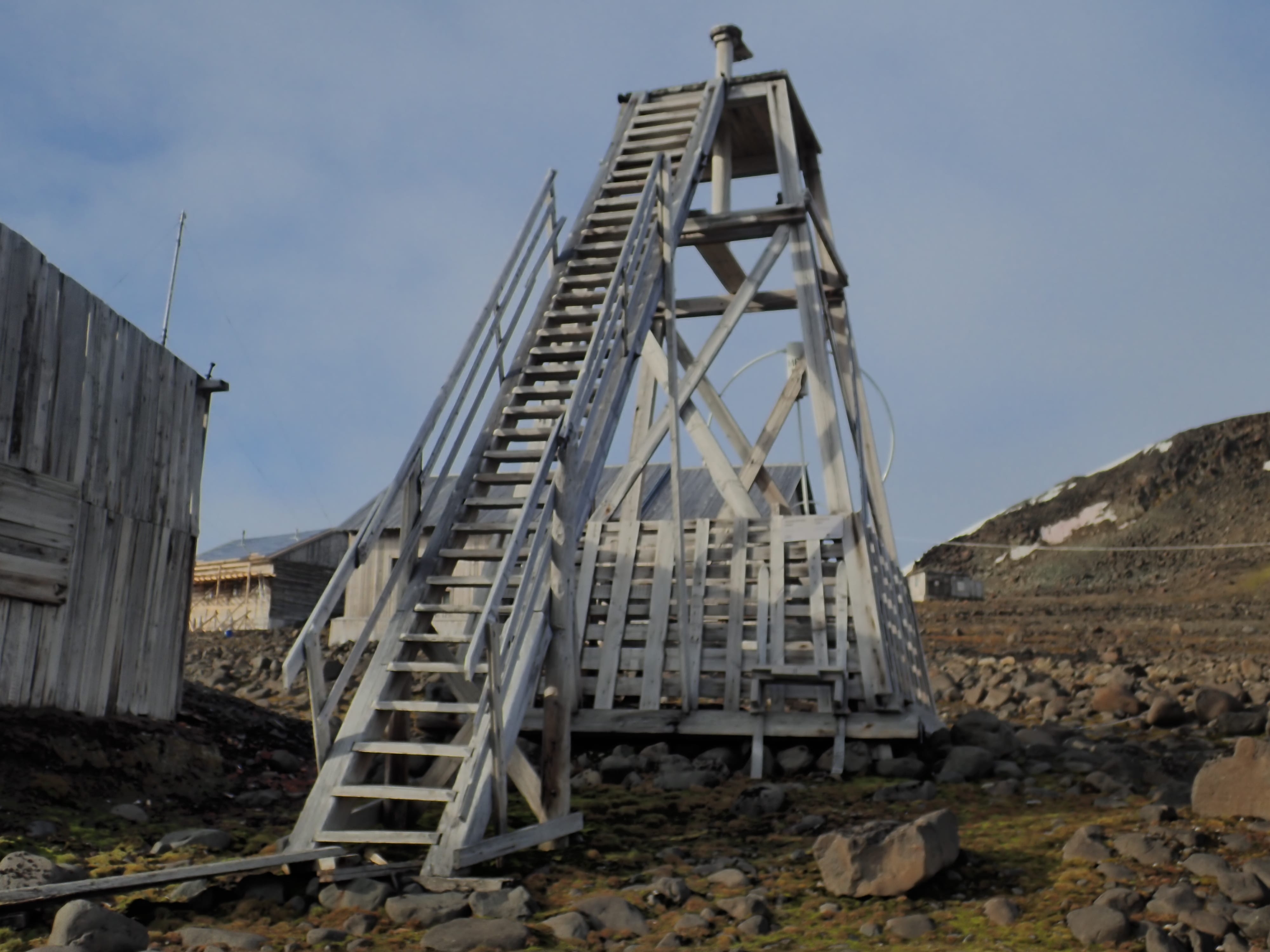
In front of you is an aerological tower, one of the buildings of scientific purpose. Even though the tower was built only in 1942, aerological observations at Tikhaya Bay were actually made since the establishment of the station. The tower, which is 6 meter high, is 11 meter high above the sea level.
In 1990, a biological research station of the Murmansk Marine Biological Institute was established at Tikhaya Bay. The station was located in a small house which was also built in 1990. As you can see, this building which was named a "MMBI house", looks like other buildings of the polar station.
"We are passing a small tidy house at a distance from other buildings. It is a magnetic pavilion. This will be a workplace for our magnetologists". These lines are from memoirs of Sergey Bezborodov, a writer who stayed for the winter in Tikhaya Bay from 1933 to 1934.
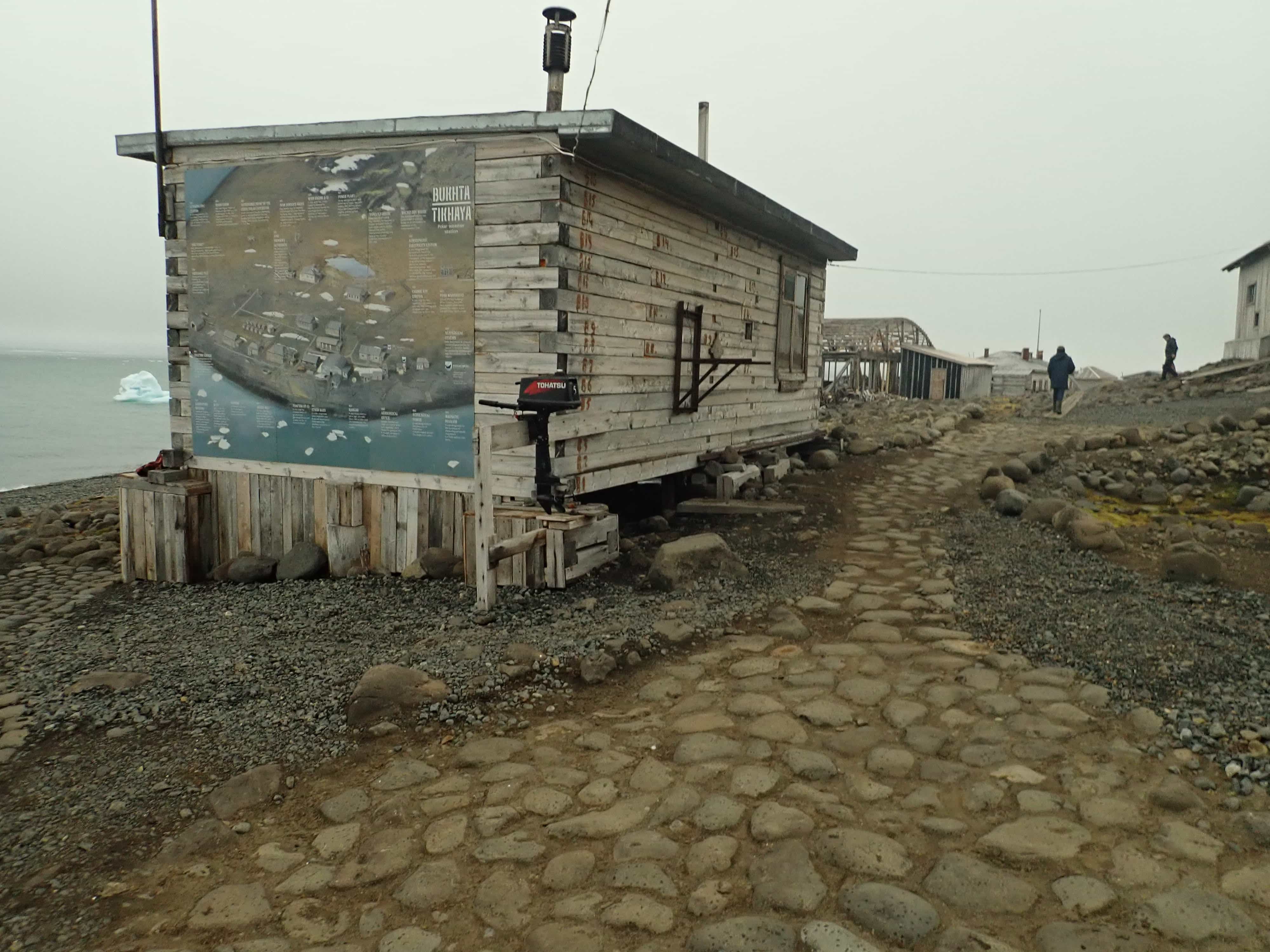
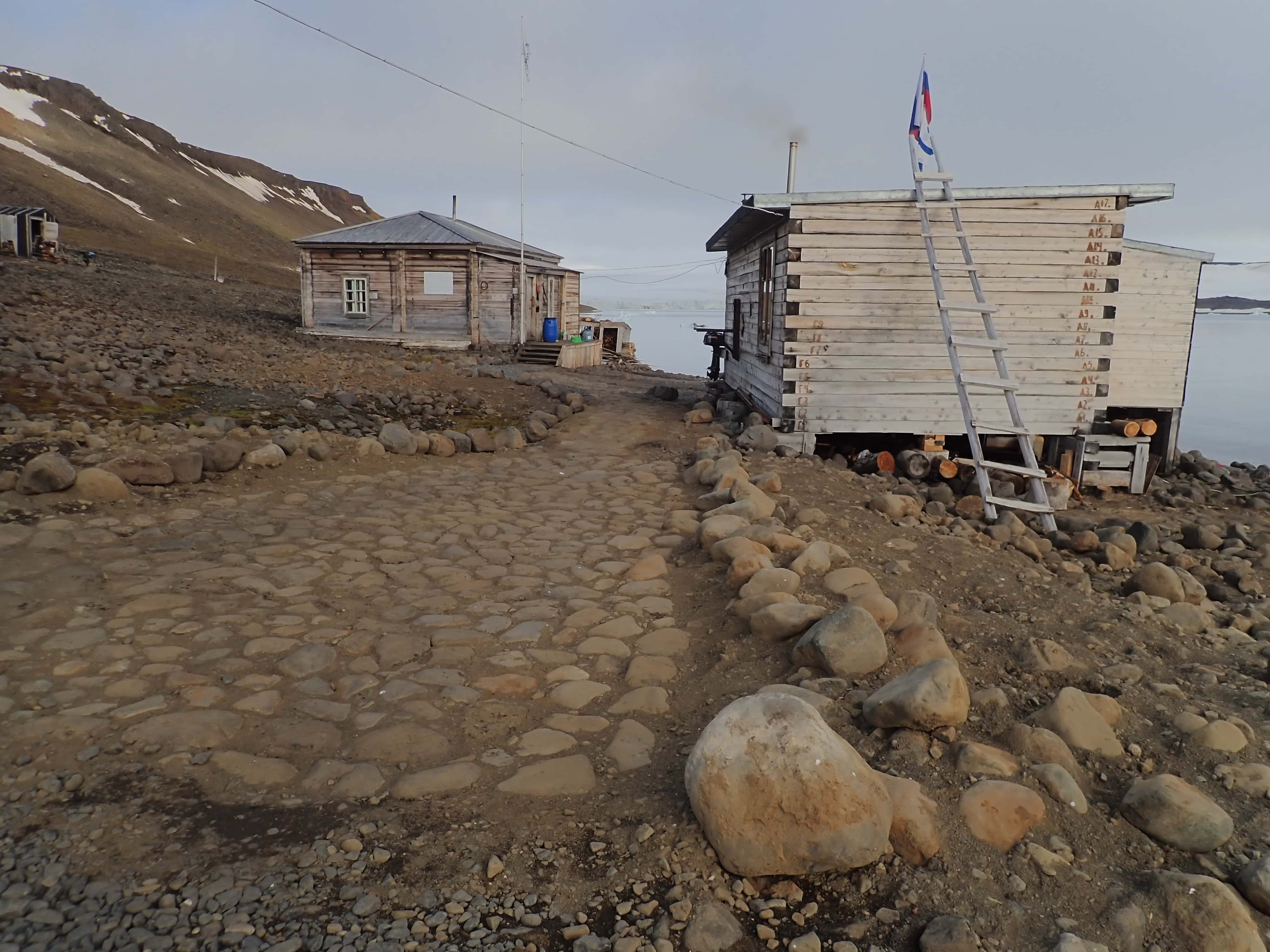
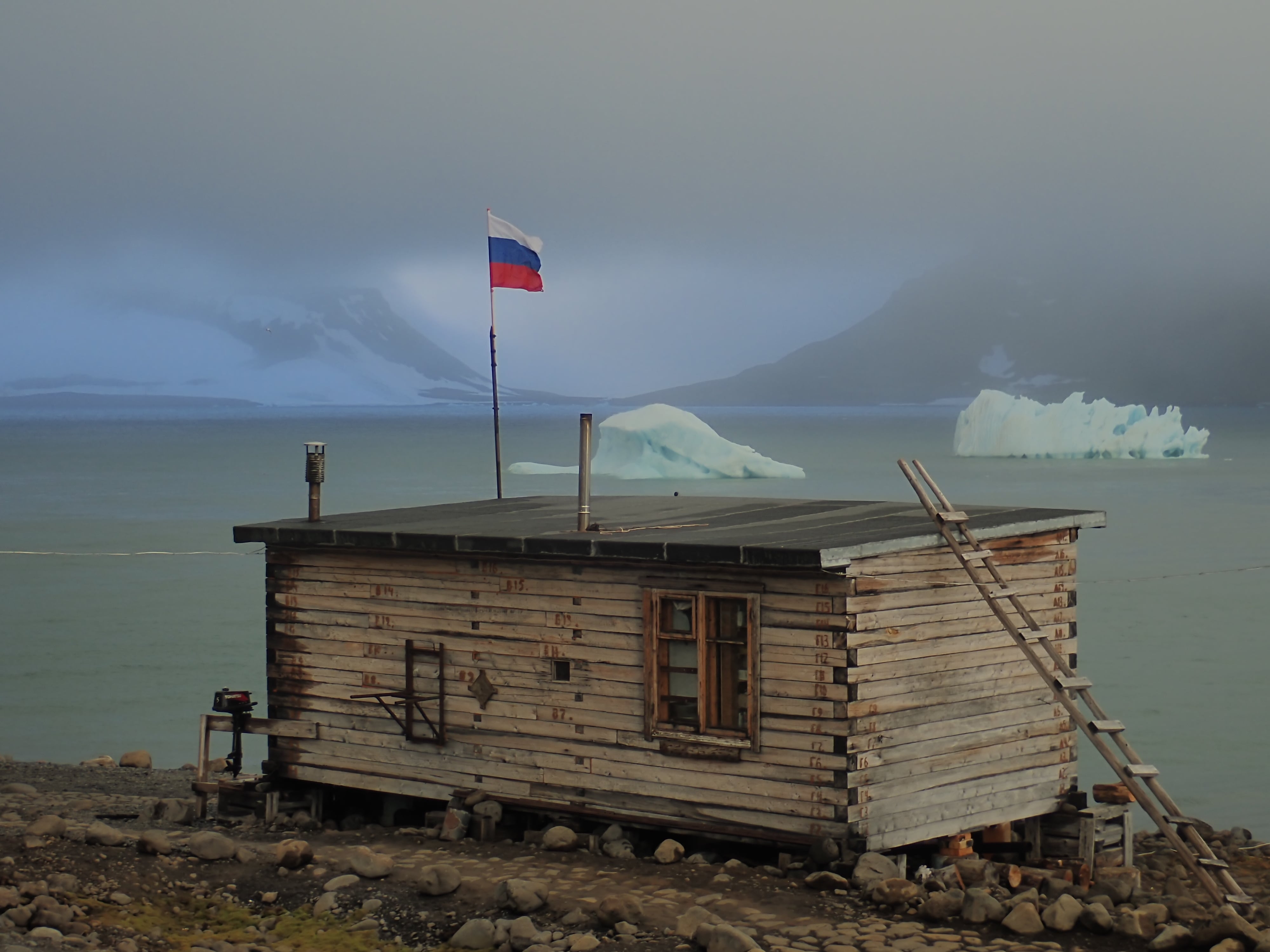
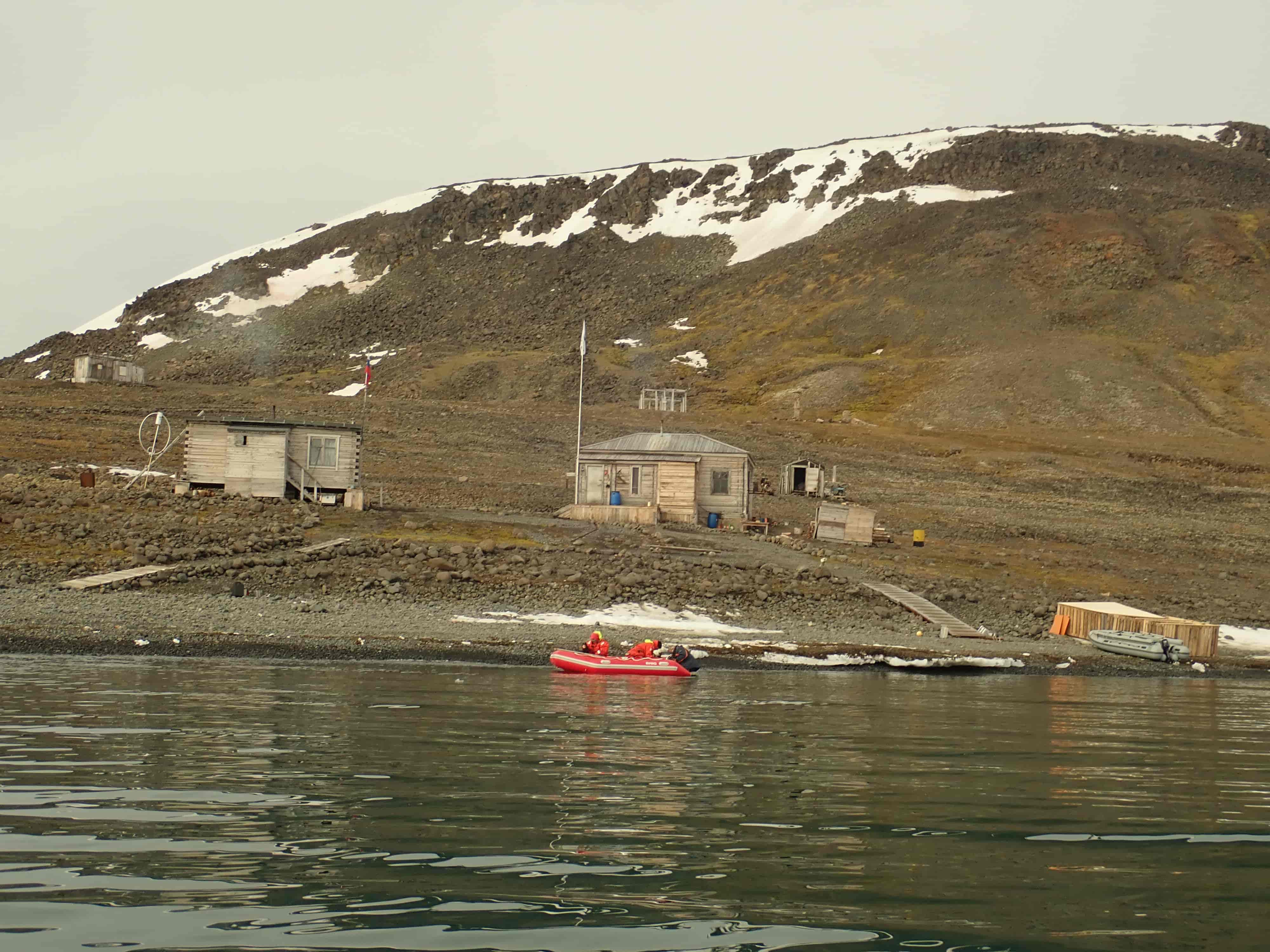
Dear visitors, welcome to Tikhaya Bay! Let's discover together this historic polar station that is located on Hooker Island, one of the islands of Franz Josef Land. It is one of the most famous and important sites of the Russian Arctic.
Near the aerological tower you can see two small buildings located side by side. This is an aerological room. These buildings were built in the 1930s and originally served as a tallow-boilery and a vegetable shed. Since the Great Patriotic War - in 1942, to be more exact - they were used for the aerological room.
In 1990, Tikhaya Bay was visited by women's sport expedition "Metelitsa" (which means "Snowstorm"), which went on skiing trips in the Arctic as well as in the Antarctic. Some of these expeditions were on Franz Josef Land.
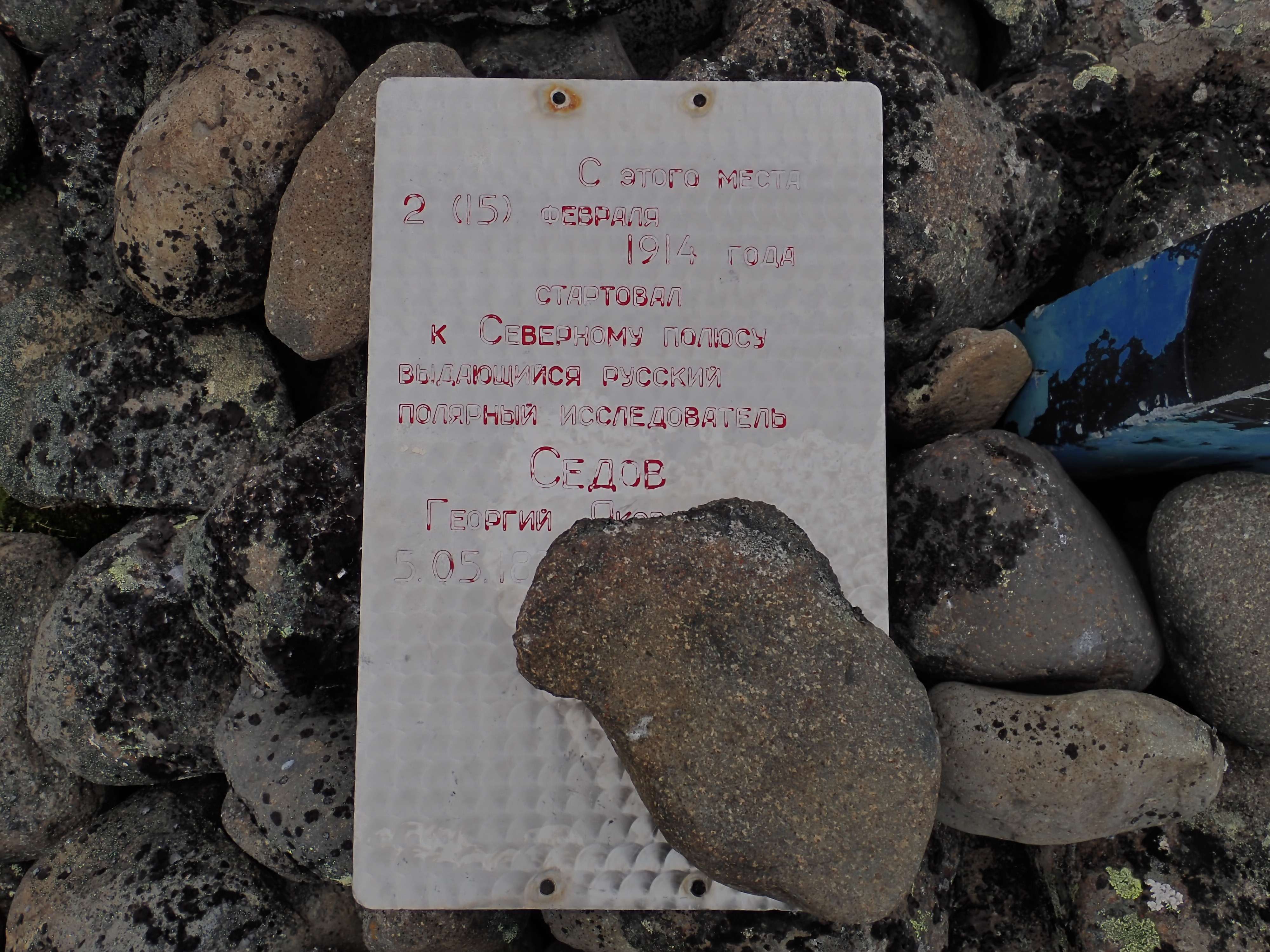
The expeditions were made up of Soviet girls who wanted to achieve sport goals and study how human body can endure extreme conditions. On May 5, 1990 "Metelitsa" placed a memorial sign at Tikhaya Bay, dedicated to members of the first Russian expedition to the North Pole, led by Georgy Sedov.
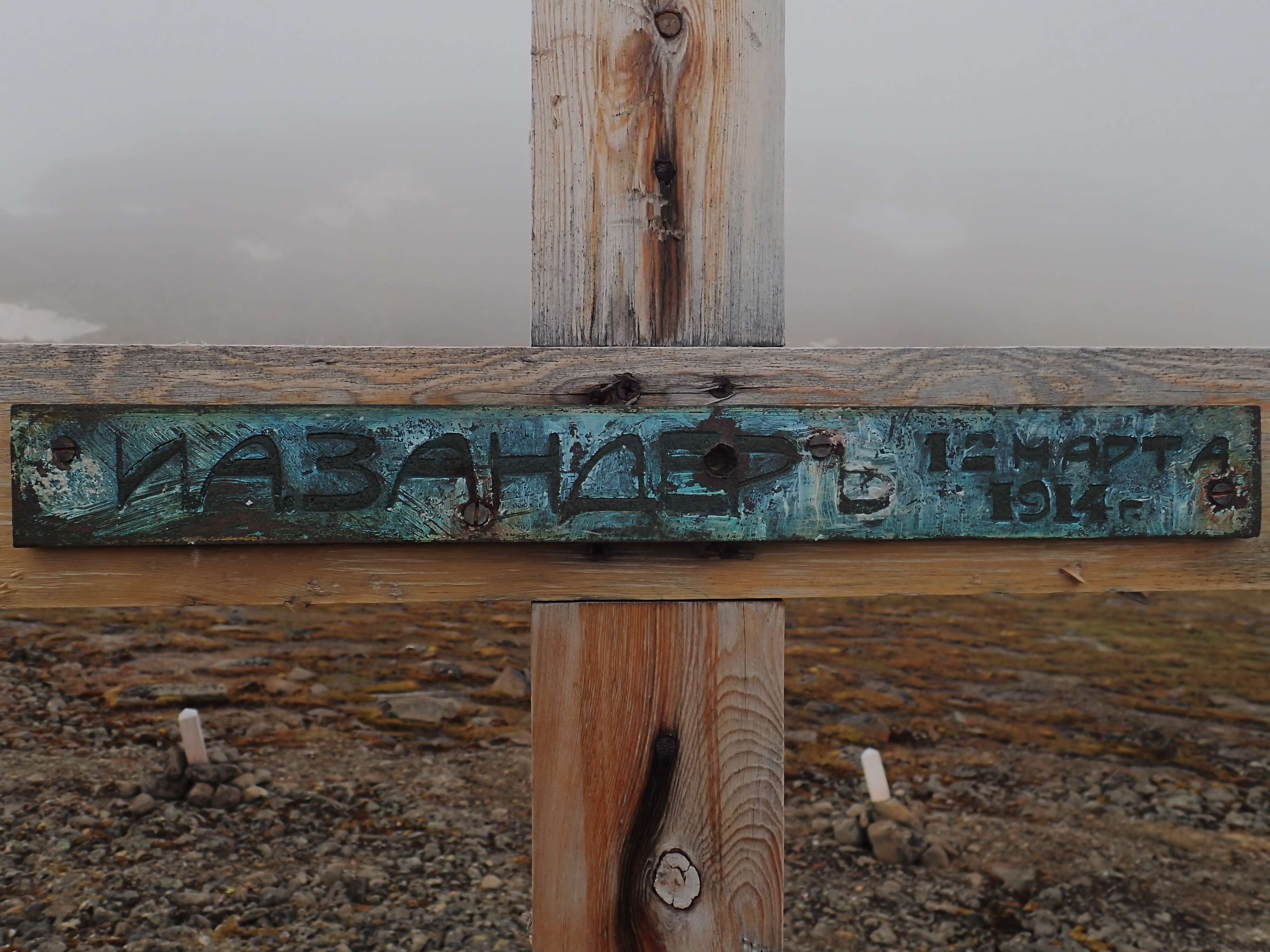
Hide detailsThere are three graves at Tikhaya Bay. Near Sedov's cross there is a grave of Ivan Zander, a machinist of a steam boat named "Saint Phocas the Martyr".
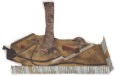
Aboard this ship, the first Russian expedition set off for the North Pole. Zander died on March 13, 1914 because scurvy exacerbated his chronic illnesses. According to history of polar expeditions, this exacerbation usually takes place in the spring when body is most weakened after the winter, and a person suffers from a long polar night and persistent shortage of food and vitamines. At first, the grave was marked with a pile of stones and a wooden cross. Later the cross was replaced with a modern replica.
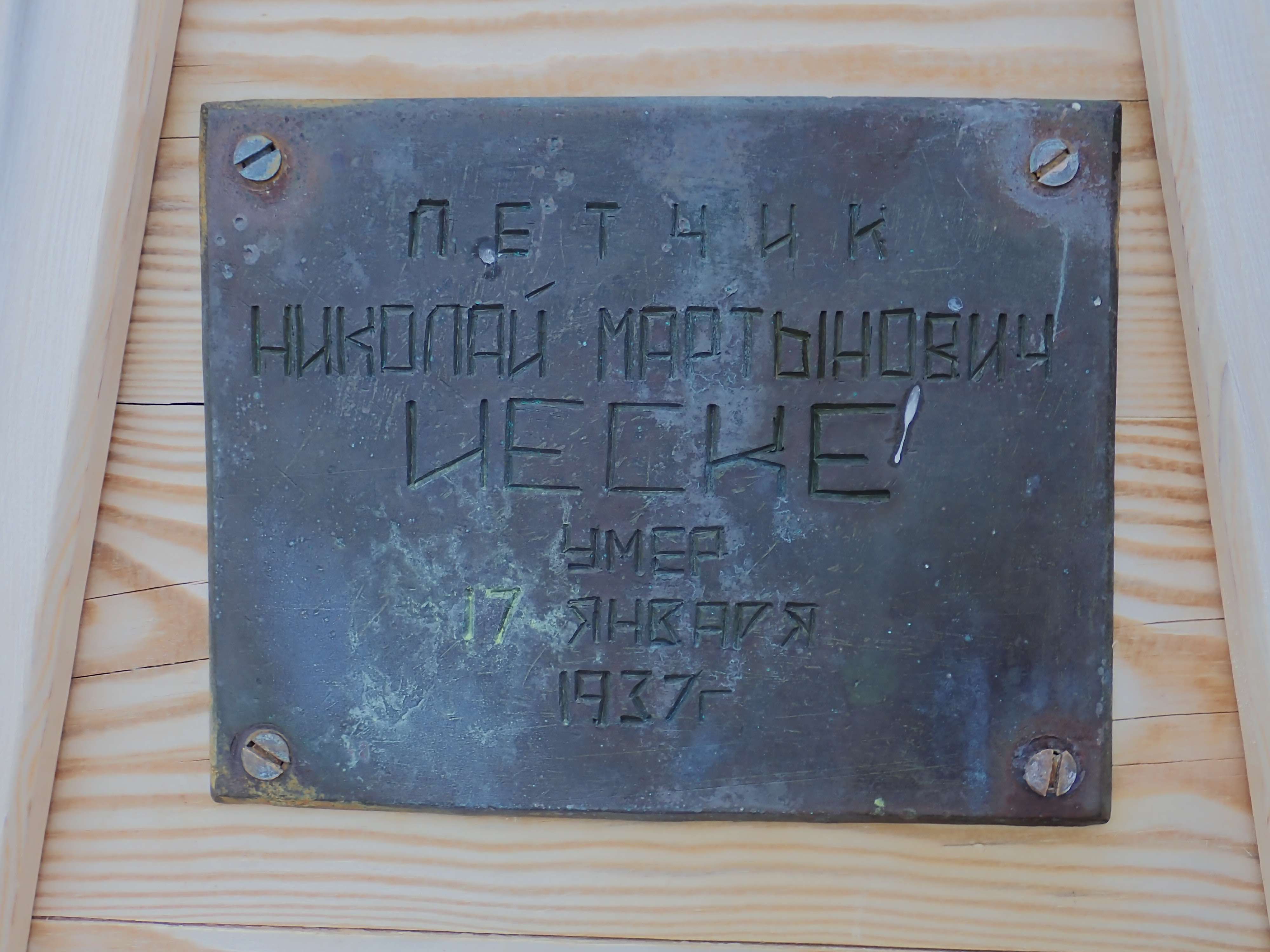
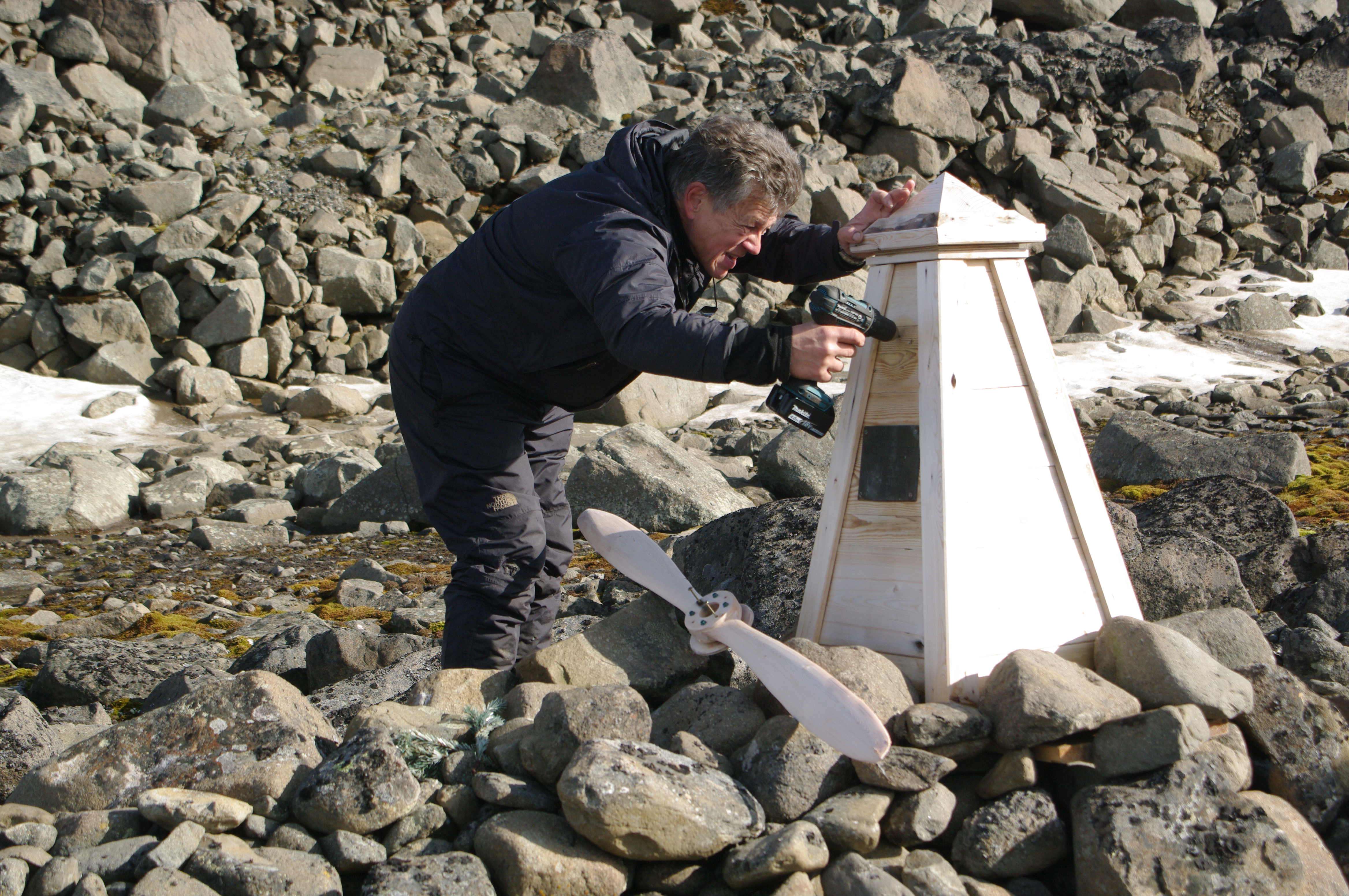
A grave of Nikolay Ieske, a polar pilot, is located a little bit apart from others. It is a wooden pyramid decorated with a propeller of a plane. Now they are replaced with modern replicas. In 1936, Ieske was one of those who built an ice airfield on Rudolf Island, and then he was transferred to the Tikhaya Bay polar station for the winter. During this winter, he died from an acute exacerbation of his chronic stomach disease, because a station's doctor wasn't able to help him whatever he did. Winter conditions and polar night made it impossible to dig up a grave, so the volume of rock had to be cleared with an explosion of ammonal. That's why Ieske's grave is apart from Zander's grave and Sedov's cross.
A grave of Pyotr Ivanovich Fotiev (? - 1948), a chief specialist in researches of ionosphere. He died at Tikhay Bay on February 12, 1948. As for now, the circumstances of his arrival at Franz Josef Land, of his duties and his death are unknown.
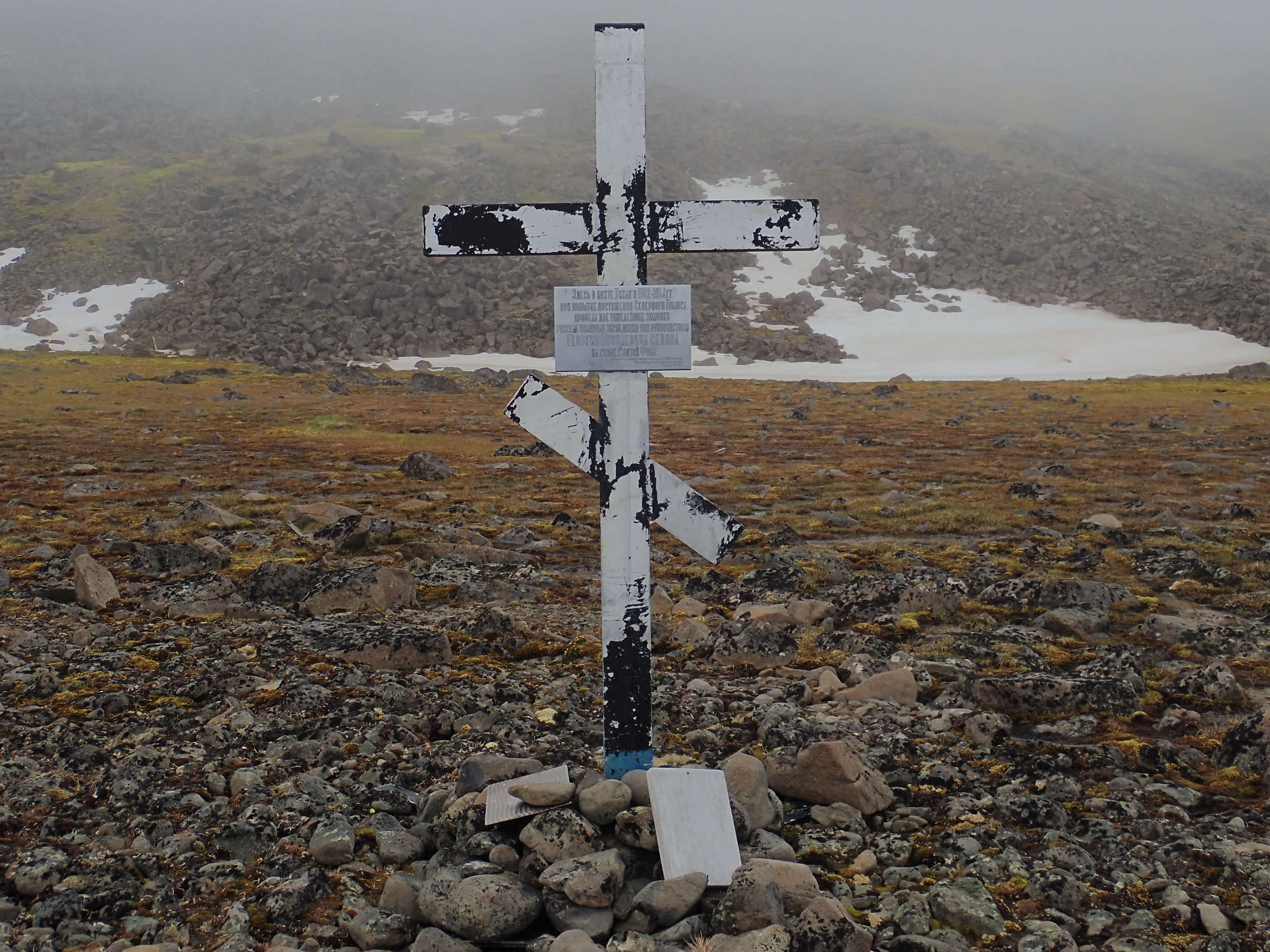
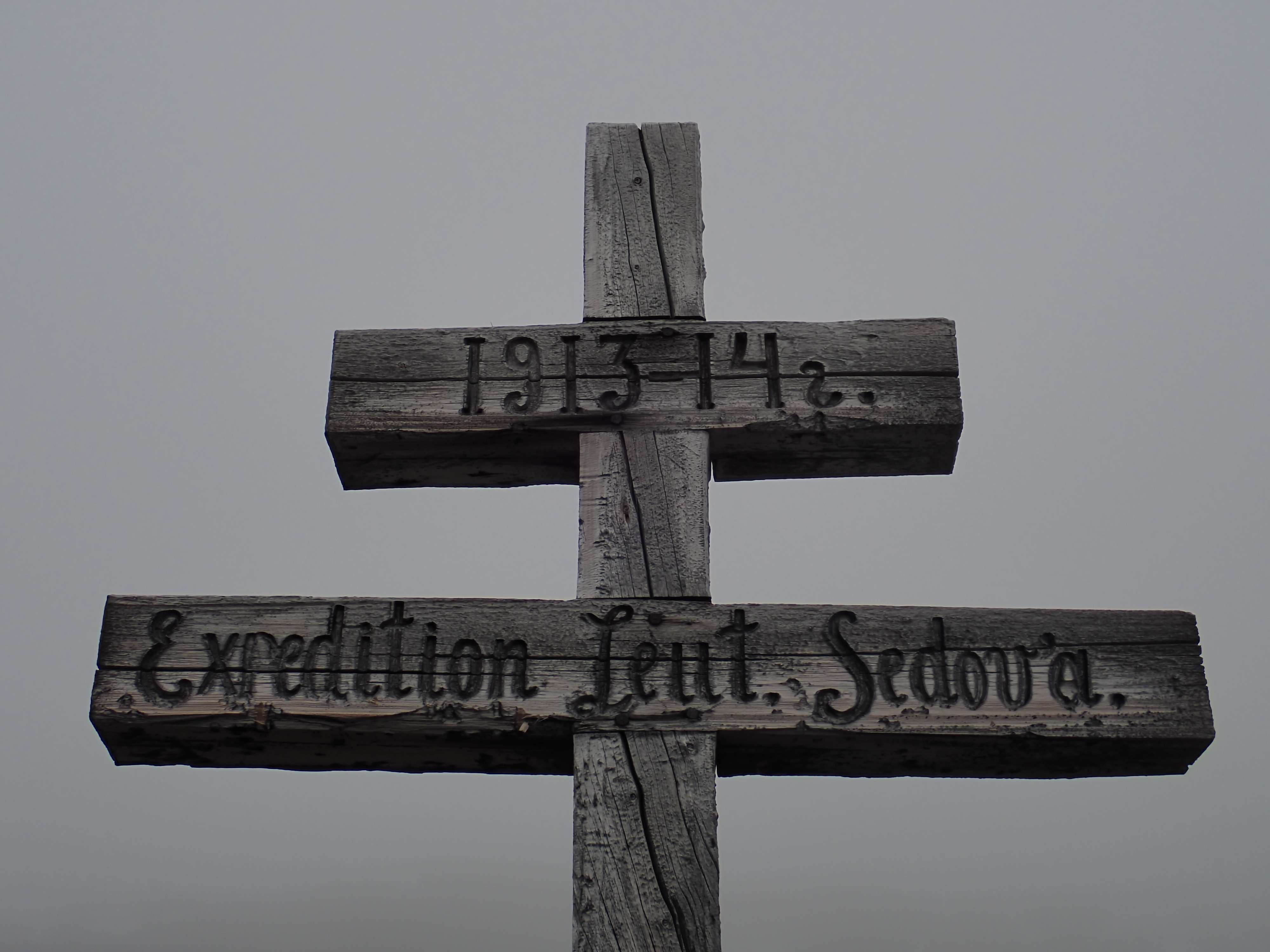
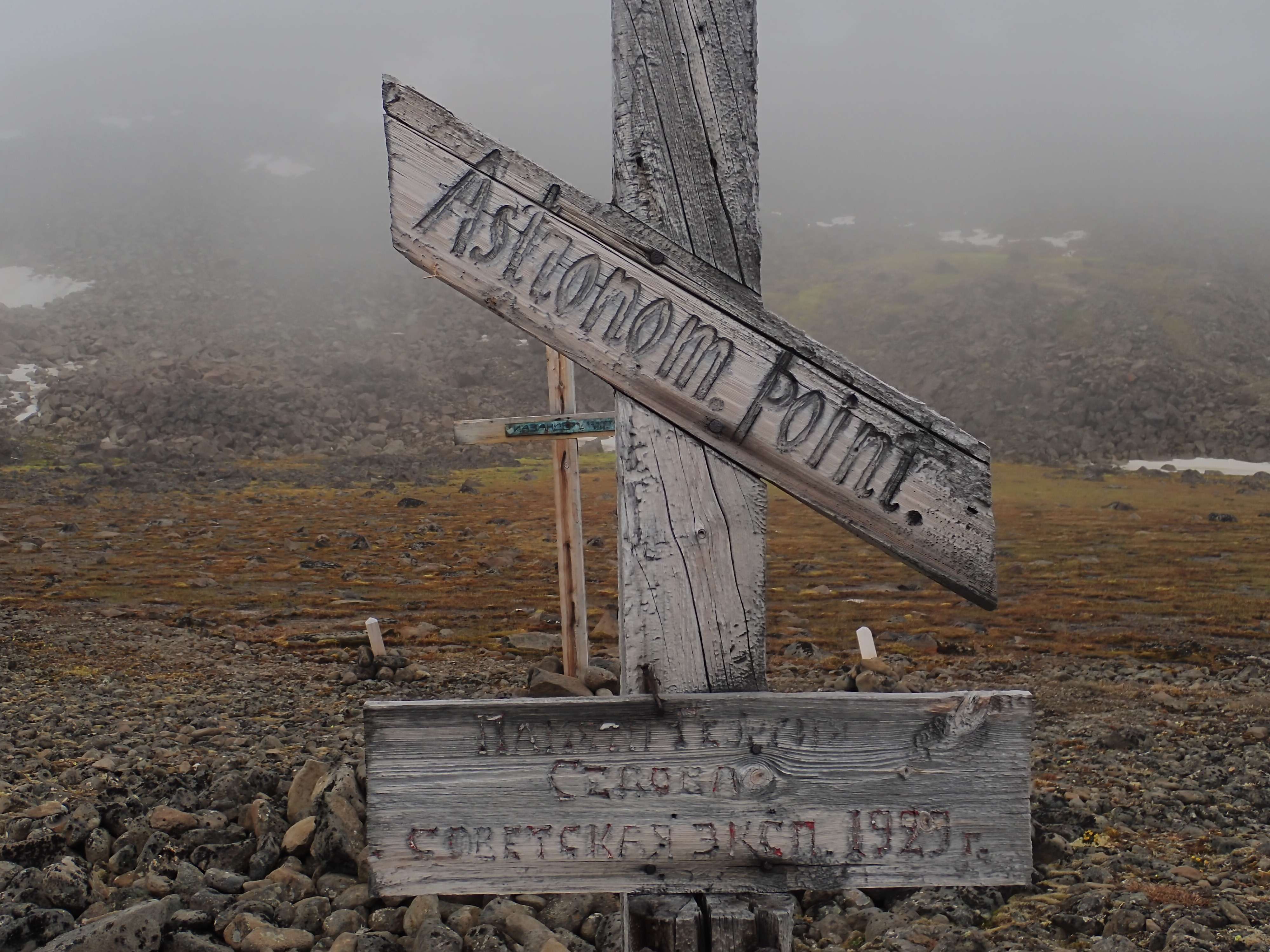
Hide detailsIn front of you is a cross that was placed around 1913-1914 at a site of astronomic determination of coordinates by members of the first Russian expedition to the North pole, led by Georgiy Sedov.
The shape of this cross is traditional in the Orthodox Church. The tradition to place such crosses was widespead among Pomors, coast-dwellers of the northern regions of Russia. The only distinct feature of this cross is the Latin inscription. Latin was chosen purposefully, because at the end of the 19th and the beginning of the 20th century Franz Josef Land was visited by a lot of expeditions from many countries.
Sedov's expedition set off for the Arctic from Arkhangelsk aboard a ship named "Saint Phocas the Martyr" in 1912. But only after the first winter on Novaya Zemlya they reached Franz Josef Land and anchored in a bay located on a west shore of Hooker island for their second winter. Georgiy Sedov named this bay "Tikhaya", which means "Quiet". Their winter was extremely hard because of lack of food and fuel. Members of the expedition mostly got scurvy.
On February 15, 1914 Sedov set off from Tikhaya Bay accompanied by two seamen with their three dog teams. Racked by scurvy, he wasn't able to walk without help. He died near shores of Rudolf Island on the 18th day of their trip.
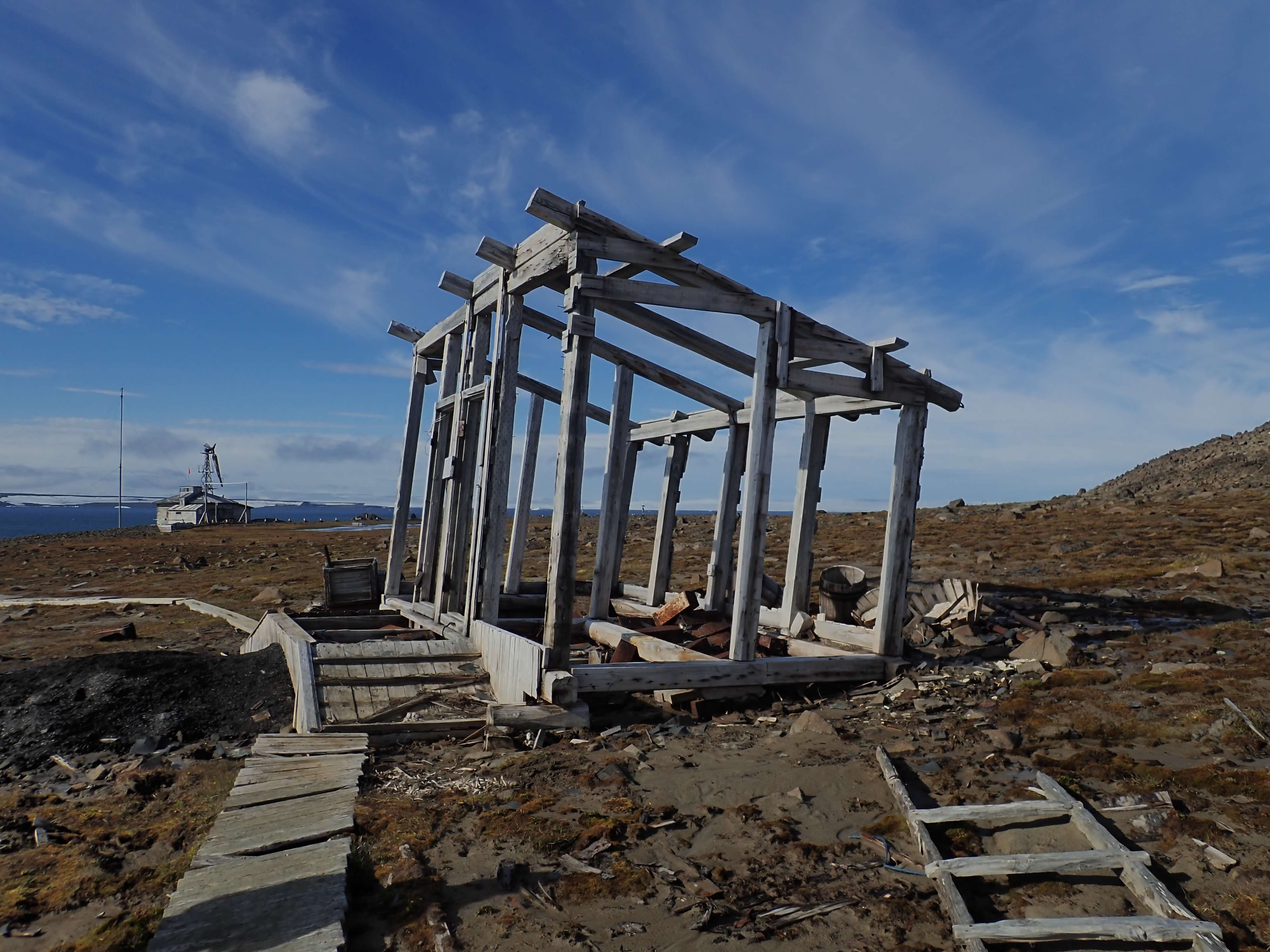
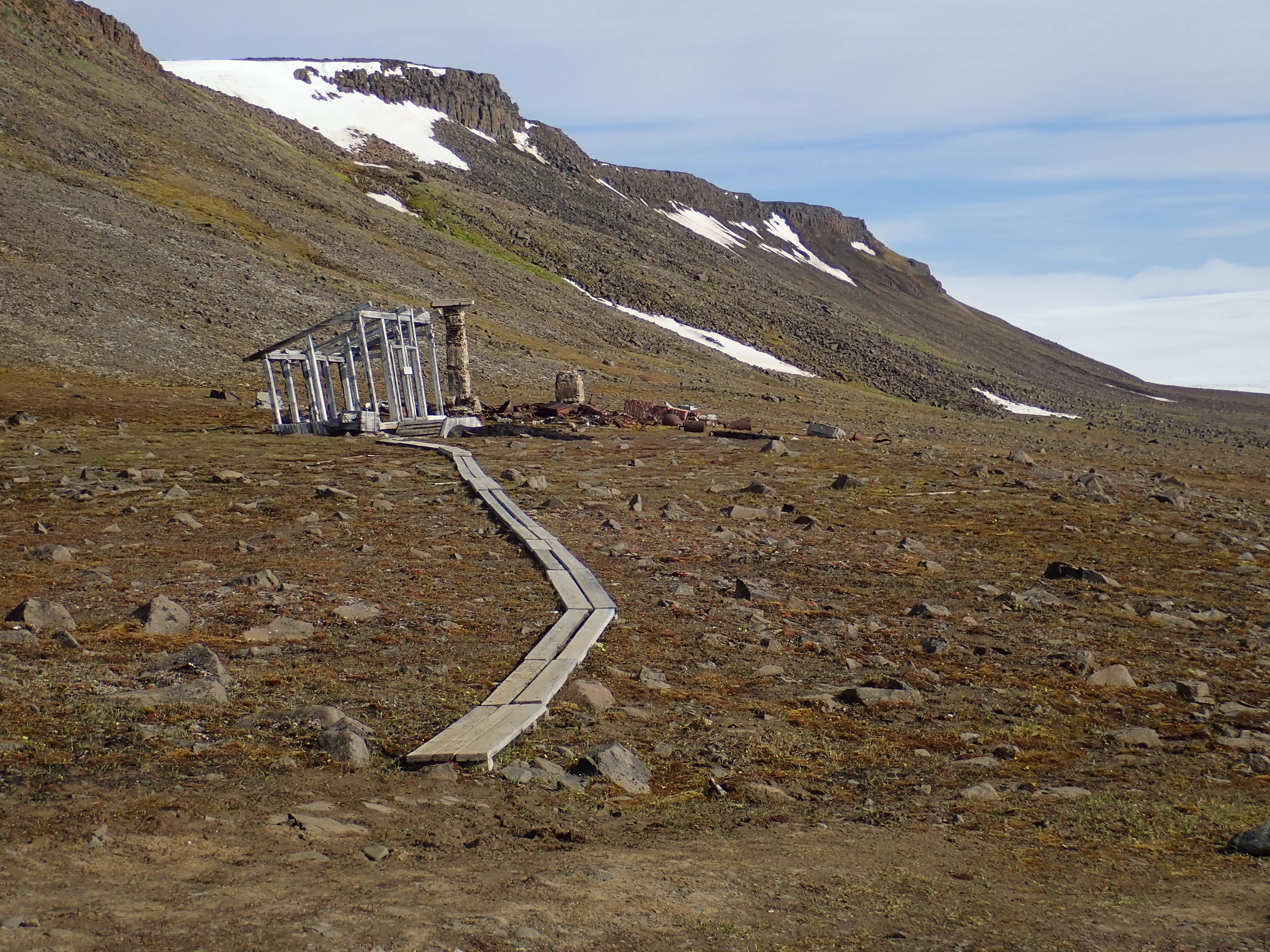
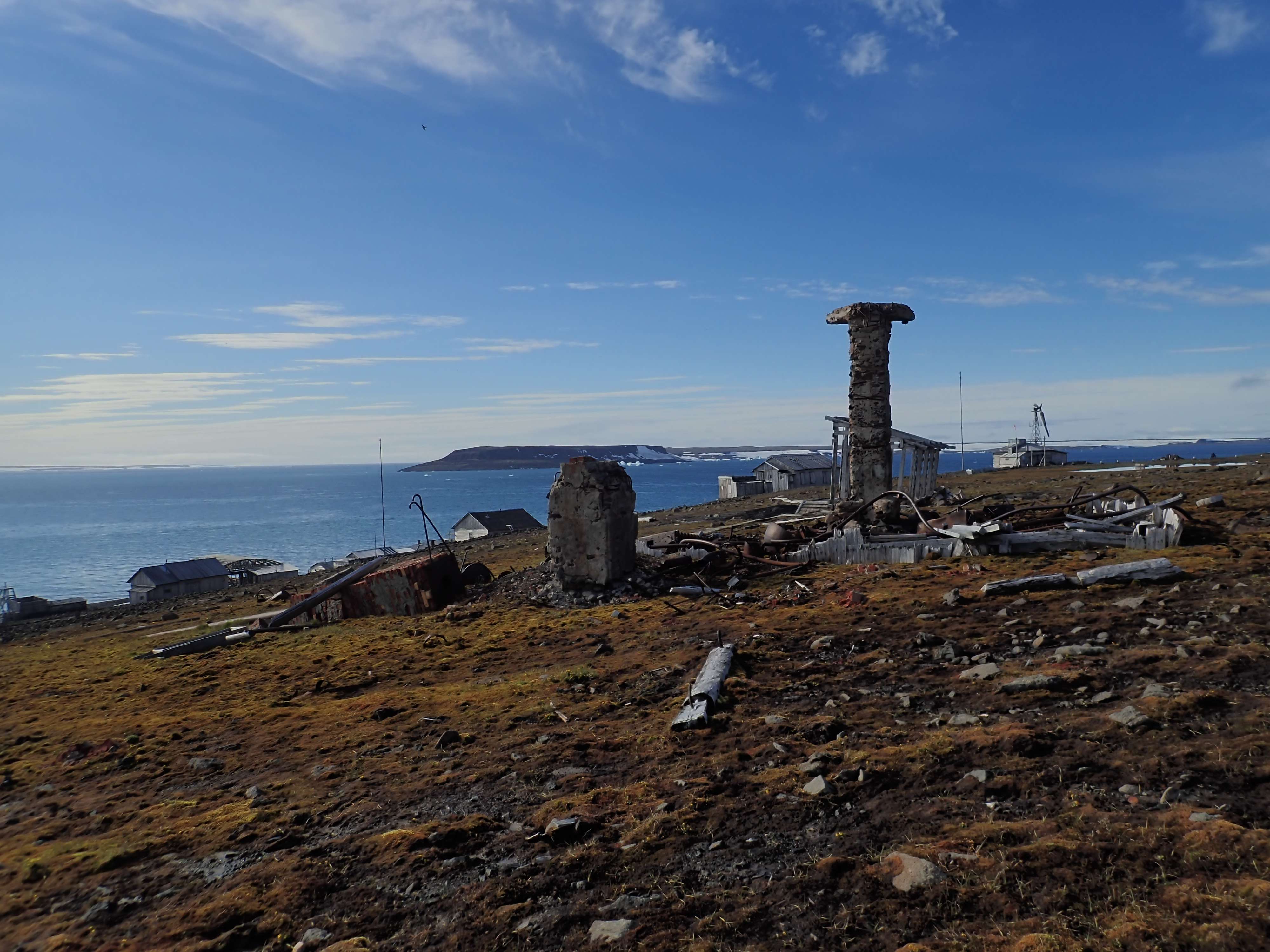
Hide detailsThis is a site where a two-storied building of a space pavilion, built in 1952, once stood. This facility served to register intensity of cosmic rays. Unfortunately, the building and all its equipment was destroyed by fire in 1955.
The pavilion had a shape of cube of 9 m x 9 m x 9 m, with a column made of reinforced concrete that used to be in the center of the cube and survived the fire. This used to be the column for ASK-2, a spherical ion chamber to be mounted. These chambers were designed in Yakutsk with assistance of the Institute of Nuclear Physics at the Moscow State University. They were massive devices in a double-walled metal case. The inside of the chamber was filled with argon, and the space between the walls was filled with lead pellets against background radiation generated by objects around the chamber. Radiation was registered photographically. These researches of cosmic rays from the Sun were secret. In the 1960s, all cosmophysical researches continued at a research observatory "Druzhnaya" located at Heiss Island of Franz Josef Land.
Hide detailsThis atmospheric electricity pavilion was built at the station in 1932 during the International Polar Year. This small framed structure was made for Joachim Scholz (1903 - 1937), who was invited from a geophysical laboratory in Potsdam to conduct a series of observations. At the same time, Kurt Woelken, another German geophysicist, conducted his work at Russian Harbor, another polar station on Novaya Zemlya.
To avoid smoke from a stove that could hinder Scholz in its observations, the pavilion was supplied with electricity for light and heating. Anyway, heating was insufficient and Scholz often had to work in a fur coat. Scholz was the first researcher who conducted a series of comprehensive studies of atmospheric electricity in the Arctic. He studied conductivity of air, atmosphere ionization, electric charge of snow, properties of the penetrating radiation, ozone in the atmosphere, and other fields. He developed new research methods, designed instruments to measure atmosphere ionization, counters of aerosol particles, and other devices which later were used widely around the globe. Apart from their research work, all polar explorers, including Joachim Scholz, were involved in general duties of construction of the station's facilities. They tirelessly hoisted logs, planks, fuel and spare parts of planes, loaded all these goods on boats and brought them to the shore.
In the 1950s, the pavilion was completely repaired and converted into a residential house. But it was still used to store tools for subsidiary work.
Hide detailsThis residential house was designed in Finland and built from 1951 to 1952 for members of an expedition sent by the trust "Arctical reconnaisance" to conduct aerial photography and geological survey on Franz Josef Land. It is one of the most recent buildings at Tikhaya Bay. The house has living quarters, a kitchen and two entrances equipped with tambours. It was heated with Dutch ovens. In the 1950s it was used to accommodate young workers who did not have a family.

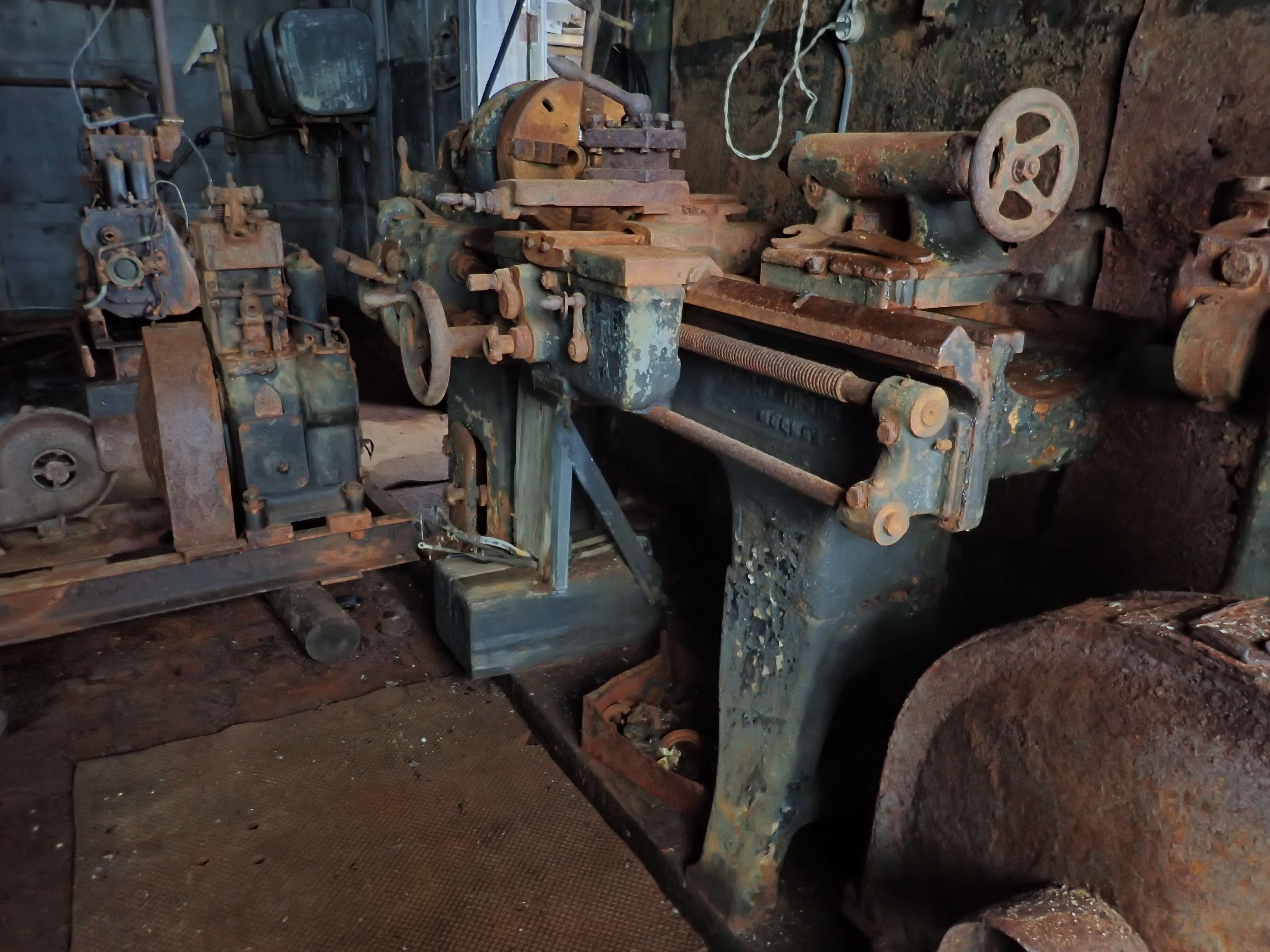
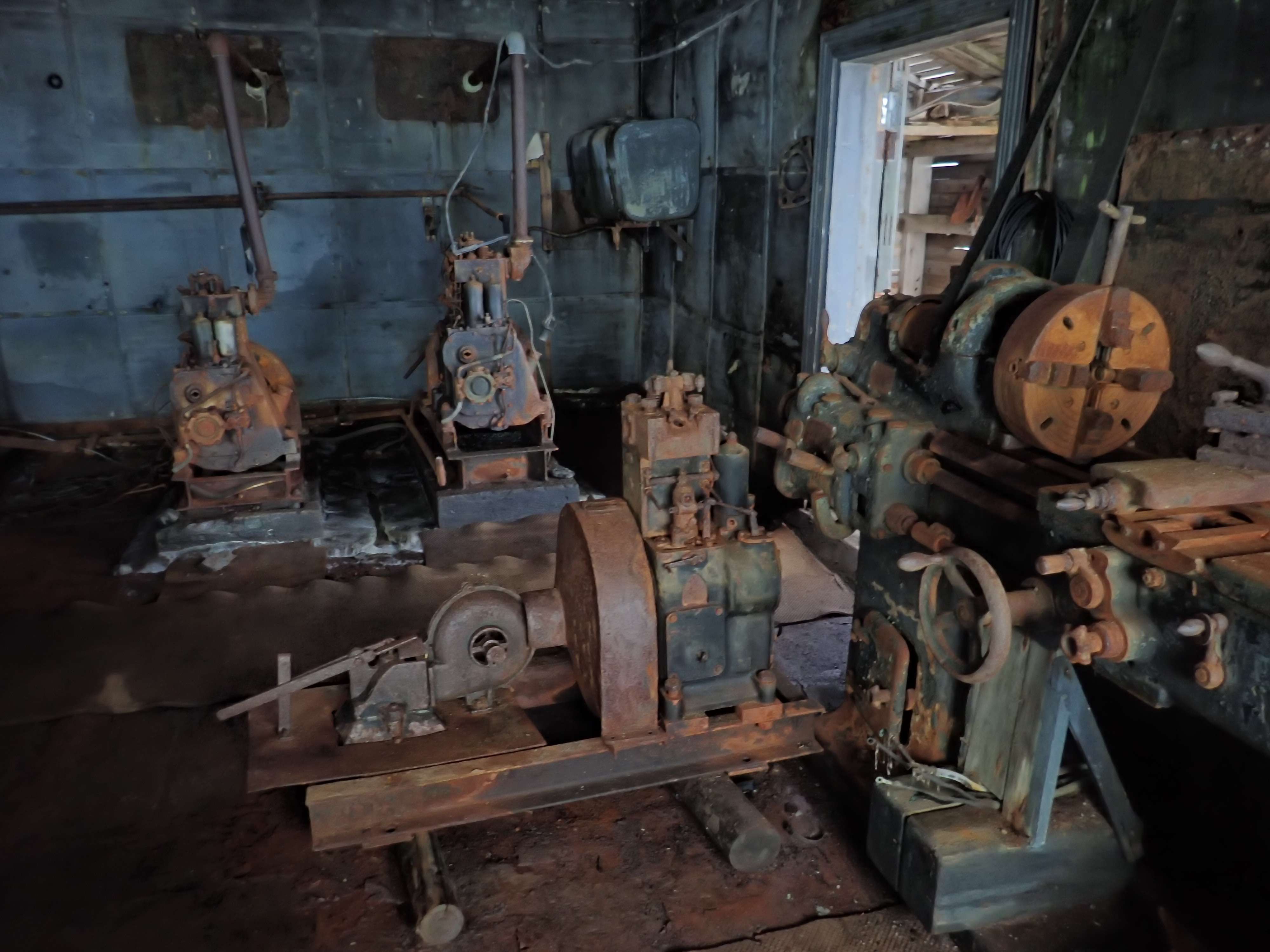
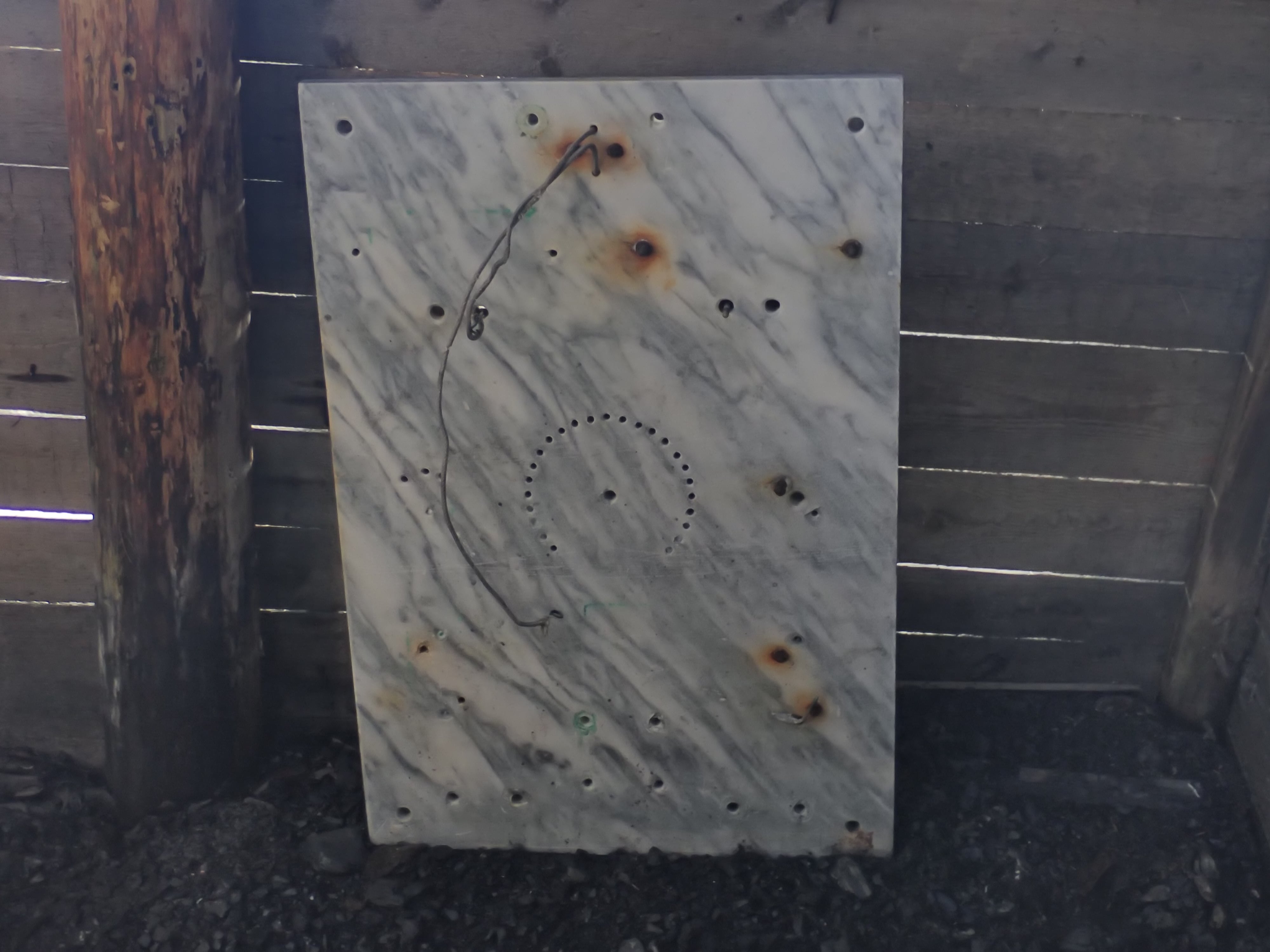
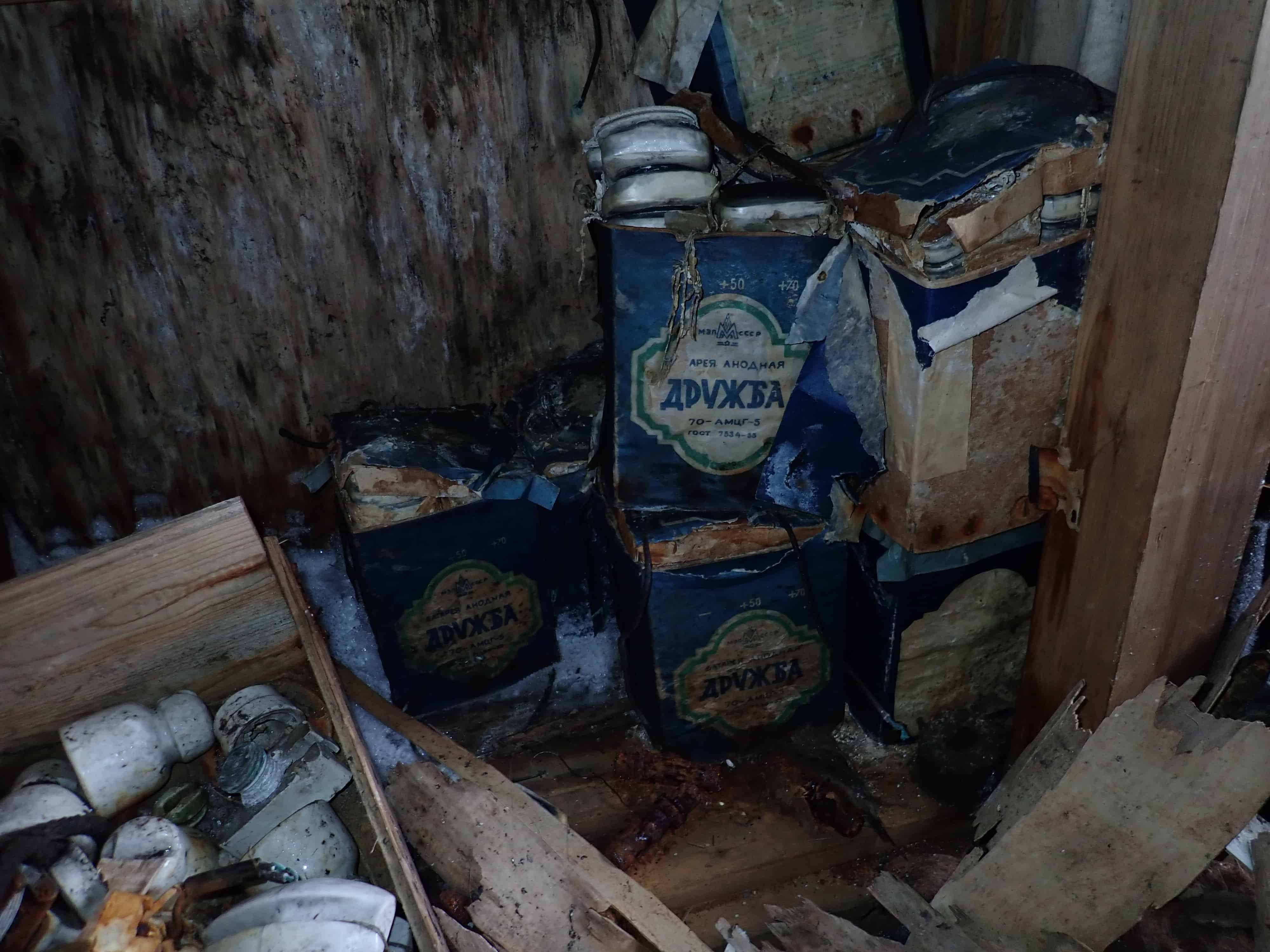
Hide detailsElectric power equipment was necessary for the station to operate properly. From the late 1920s to the early 1930s, electric power plants in the Arctic were a real hi-tech technology. At first, an electric generator and accumulator batteries for a radio transceiver were placed in a radio room. As the station built up, a decision was made to make a new building for the electric power plant. Another important task was to reduce inducing in sensitive equipment of an ionospheric department.
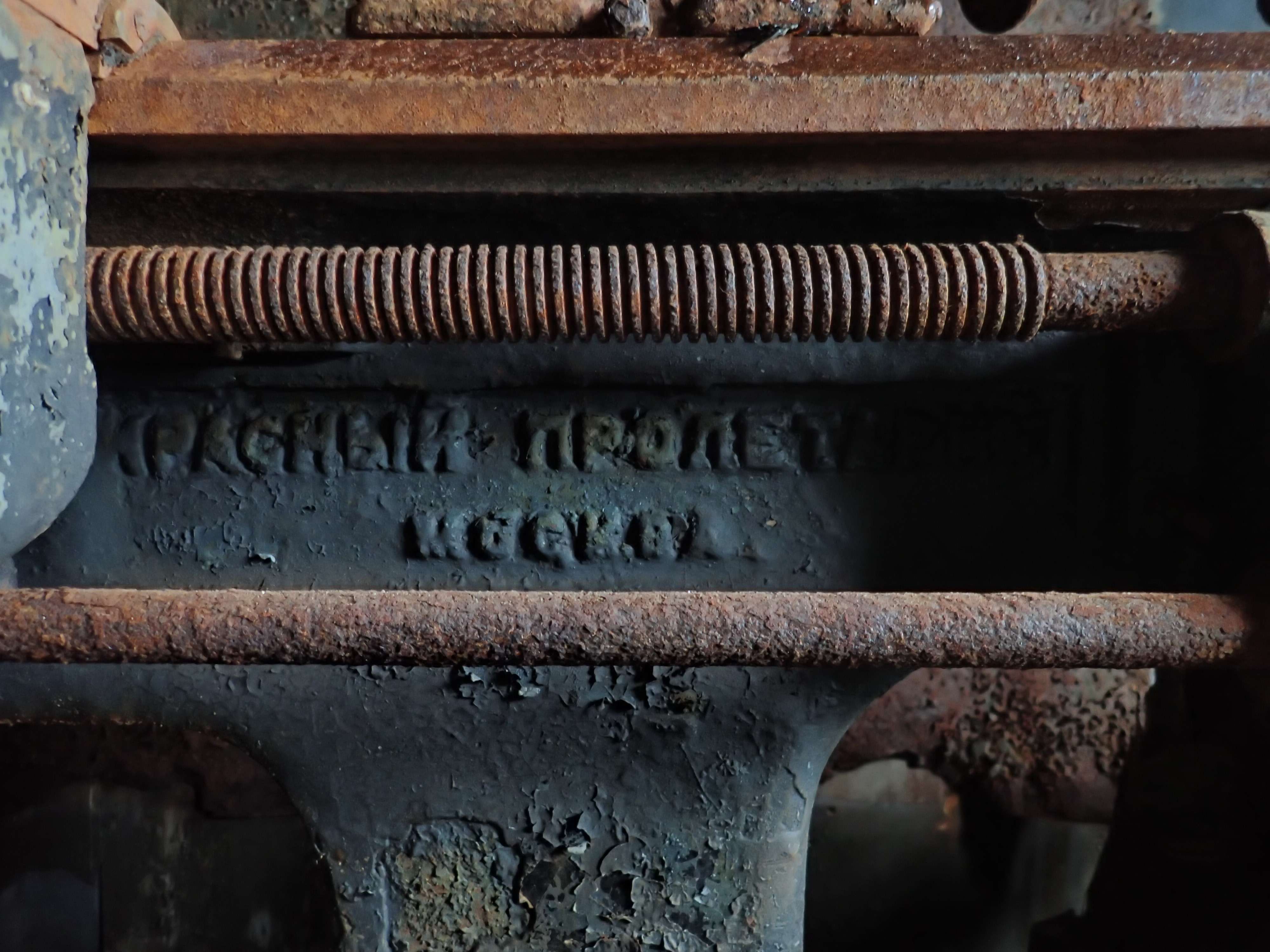
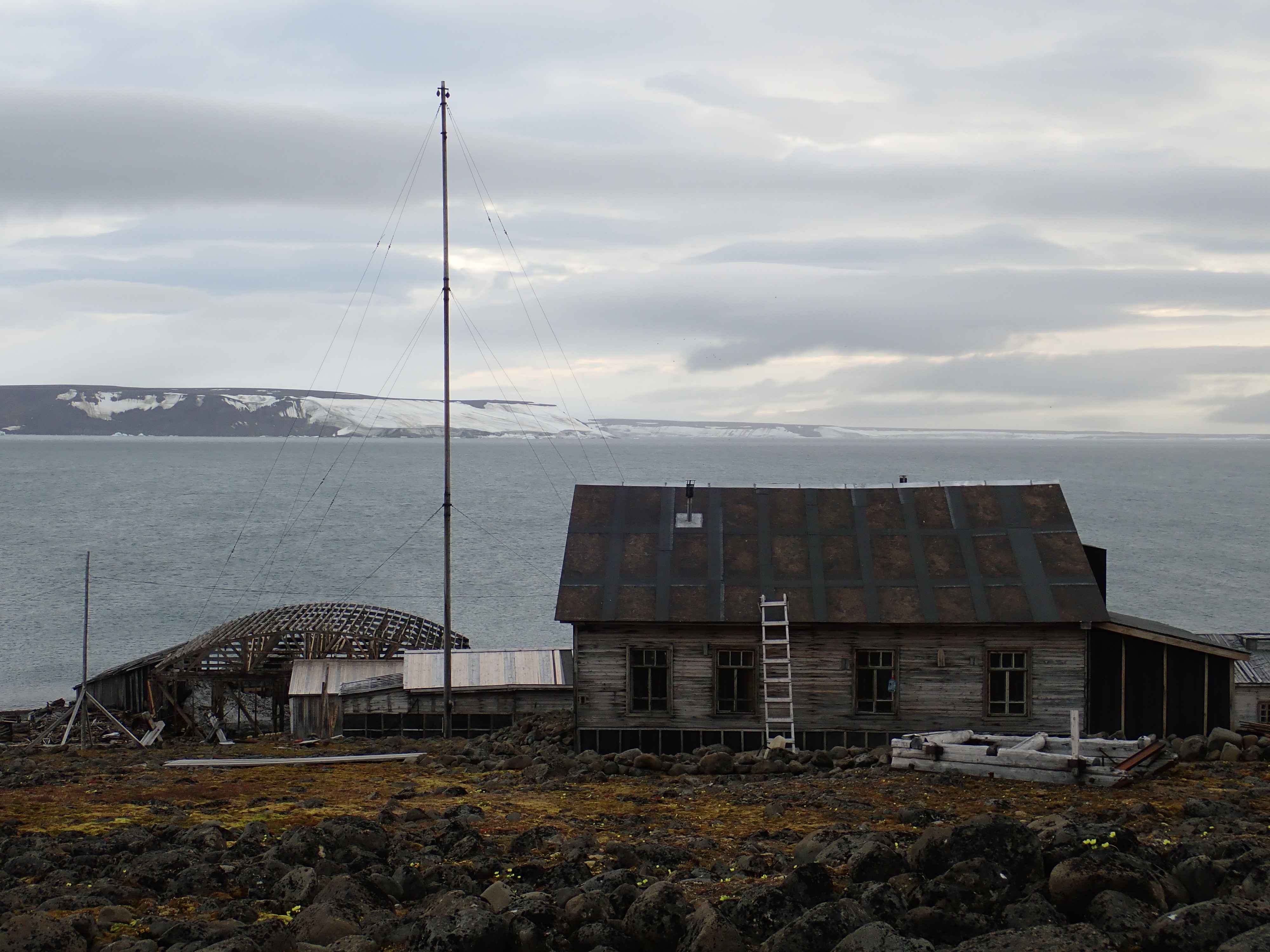
The building for the electric power plant and machine shop was constructed near windmill's mast during the winter of 1940-1941. It contained a machine hall for electric generators and machine shop, and a living room for mechanics. There was a main accumulator battery in the machine shop to store energy generated by a windmill which was installed in 1939. In 1952, after a major repair, the accumulator room was relocated from the machine shop to a specially made additional building.
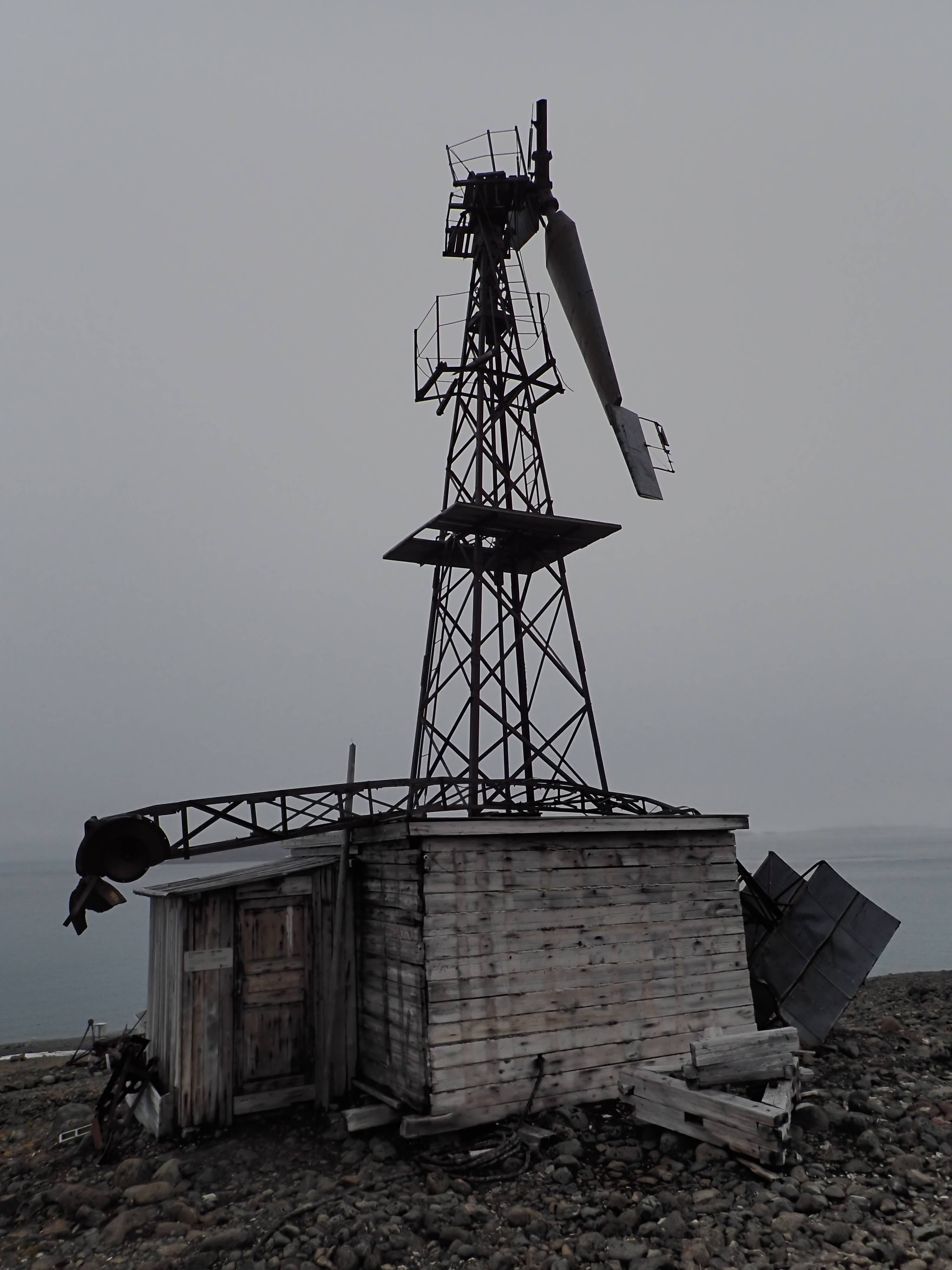
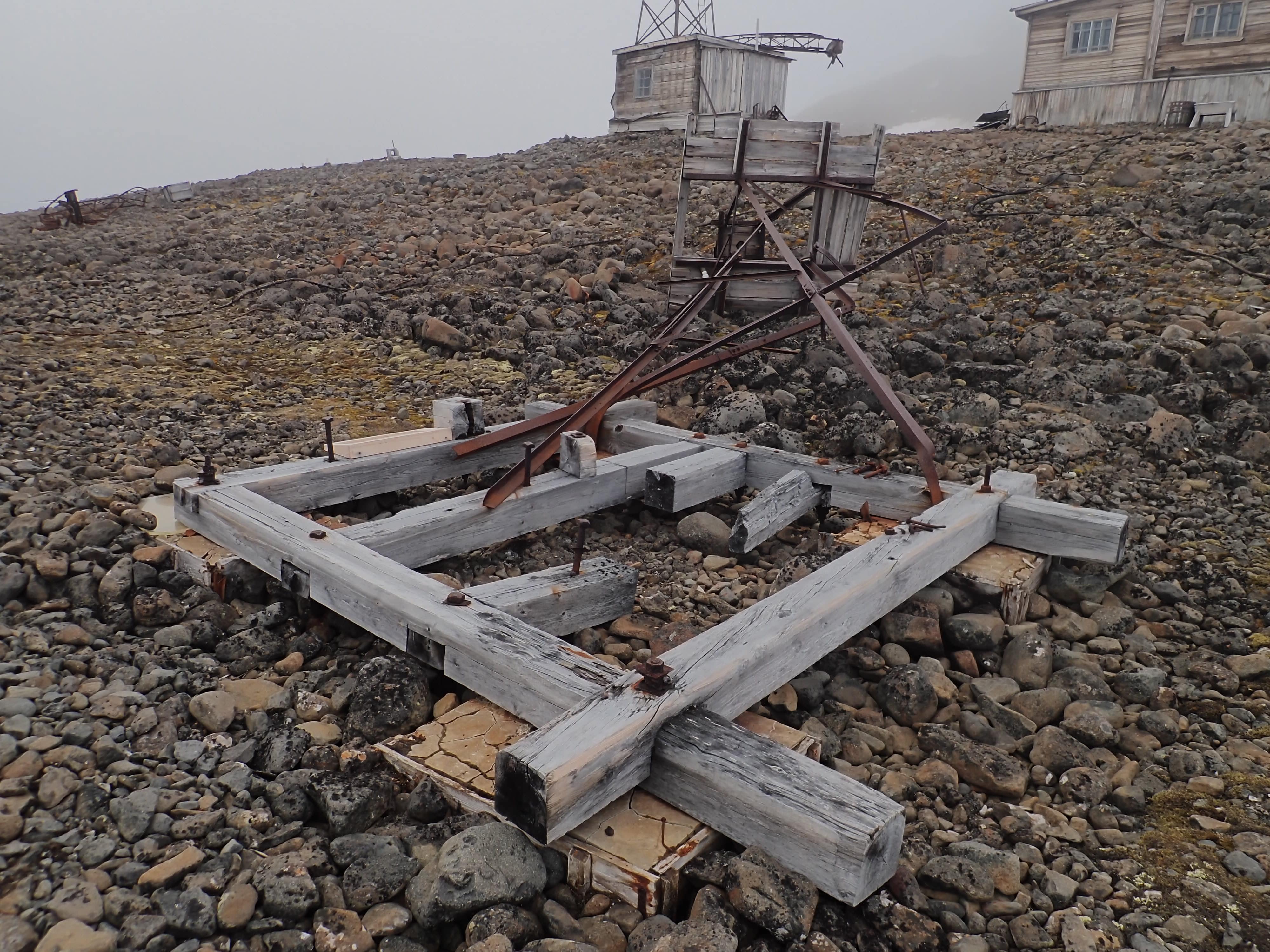
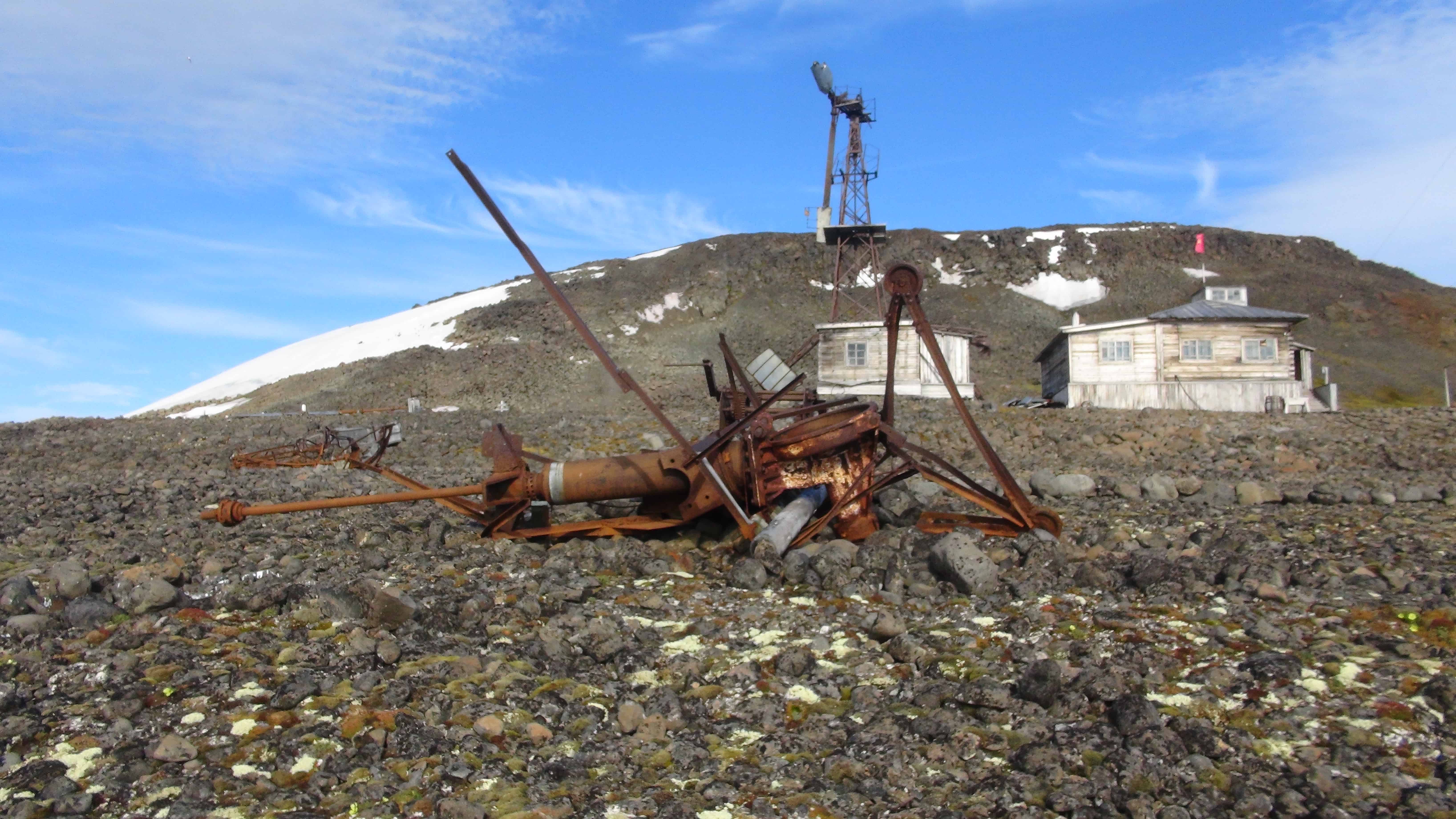
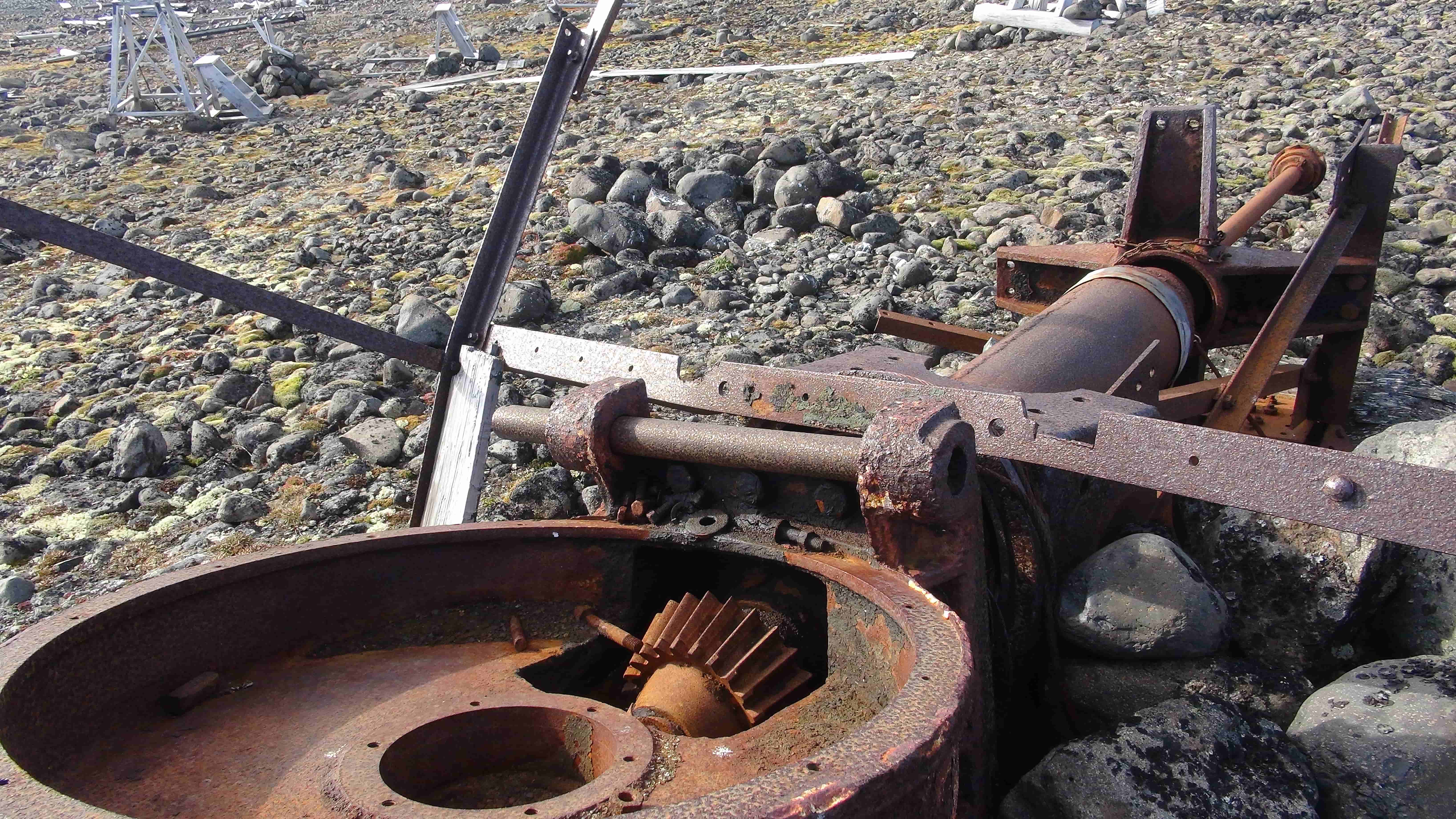
Hide detailsIn the 1930s, the Soviet Union actively experimented with alternative sources of energy to supply Arctic polar stations with electricity. The first windmill was built at the station from 1932 to 1933 during the International Polar Year.
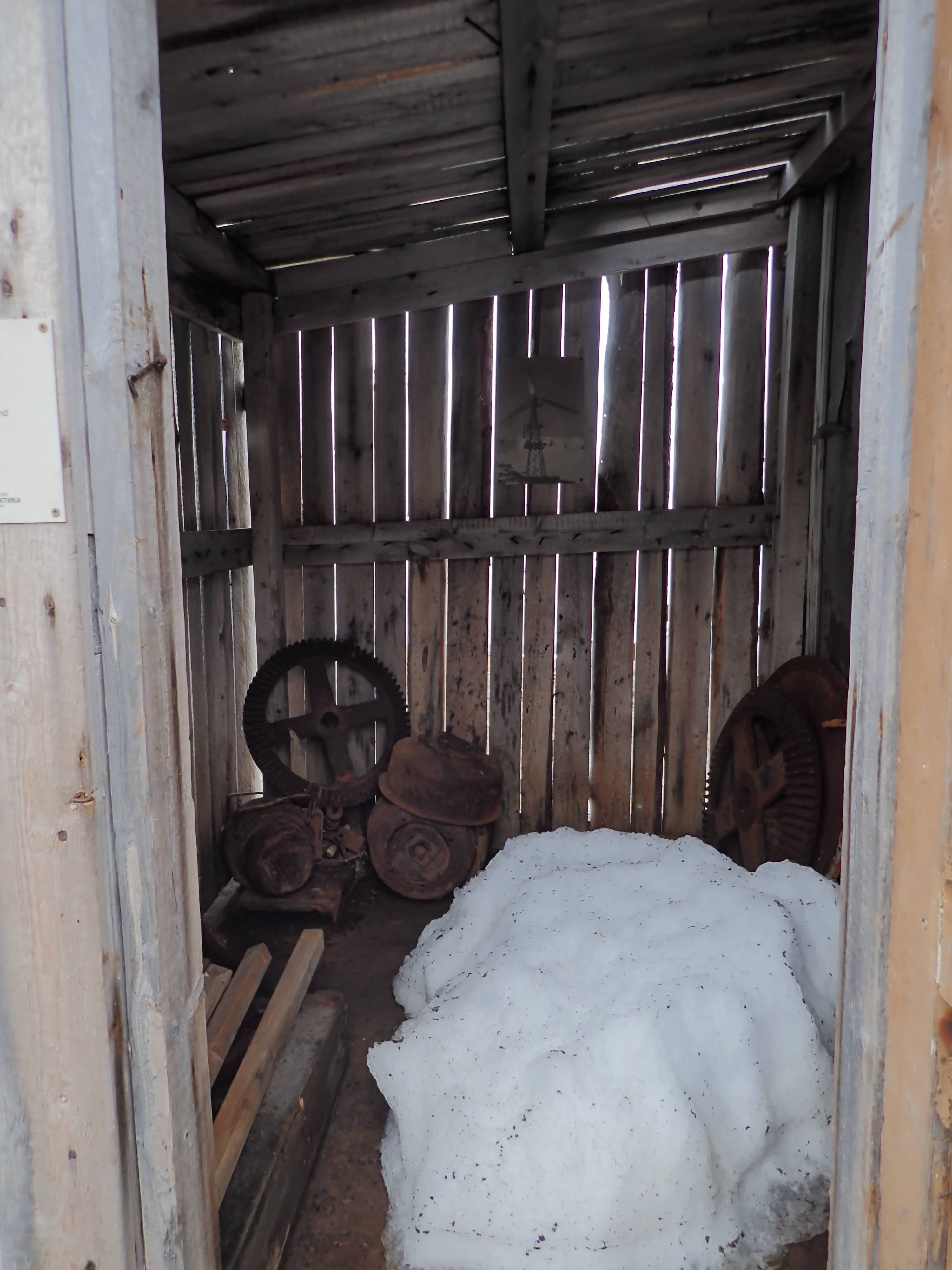
It was an American windmill, poorly adapted for Arctic conditions. In 1939 a new Soviet wind-powered engine of D-12 model was shipped and mounted at the station. It had a mast 12 meter high, with a wind-wheel 12 meter across and maximal power of 7,2 kw. The windmill was mounted by two shifts of winterers led by Boris Kremer, a famous Soviet polar explorer who carefully considered skills, experience and interests of all workers. Some of the most difficult tasks were carried out with an all-out effort. Fastening a mast of the windmill required an ingenious approach. After it was set upright, its piles in a two-meter deep foundation pit were bound with rectangular timber, then the pit was backfilled with stones and sand, layer by layer. After ramming of each layer, it was poured with water. As the water froze, the backfilling turned into a solid monolith. Then the pit was covered with a frost-protection layer of sawdust, and construction of a house continued upon it.
The windmill supplied the station with up to 75% of the electricity it needed. Its importance grew significantly during the time of the Great Patriotic War, when fuel supply was scarce. In these four hard years the station staff didn't lose a single person, successfully kept scientific observations and contributed a great deal to sea and airborne operations in the Arctic.
In 1954, a new windmill of the same D-12 model was shipped to the station. It was decided to partially dismantle the old mast to lower it to about one meter above the roof. To set a mast upright, "piles" of old and new towers were connected with joints. The new windmill picked up the baton from the old one. It served well until 1960 when the Tikhaya Bay station was closed down.
Hide detailsThis residential house was built in Arkhangelsk and then shipped in a disassembled state. The destination point was a polar station at Rudolf Island. But this island wasn't reached because of severe ice conditions, and three ships had to winter at Tikhaya Bay from 1937 to 1938.
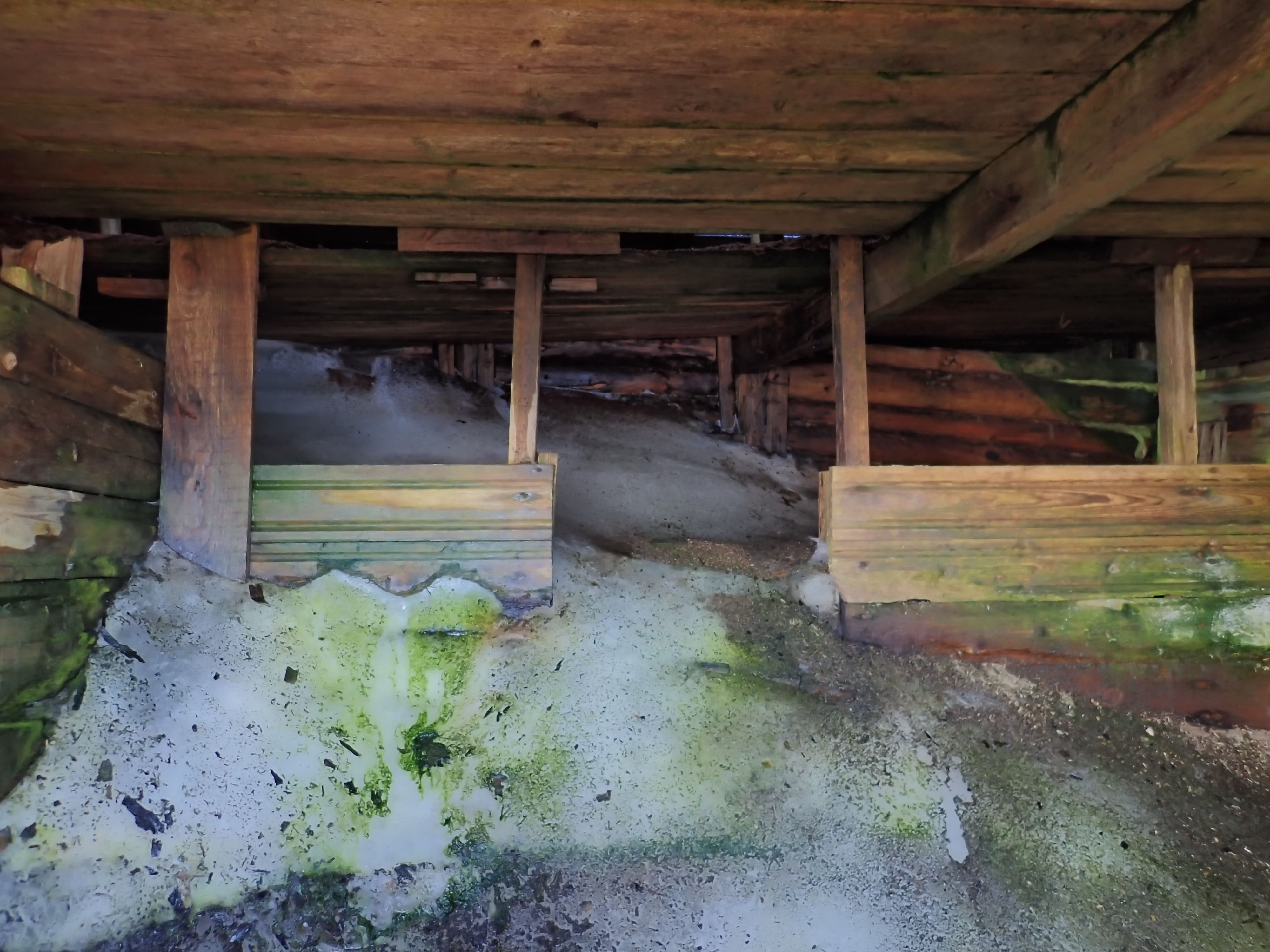
The station had to accommodate a record-breaking number of 87 people while the basic staff number used to be 16 workers. Ivan Alexanrovich Kopusov, the head of the station, pushed an idea to unload and assembly the house at Tikhaya Bay. It was done in the autumn of 1937. This was a residential house for family workers of the station. The Soviet government encouraged the involvement of women in the Arctic, they worked at the station as scientists, observers, doctors, cooks and even stokers. It was considered that the woman can turn the station into a more cultural, homelike and comfortable place. People joined together to hold holidays, birthdays and family celebrations. While the Tikhaya Bay polar station functioned, more than ten children were born. In the early 1950s, there were six children at the station, from age one up to five. Despite polar bears, children often used to walk around the station as they grew up a little, but they never left its limits. Winterers' best qualities were reflected in their attitude towards pregnant women, young mothers and their children. The first child that was born at Tikhaya Bay was the daughter of Iosif Bitrikh, the head of the station, and Evgeniya Simtsova, his wife. The girl was born on April 27, 1935. At a general meeting of winterers they chose a name "Severina" (Sever means North). After the station was closed down in 1960, the family house filled with ice and snow up to its roof. After the station was deconservated in 2012, all the ice and snow were removed, the house was dried up and restored. Now it serves to accommodate workers of Russian Arctic National Park.
Hide detailsIn front of you is a building of a food warehouse that was built in 1929 during the first winter at Tikhaya Bay. The station had always a food stock for several years because of troublesome shipping at high latitudes and a risk of severe ice conditions, in which ships would not come through to the station. For example, in the 1930s a group of winterers led by Aref Ivanovich Mineev had to winter for five years at Wrangel Island located in the east part of the Arctic, because ice made it impossible for ships to come to the island.
During the first winter at Tikhaya Bay the explorers accumulated food stock for three years, and they constantly replenished it later. Sometimes the warehouse was overstocked with food left from previous winters. In this case, food was discarded or used as fodder for cows and pigs kept at the station for a balanced diet. In the 1930s, the polar explorers ironically nicknamed the warehouse "Torgsin" ("Trade with foreigners") by analogy with Soviet shops with the same name, where foreign visitors and Soviet citizens who had foreign currency could buy hard-to-get goods.
It should be noted that in the 1930s, polar stations had excellent supply whereas in central regions of the country food was scarce, and sometimes it even came to hunger. The station had a cook in its staff, people were provided with good food, any cases of scurvy were monitored and prevented. Now workers of the Russian Arctic National Park use the warehouse for the intended purpose, that is, food storage.
Hide detailsThe only facility for the polar station to communicate with the mainland on a regular basis was radio. Winterers used it to learn news and send weather reports. In front of you is a radio station building, which was built during the first winter in 1929. The building was repeatedly expanded and repaired. It accommodated a radio transceiver, electric power equipment, a radio repair shop and living quarters for radio operators and mechanics.
Ernst Teodorovich Krenkel, the famous Soviet radio operator, was a radio operator of the first shift of winterers at Tikhaya Bay. On January 12, 1930, he set a world record in a radio range. He used a short-wave transmitter and managed to connect from Tikhaya Bay to Richard Byrd, an admiral who was at an American base in Antarctica, 20,000 kilometers away. This record remains unbroken to this day.
In the 1930s, as a sprawling net of radio stations was set in the Arctic, polar explorers at Tikhaya Bay used radio to communicate with other polar stations. The Tikhaya Bay station usually had permanent connection with stations Rudolf Island at Franz Josef Land, Mys Zhelaniya and Matochkin Strait on Novaya Zemlya, and Barentsburg on Spitsbergen. Radio communication was used to exchange information about weather, ice conditions and winter issues. Radio was also used to arrange for socialist emulations between polar stations. The challenge for explorers was to become the leading polar station that carries out all their tasks as quickly and efficiently as possible. The explorers also conducted radio chess tournaments. They could hear their friends and relatives from towns scattered across the Soviet Union, and talk to them at specially arranged radio transmissions. As the winterers remember, these exchanges of radio messages where they could hear voices of their friends and relatives, played a huge role in their polar life.
Radio operators' job was one of the most difficult at the station. Not only did they have to regularly send weather reports on a strict schedule, but they also had to receive and send a lot of cables and messages, not to mention the maintenance of all radio installations they were responsible for.
The explorers also conducted researches to study radio-wave propagation and ionosphere. These researches started during the International Polar Year from 1932 to 1933.
Hide detailsThis actinometric pavilion was built at the station during the International Polar Year. Its building was repaired and rebuilt several times until the middle of the 1950s. The term "Actinometry" goes back to Greek "Actinos", which means "Ray".
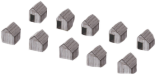
This science is a branch of geophysics concerned with the processes of energy transfer and transformation of solar power on the Earth, and radiation of energy of the Earth. This pavilion used to be an observation point for solar activity. Its flat roof served as a site for instruments. The most important of them was a heliograph, an instrument with a ball lens which concentrates sun rays on a cardboard band separated into time zones, to automatically register the daily duration of the shining Sun. As the Sun moves, the lens burns a clearly visible trace on the band.
Other instruments, such as actinometers, photometers, pyranometers, were also used. To study nocturnal radiation, some observations were performed even during the hours of darkness. An object of study was albedo of snow, that is, its reflection power.
One of the reasons why the Tikhaya Bay polar station was closed down in 1960, was that its observations weren't relevant enough. As it was found back in the 1930s, nearby elevations of landscape fence the station's horizon and cast shadows, making actinometric researches troublesome.
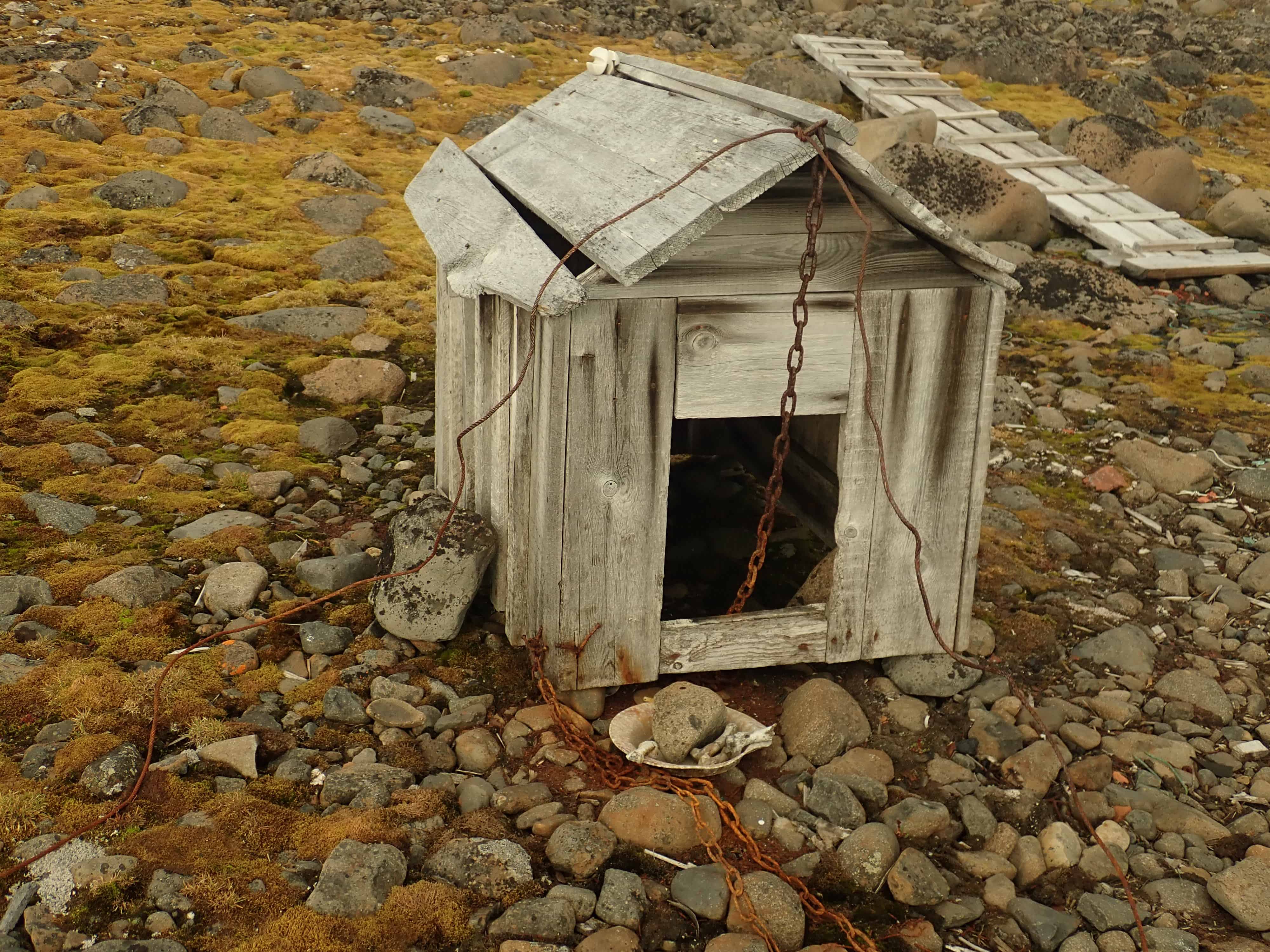
Hide detailsFrom the 1930s to the 1950s dog sleds were irreplaceable means of ground transportation. They were used for polar expeditions to explore islands, as well as bringing observers to assigned points, including ice domes.
Dogs also warned polar explorers when dangerous polar bears came too close. Dogs were helpful to improve a psychological state of winterers during periods of isolation. When children were born at the station, dogs helped nurse and guard them. Population of dogs at Tikhaya Bay varied from 10 to 50. They were used for hunting and transporting game. The number of polar bears killed annually from the 1930s to the 1950s varied from 10 to 15. Winterers used fleshy parts of paws as food, and the dogs got the rest. They also got meat of the few walruses and seals the winterers occasionally hunted for. The first winter shifts were staffed with a dog-team driver whose job was to attend to the dogs, to feed them and to maintain sled expeditions. There are still 11 wooden kennels at the station. As you can see, there are feeding bowls and parts of chains near them.
Hide detailsIn 1932 the Second International Polar Year took place, a coordinated international scientific program of researching polar regions of our planet. To meet the requirements of this extended international program, the staff of winterers at the Tikhaya Bay polar station had to be substantially supplemented. The process of transforming a little weather station into a large geophysical laboratory was led by the famous Soviet polar explorer Ivan Dmitrievich Papanin, who was also in charge of a winter shift from 1932 to 1933.

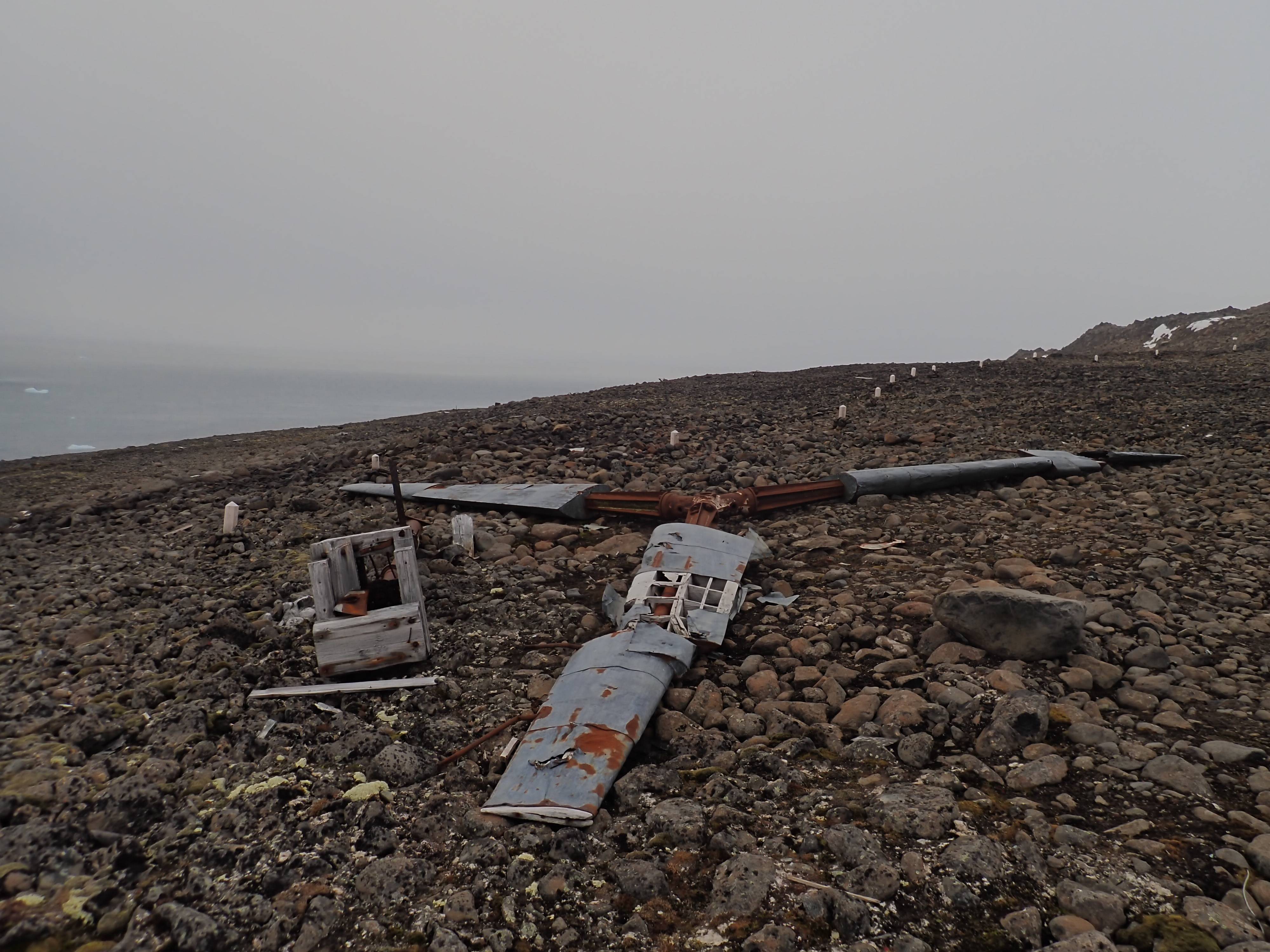
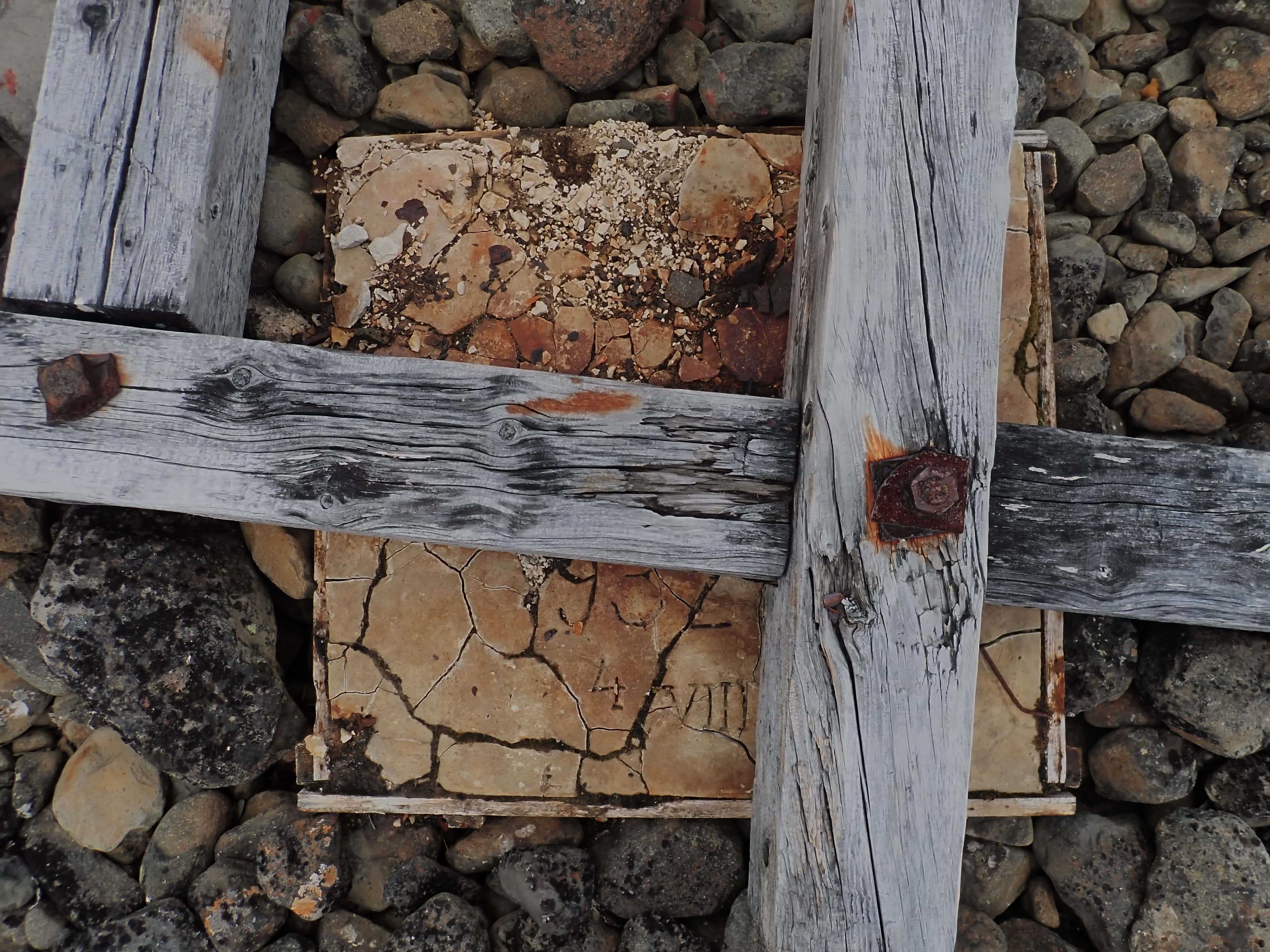
Polar stations were always in an acute need for power supplies. Supplying combustion engines with fuel was a difficult task because it had to be shipped through arctic seas. To contribute to a solution of this issue, staff of polar stations actively experimented with alternative sources of power. For example, in 1932 an American wind-powered engine produced by "Perkins Windmill Co" was installed at the station. Its power was 2,5 horsepower. This "Papanin's windmill" had a mast about 10 meter high, with a multi-blade windwheel about 5 meter across. A concrete foundation of one of its three mounts has an inscription: "Placed by Ivan Dmitrievich Papanin, a Chief of Franz Josef Land. August 4, 1932".
But this windmill turned out to be a disappointment. It ran quite unpredictably and soon it broke down. Wind gusts accelerated it too fast, while during a gentle breeze its wheel almost came to a stop. Its use was complicated because it couldn't generate stable current. Because of winds the mast fell down back in the 1990s. But this experience was helpful: in 1939, a Soviet wind-powered engine of D-12 model, was put into use at the station. It served well for many years until 1960 when the station was closed down. You can see its structure at the station.
Hide detailsNow we are at a meteorological site of the Tikhaya Bay polar station. Meteorology is a science concerned with the processes in the lower atmosphere. Every polar station is built upon meteorological observations of temperature, relative air humidity, atmospheric pressure, precipitation amounts, wind speed and directions. The first event in a history of any polar station is its first weather report. From Tikhaya Bay, this report was sent on August 30, 1929.
The distinct feature of the site are elevated booths. They contain thermometers and psychrometers (instruments to determine relative air humidity). Walls of the booths are vent-filtered. Other thermometers were used to measure ground temperature. Snow depth used to be measured with snow scales. Wind directions used to be determined with Wild's anemometer, parts of which still remain at the station.
A meteorologist on duty had to collect instruments' readings on schedule for an encrypted radiogram to be sent to the Weather Bureau on the mainland.
Barometers and self-recording instruments which continuously registered atmospheric pressure on paper tapes, were installed not on the meteorological site but in a meteorological room in a laboratory building.
During the Second International Polar Year, an extra meteorological site was organized on a ice dome of Sedov's glacier. Its location was 316 meters above the sea level. Cloud studies were an important part of the Polar Year's program, so duties of polar explorers also included sketching them and taking photographs.
Meteorologists at the Tikhaya Bay station kept working even in disastrous time of the Great Patriotic War, when supplying and shift changing were a great problem.
Big array of meteorological data collected by polar stations and expeditions of the 1930s and 1940s, was processed by scientists of the Arctic Research Institute led by Georgy Yakovlevich Vangengeim. It enabled them to make long-term weather forecasts in the Arctic much more effectively.
But by the late 1950s it was clear that weather data collected at Tikhaya Bay are not an exact representation of weather conditions of Franz Josef Land, because the bay was well-fenced from winds and had its distinct microclimate. So a decision was made to relocate the entire observation facility from Tikhaya Bay to an arctic observatory "Druzhnaya" at Heiss Island. It began to operate in 1958.
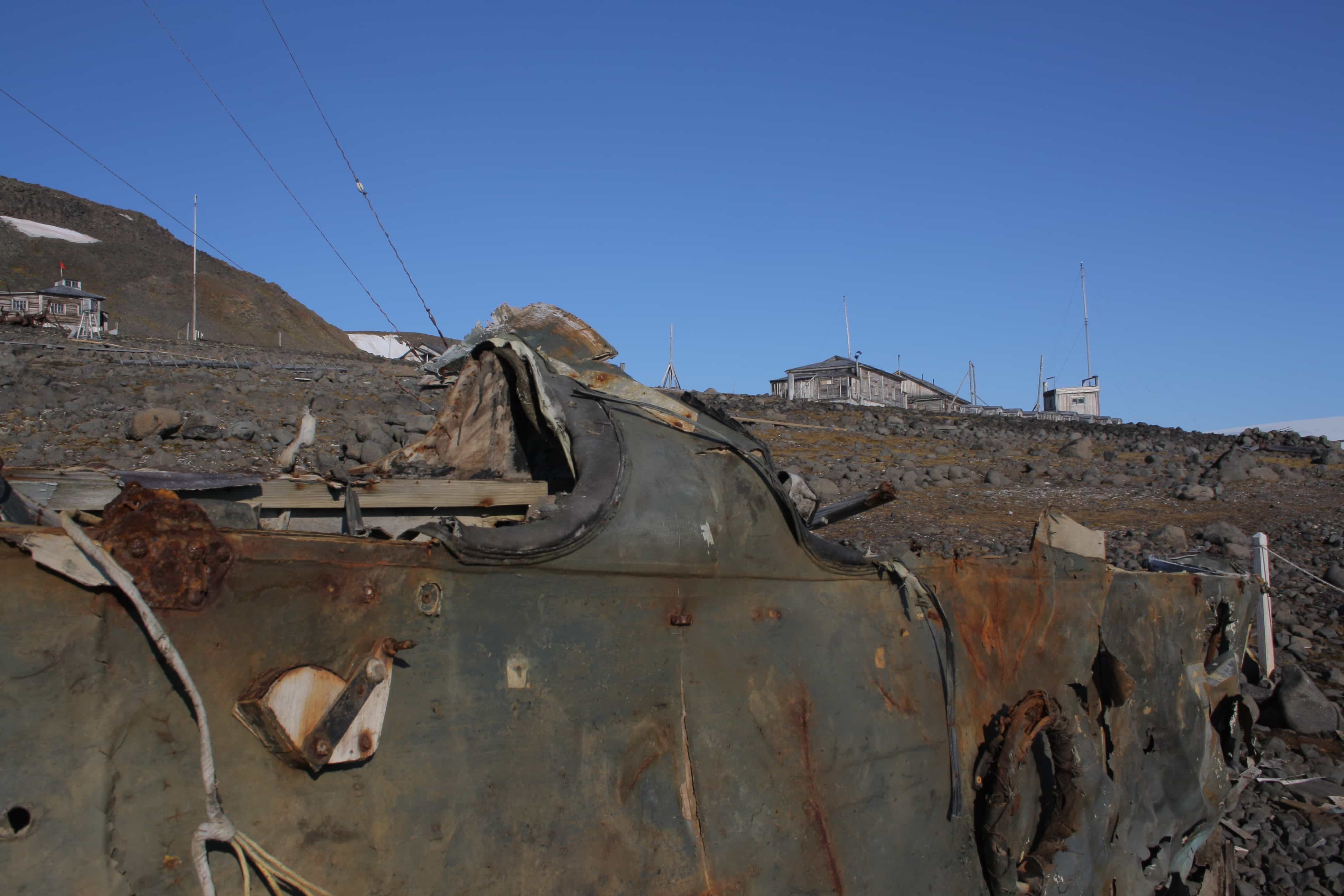
Hide detailsAt the Tikhaya Bay polar station, some parts of two Po-2 airplanes remained. These planes were used at the station after the end of the war.
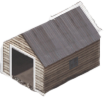
Po-2, also known as U-2, was a Soviet multirole biplane, designed by Nikolay Nikolaevich Polikarpov in 1927. It is one of the most produced aircraft in history. Po-2 was manufactured until 1953, and its production figures are about 33,000. Originally it was designed as a military trainer airplane, but then was widely adopted for various purposes, ranging from military tasks to the application of fertilizers and harvest sprays to control weeds and insects, for which it was nicknamed Kukuruznik, or "Crop duster". U-2 also served as a medevac and liaison aircraft. During the Great Patriotic War, they were used for bomb raids in the middle of the night. It was also widely used in Soviet polar aviation.
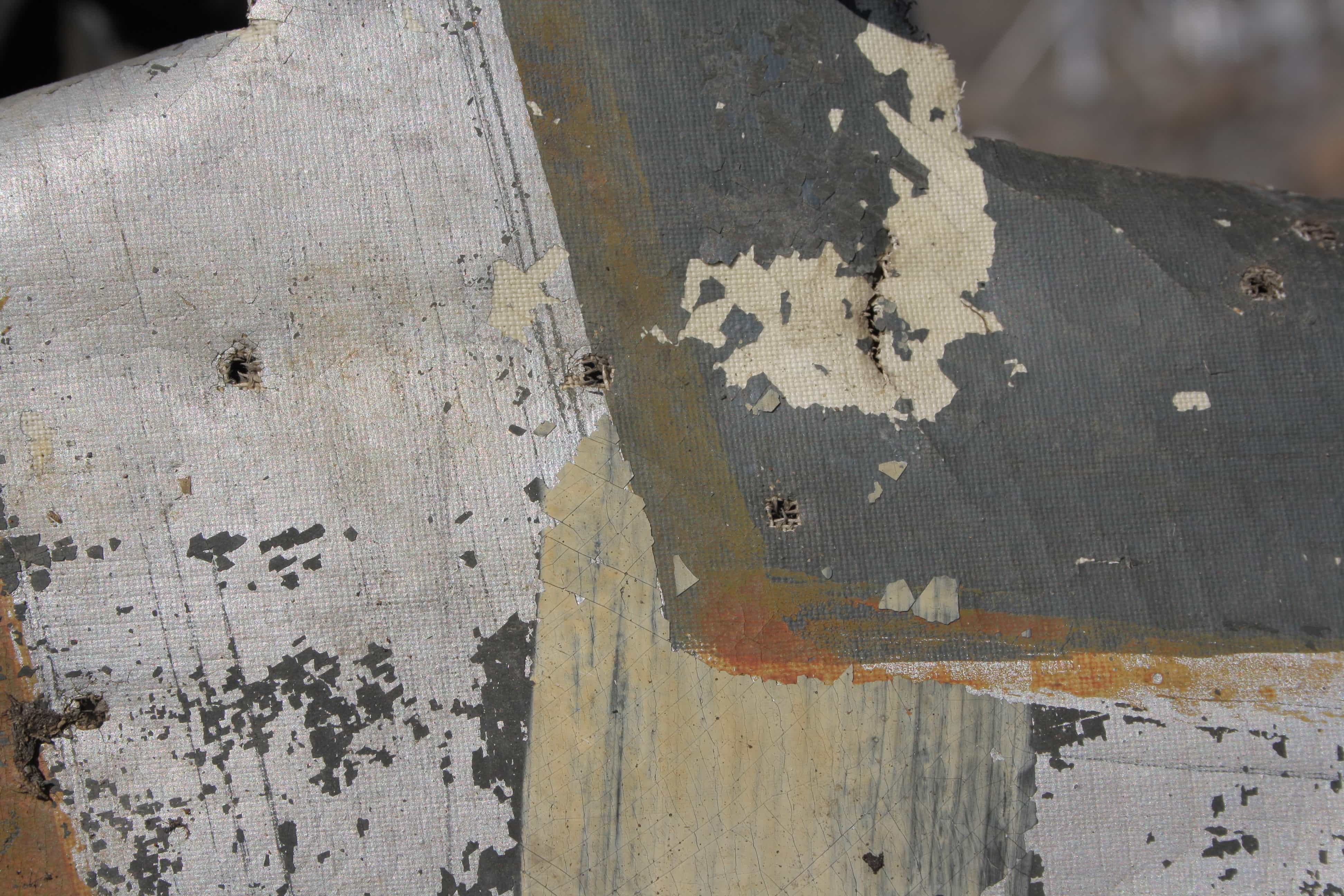
The supporting framework of the plane was mostly made of wood and veneer. Wings and parts of a fuselage were upholstered with fabric. The plane had a M-11 five-cylinder piston engine of up to 115 horsepower, with maximal speed up to 150 km/h. Po-2 could be fitted with wheel-type, float-type or ski-type landing gear. The latter allowed planes to land on ice and snow, so skis became the most common type of gear in polar aviation. The great advantage of Po-2 was its good short-takeoff-and-landing capabilities.
Because of its wood-and-fabric construction, Po-2 were pretty vulnerable in hard conditions of the Arctic. Anyway, they were widely used in polar aviation from the early 1930s to the 1950s. Some specially designed modifications of U-2 for northern regions had enclosed cockpits, but planes in front of you are just regular ones.
The first U-2 at the Tikhaya Bay station was put into use way back in the 1930s. Its pilot and flight mechanic were staff members of winterers' shift. On Franz Josef Land, planes were used for aerial reconnaissance, aerial photography, and also as liaison aircrafts for flights between islands of the Archipelago or between the station and a group of scientists on a research mission to an assigned area. The remaining parts belong to planes which served at the station in 1949. These are destroyed fuselages. Also, some parts of U-2, namely bracing wires, pieces of wings and an empennage have been rediscovered during the restoration of the hangar.
Hide detailsIn front of you is a tractor garage of the polar station which accommodates a tractor of "Stalinets-80" model, or S-80. This machine was brought to the Arctic in the late 1940s for an expedition named A-70, where researchers of the Arctic Research Institute studied glaciers of Franz Josef Land.
On Čiurlionis Ice Dome near Tikhaya Bay, which you can clearly see from the station, a permanent scientific installation was established, a residential house and a bathhouse were built and scientific instruments were installed. This is where meteorological observations and researches of ice were conducted.
This tractor of S-80 model, which you can see in a garage, had to drag to a glacier a trailed sledge with all goods that were necessary for the expedition. But because of the rugged terrain (boulders were a big problem for the tractor), at first it couldn't make it. So members of the A-70 expedition cleared a road for the tractor alongside the shore. In doing so, they dropped about 300 tons of fractured rocks into the sea. Another problem was a surface of the ice dome itself, because it caused the heavy machine with its sledge to dangerously slide. To avoid accidents, mechanical engineers at the Tikhaya Bay station put steel dowels on tractor's caterpillars. The path of the tractor along the glacier was tracked by special stakes which were firmly driven in ice.
And now a few words about tractor's design. It was based on "Caterpillar D7", an American tractor that was supplied to the Soviet Union by Lend-Lease during the Great Patriotic War. The Chelyabinsk Tractor Plant put the tractor into production line in July 1946. S-80 was produced for ten years, until 1956. In this year, this model was replaced with more powerful S-100. But in the Soviet national economy S-80 was used until the early 1970s.
Unlike its predecessor S-60, S-80 had an enclosed two-seat cabin. Early modifications had wooden frames for cabin glasses. A stamped cabin was later introduced. Total weight of S-80 was 12 tons. It had a 92 horsepower diesel engine. Maximum driving speed of the machine was more than 9 km/h.
S-80 were the very first Soviet tractors to be sent to the Antarctic. In April and May 1956, they were used for the first intercontinental expedition of Soviet polar explorers.
Hide detailsJust as the first big residential house was unofficially labeled as "The House No. 1", a laboratory building in front of you was nicknamed "The House No. 2". It was built in 1931 during the preparation of the Tikhaya Bay polar station to the Second International Polar Year. The building accommodated scientific laboratories and apartments for scientists.
In the first years after it was established, the Tikhaya Bay station quickly evolved into a geophysical laboratory that gathered comprehensive data about conditions of various natural environments. In the 1930s, it was the most advanced and one of the largest high-latitude research bases of the Soviet Arctic, an administrative center and an aerial gate of Franz Josef Land. This was the place where state-of-the-art technologies were tested, the latest researches were made and numerous polar expeditions were based. Up to the beginning of scientific observations on Rudolf Island on a regular basis, which first started as a part of a program of the Second International Polar Year and continued after a few years, this station was also the northernmost scientific settlement in the world.
During the preparation to the Second International Polar Year, which lasted from 1932 to 1933, the station was modernized with a set of new equipment. Geophysical pavilions, a meteorological site and a powerful radio station were built, as well as an aircraft hangar. In the Soviet Arctic, the Tikhaya Bay station became one the two permanent scientific installation where foreign researchers, such as Joachim Scholz, a German expert in atmospheric electricity, worked side by side with their Soviet counterparts. The second station was Russian Harbor on Novaya Zemlya, where Kurt Woelken, another German geophysicist, conducted his work. In addition to researches in hydrometeorology and geomagnetism, some studies were made in radio-wave propagation by Boris Fyodorovich Arkhangelsky, who was a radio engineer. He also designed and built a communication device for expeditions.
The laboratory building accommodated a meteorological room, a radio-wave laboratory, aerological and ionospheric departments, and a photographic darkroom. The building accommodated laboratories as well as a library of the polar station and living quarters for researchers in meteorology, aerology and ionosphere. The house had coal-burning heating stoves which had to be stoked every day.
The meteorological room was equipped with barometers and self-recording instruments. It was a workplace for a chief meteorologist of the polar station. The aerological room was connected by the phone line to a pavilion which in the 1930s used to be located higher up. It was right there where gas bags of radiosondes used to be filled with hydrogen and released.
The laboratory building has as yet been neither restored nor converted into a museum. This has to be done in the future.
Hide detailsThe bathhouse played a huge role in the explorers' everyday life. A schedule of bath days used to be set by orders of a person in charge of a winter shift. Usually they were scheduled at intervals of about 10 days. All winterers used to heat and prepare the bathhouse in turns. Besides bathing, it was used for washing.
Sergey Bezborodov, a writer who stayed for the winter at Tikhaya Bay from 1933 to 1934 as a meteorologist on duty, wrote:
"Every bath attendant considered it his duty to surprise winterers with something new.
Someone decorated a dressing room with cheerful mottos, someone covered benches with his own clear sheets, someone carefully placed decanters full of cold kvass or nailed open packs of best cigarettes to the walls: up for grabs, lads! Someone arranged light effects, just like in a circus, with blinking bulbs, green, red and blue spotlights". This is how a routine sanitary procedure helped improve a psychological state of the winterers.
The bathhouse had two coal-burning heating stoves, in a dressing room and in the bath itself. To get fresh water for the bath and the station in general, snow or icebergs were thawed. As Bezborodov writes in his book, the bathhouse was not big enough to provide room for more than six people. He describes it as small and cramped. He also notes that between bath days the bathhouse froze right through, and water that was left in barrels turned into ice.
Now this historic bathhouse has been repaired by workers of Russian Arctic National Park and can be used for the intended purpose.
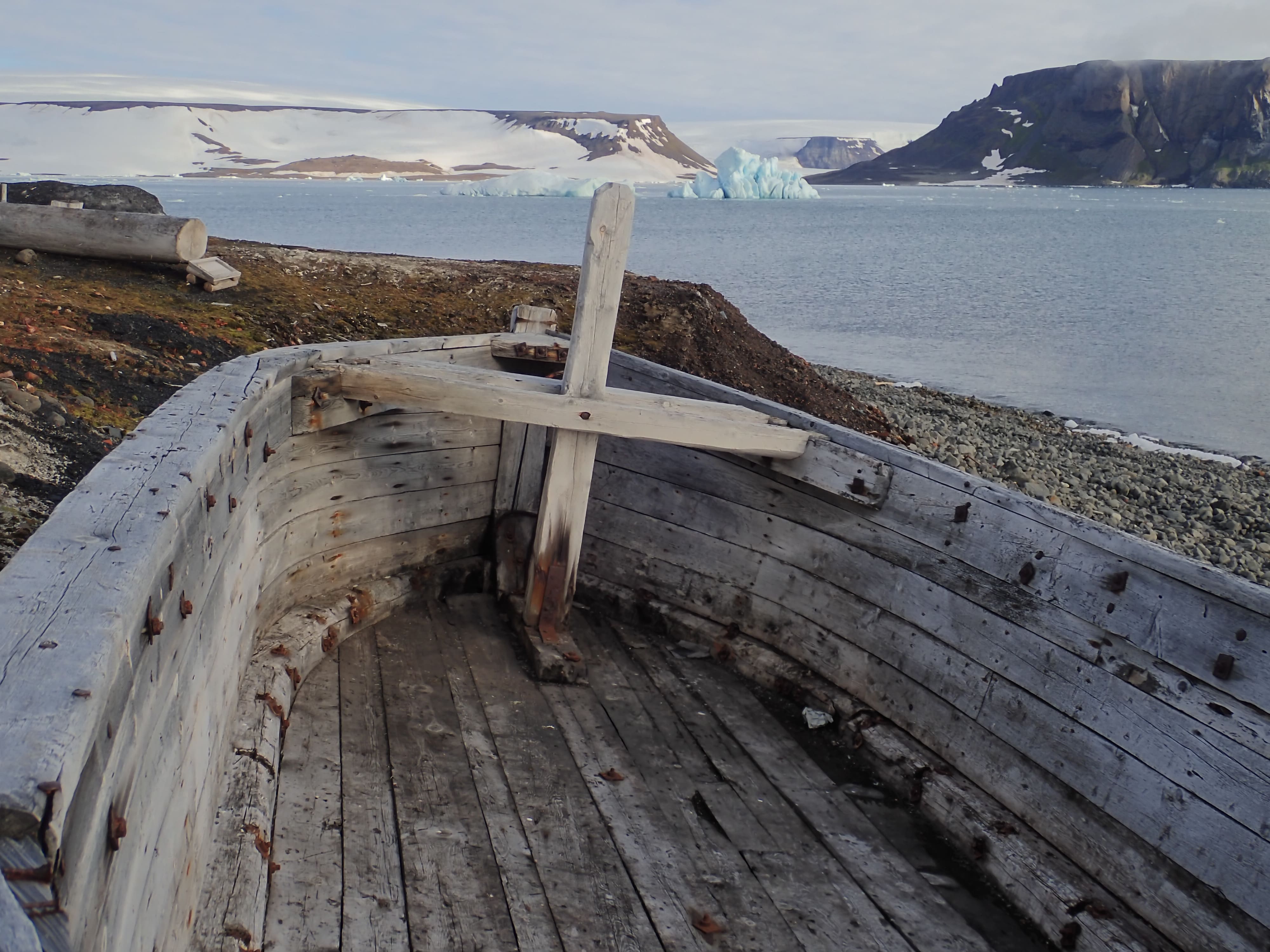
Hide detailsAt the shore of Tikhaya Bay in front of "The House No. 1" you can see a kungas - a big undecked wooden vessel which was used to carry goods.
The kungas is notable for its flat bottom with almost straight boards. It was designed to get a lot of goods aboard. Thick planking and heavy framing make the kungas a really solid boat, which is an important factor in Arctic conditions.
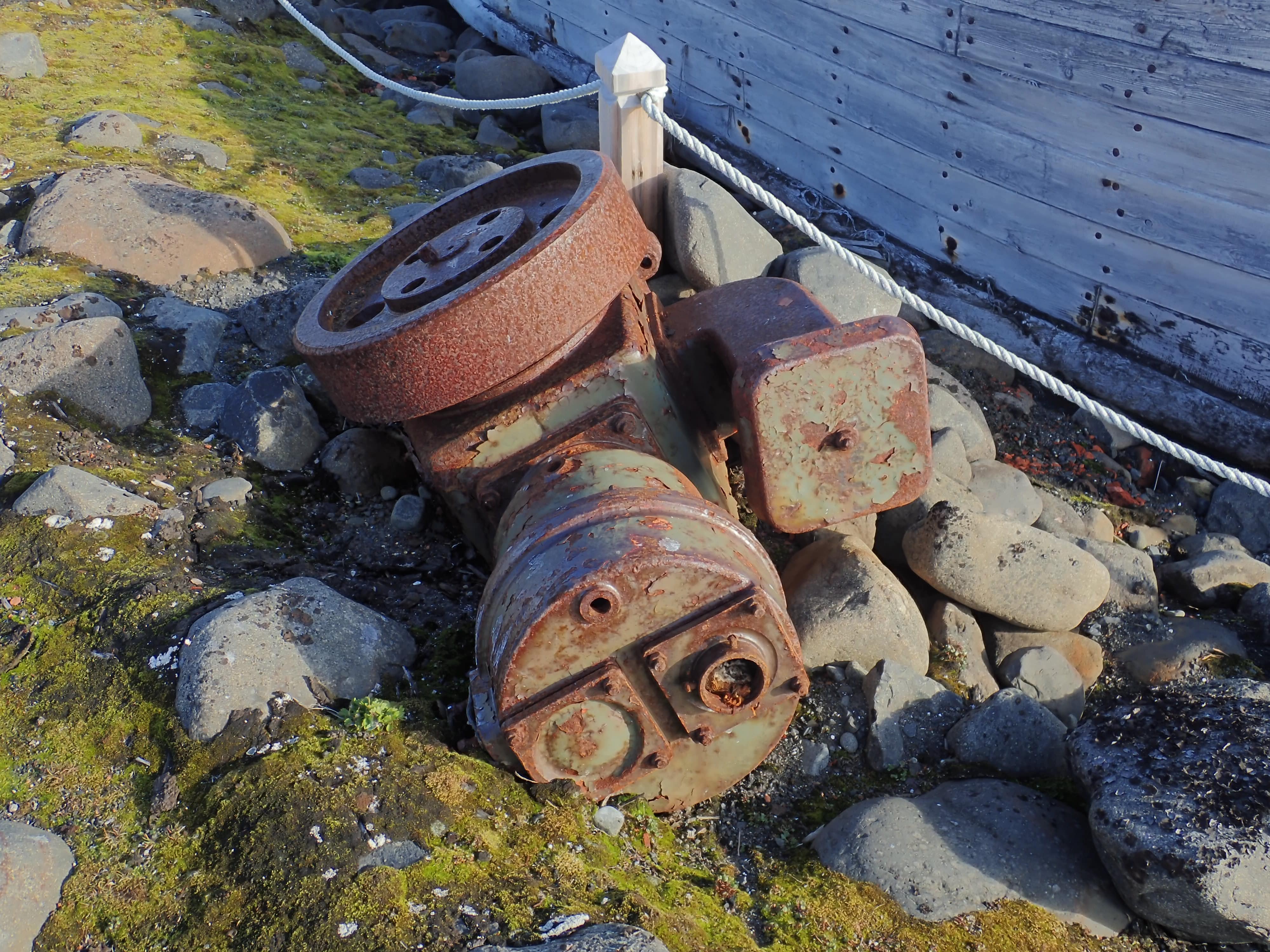
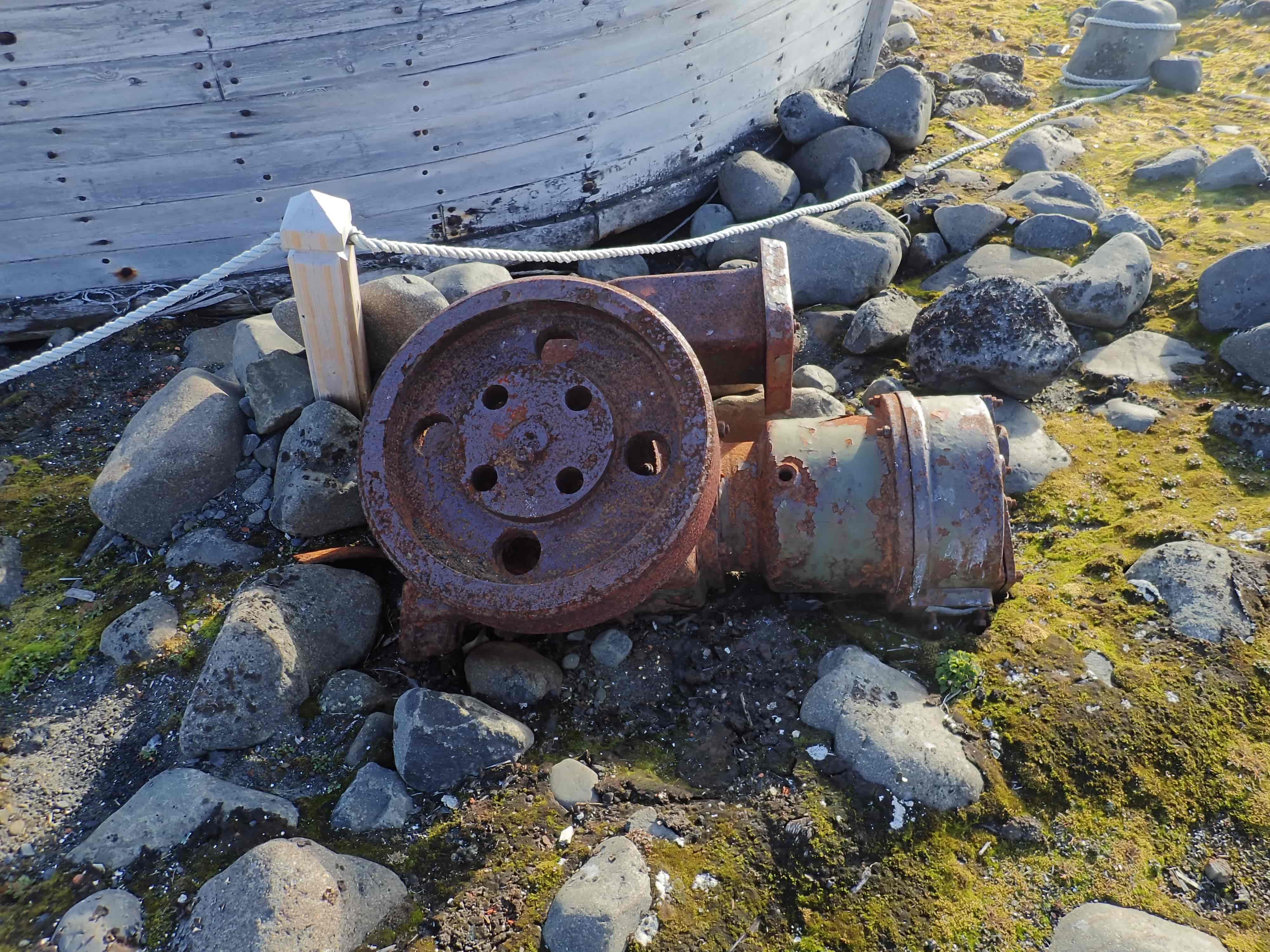
This kungas and boats of other types were used at the Tikhaya Bay polar station all the time. They transported goods delivered by steamers, which were the only means to provide the station with all it needed. New shifts of winterers, food, scientific equipment, rifle ammunition, fodder, building materials and disassembled buildings used to be brought to the station by ice-breaker steamers named "Georgy Sedov", "Taymyr", "Malygin". Then everything was transferred from steamers to boats to be unloaded on a special berth. It was built in front of an aircraft hangar, which was converted into a warehouse at the end of 1930s. Goods used to be pulled into the hangar from the berth with an electric winch. Handling was mostly done by those who worked at the station.
In addition to purely service tasks, boats at Tikhaya Bay were used for research purposes. Hydrological observations were constantly performed. Coast observations were to monitor ice and wave conditions immediately in the bay and in Mellenius Strait between Hooker Island and Scott-Keltie Island (it can be clearly seen on the horizon when weather conditions are fine). Hydrologists also performed off-shore observations. For this purpose, they used a dog-drawn shack during the winter and boats during the summer. But usually these observations were not on a regular basis, due to the state of the boats (it was impossible to work where depth was from 200 to 400 meters without anchors, for example) as well as bad ice conditions, when the bay was totally blocked by floating ice for the most part of the summer.
As specialists of the Arctic Museum and Exhibition Center were clearing the aircraft hangar from the ice that formed inside after the station was closed down, they rediscovered a set of items from the boats of the explorers, including a fuel tank of a cutter, a two-blade wooden propeller and a piece of a life ring.
Hide detailsIn front of you is a big residential house. It was nicknamed "The House No. 1" because at the time, it became the first building at the Tikhaya Bay polar station.
In 1926, the Soviet Union declared its annexation of all polar islands to the north of its Arctic coast, including Franz Josef Land. But consolidating in the Arctic required a regular activity on the islands. That meant permanent stations that could operate for a full year. To establish the first Soviet station on Franz Josef Land at a historic site where Georgy Sedov once wintered, the Soviet Union sent an expedition to the Archipelago. Among its members were two prominent Arctic explorers, professors Rudolf Lazarevich Samoylovich and Vladimir Yulyevich Wiese. The expedition was led by Otto Yulyevich Shmidt, who later was appointed a leader of the Soviet polar program and the first head of the Chief Directorate of the Northern Sea Route. In August 1929, members of the expedition assembled wooden houses that they brought with them in a disassembled state, mounted a radio station, tuned measuring instruments. The first buildings of the new station were a big residential house for the winterers (our "House No. 1"), a food store and a bathhouse. The first group of winterers consisted of seven men, led by Pyotr Yakovlevich Illiashevich, who was a hydrometeorologist.
"The House No. 1" remained a center of life at the Tikhaya Bay polar station even later, when new residential houses were already built. The small rooms, separated from each other, also accommodated the main body of the group. The coal for heating stoves used to be periodically replenished by ice-breaking steamers.
At the first time, it was a residential place for all polar explorers at the station. Then some specialists moved into newly build houses. The main house also used to serve as a place for ceremonial events like party meetings and visitors' receptions. Despite being far away the mainland, the polar explorers always took part in elections of deputies to the Supreme Soviet of the USSR.
The appearance of "The House No. 1" that you see today dates back to the post-war time when its walls were completely planked. In the 1930s it looked differently, its walls were upholstered with black tar paper and life rings from ships were put above at some places. After the station was closed down and people left it, rooms of the empty house mostly filled with ice. Today specialists develop a plan to repair the house.
Hide detailsThere is a tractor of DT-55 model at Tikhaya Bay, which now serves as a memorial on its shore. It was used at the polar station in the late 1950s, shortly before it was closed down.
Caterpillar tractors were purposefully transported to the Arctic as a part of a large-scale Soviet Arctic development program which was initiated in the 1930s. These machines were also brought to Franz Josef Land. The first tractors had a name "Stalinets-60". They were used both at Tikhaya Bay and Rudolf Island, where the northernmost polar station was established. On Rudolf Island tractors were used to carry out tasks for an airborne expedition of 1937, which brought polar explorers of the first Soviet drifting-ice station to the North Pole. For Soviet caterpillar machinery, it was the first practice at such high latitudes. In the 1930s, tractors were used in the Arctic along with the first semi-track off-road vehicles designed by the Research Institute for Automobiles and Tractors.
After the war, caterpillar tractors of various models were widely used at polar stations, and even at "North Pole" drifting-ice stations for material handling as well as clearing ice airfields. They were transported to their working sites by ships and planes, sometimes in a disassembled state. To retrofit regular farm tractors for the Arctic conditions, they were equipped with starting heaters, and their engine jackets were covered with warming materials.
The caterpillar tractor of DT-55 model was produced at the Volgograd tractor plant from 1955 to 1957. Its design was based on DT-54, a tractor of mass production that was widely used in agriculture of the Soviet Union. Unlike its predecessor, DT-55 was designed to operate on boggy soils and could be used at peatery. It had wider caterpillars and drive sprockets of bigger diameter meant to increase a bearing surface of the caterpillars. Its design also included rig brackets to mount a bucket or a scraper.
The power of its diesel engine was 54 horsepower, with full weight about 5,5 tons and maximal speed of 8 km/h.
The tractor that survived at the Tikhaya Bay polar station is observed now by specialists of the Arctic Museum and Exhibition Center. To prevent the tractor from the destructive climate of Franz Josef Land, they check its state on a regular basis and carry out conservation work.
Hide detailsAs you can see, there is a little building between the hangar and "The House No. 1". This is a cattle house, one of the utility structures of the station. It was used to keep cows and pigs that served as living provision.
This cattle house was built at Tikhaya Bay in 1930. It was transported here in its disassembled state. At the same time, a lot of other structures were being built. During this period, a separate building for a radio room was built, and a laboratory building in the following year.
The station had always a lot of domestic animals, mostly sled dogs that were essential to carry out exploration of the Archipelago. Later, after the second winter, explorers began to ship livestock to provide themselves with fresh meat and milk. It was extremely important during polar nights which lasted many months. Fresh meat was the most important thing to prevent scurvy. This terrible disease caused by malnutrition was a real scourge of polar expeditions in the first half of the twentieth century. To provide themselves with fresh meat, winterers didn't rely exclusively on keeping domestic animals, but also hunted.
Fodder for animals at the station used to be replenished by coming steamers. Pigs were bred and then slaughtered for meat. In the 1930s, the winterers also kept a couple of milk cows. Their milk was given to children that were born during winters.
In the 1930s the Arctic played an important role in Soviet plans to create the new world of the future. It was thought to be possible to turn Arctic regions of the Soviet Union into the flourishing area by transforming polar nature with towns under glass domes equipped with artificial light to grow a lot of fruits and vegetables. The Arctic of the future was considered as an integral part of the country, so in an effort to make the life of polar explorers as good as possible, a family life in the Arctic was encouraged, for example. And stalled keeping of cattle was also a part of this strategy.
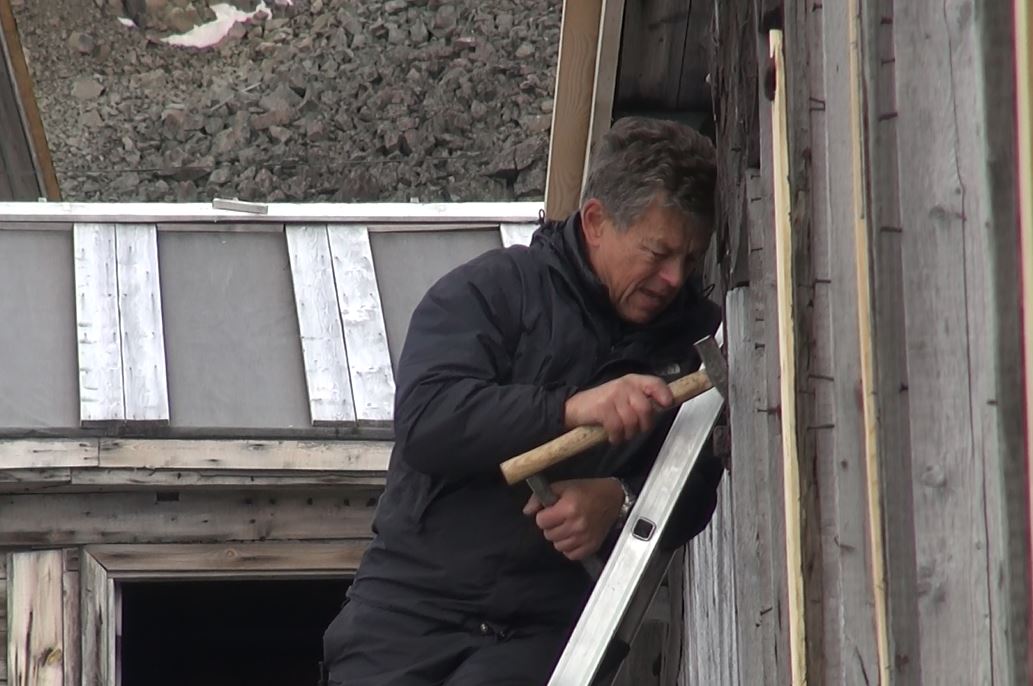
Remaining household items of polar explorers who lived at Tikhaya Bay also include farming tools, namely a pitchfork and portable wooden feeding troughs. Sergey Bezborodov, a writer who was one of the winterers from 1933 to 1934, remembers in his memoirs that their shift kept 18 pigs at that time.
Hide detailsThis aircraft hangar was constructed from 1932 to 1933 as the station was built up during preparations for the International Polar Year. Neither Tikhaya Bay nor other Soviet polar stations had ever seen such a big structure before. A framework of the hangar was manufactured in Arkhangelsk, then disassembled and transported to the station in 1932.
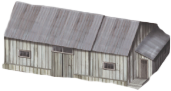
During the winter of the Second International Polar Year the hangar had not been yet planked. Sergey Bezborodov, a writer and a journalist, visited the station as a member of a group of winterers which replaced a team of the International Polar Year. He wrote: "As for now, it's just a skeleton of the hangar. It has neither walls nor a floor nor a roof. That's exactly why we brought more than a thousand veneer sheets here - to make roof and walls for the hangar".
After hangar's walls and roof were planked with veneer, it served its intended purpose, that is, to accommodate station's airplanes in the 1930s. These were light planes: Polikarpov U-2 (an universal plane which was used widely, in polar aviation as well), and Shavrov Sh-2, a small amphibious flying boat for hard-to-reach areas.
Both types of the planes based at Tikhaya Bay were fitted with skis during winter and a float-type landing gear during summer. To lift the planes to the hangar, it was equipped with a specially designed slipway. Heavy planes were later based on a land airfield which was built on Sedov's Plateau.
Planes based at Tikhaya Bay were used to carry out ice patrol and aerial photography of the Archipelago's islands.
The last U-2 planes (during the war they were renamed Po-2, by the name of Nikolay Nikolayevich Polikarpov, their designer) were used at Tikhaya Bay in the late 1940s. At the outskirts of the station you can still see remains of their frames.
Since the pre-war time, the hangar was used as a store to keep various materials and food for the station. Bathroom scales and an electric cargo winch to hoist goods from the shore were installed inside. Fodder, coal, glass, cement, even parts of destroyed planes - all of this was kept in this hangar!
A lot of this stock remained in the hangar even after the station was closed down. From 1940 to 1941 the hangar was converted into a warehouse ("a storage room for general-purpose goods"). A tarpauline curtain, which served as a wall facing waters of the bay, was replaced with a solid wooden wall with a gate. A loading berth was built in front of the warehouse, and a rail track was laid into the building to hoist the goods with an electric winch.
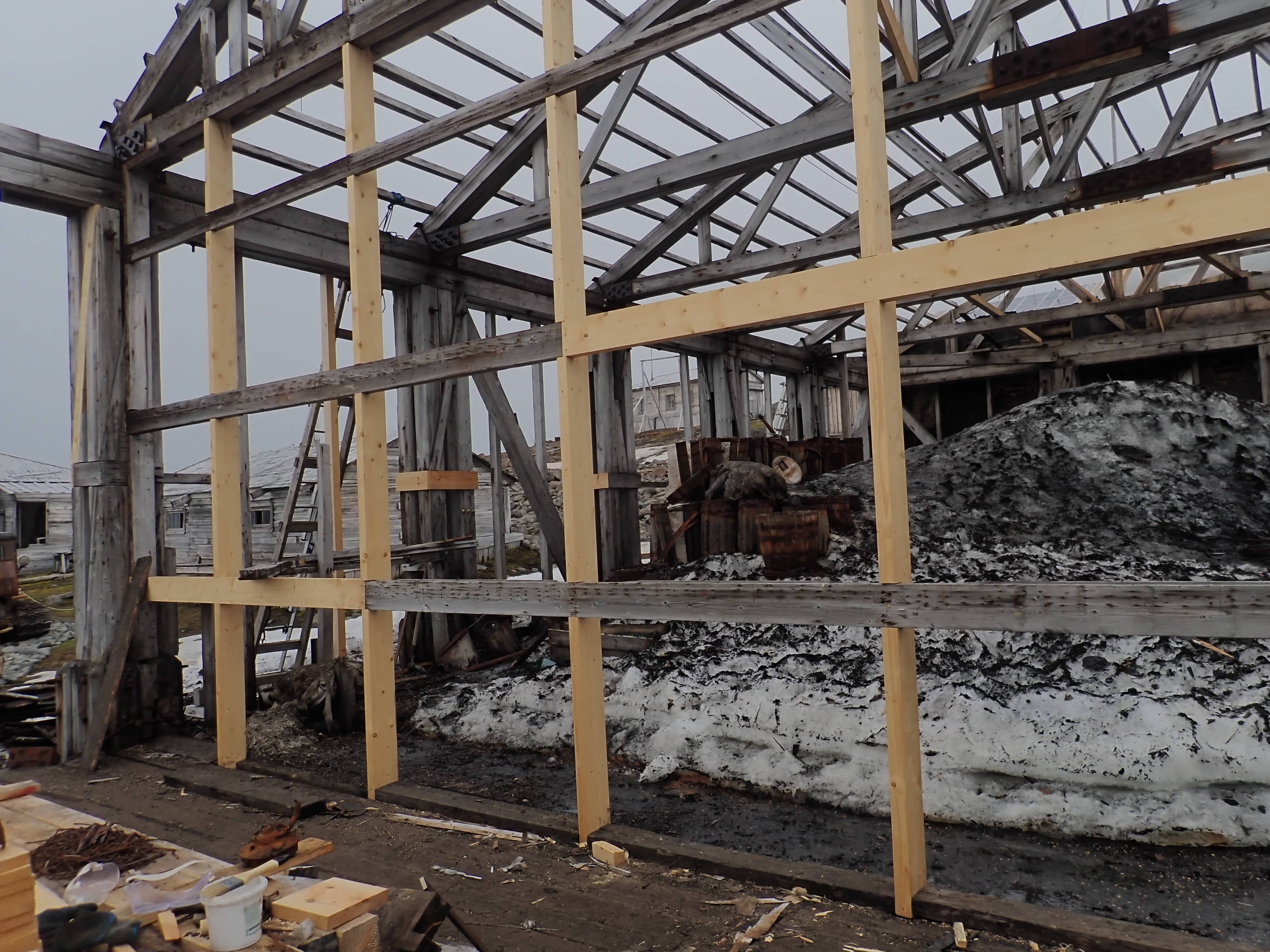
Over the following years the hangar was repaired several times. After the station was closed down, the veneer crumbled, and the inside of the hangar turned into a high pile of ice.
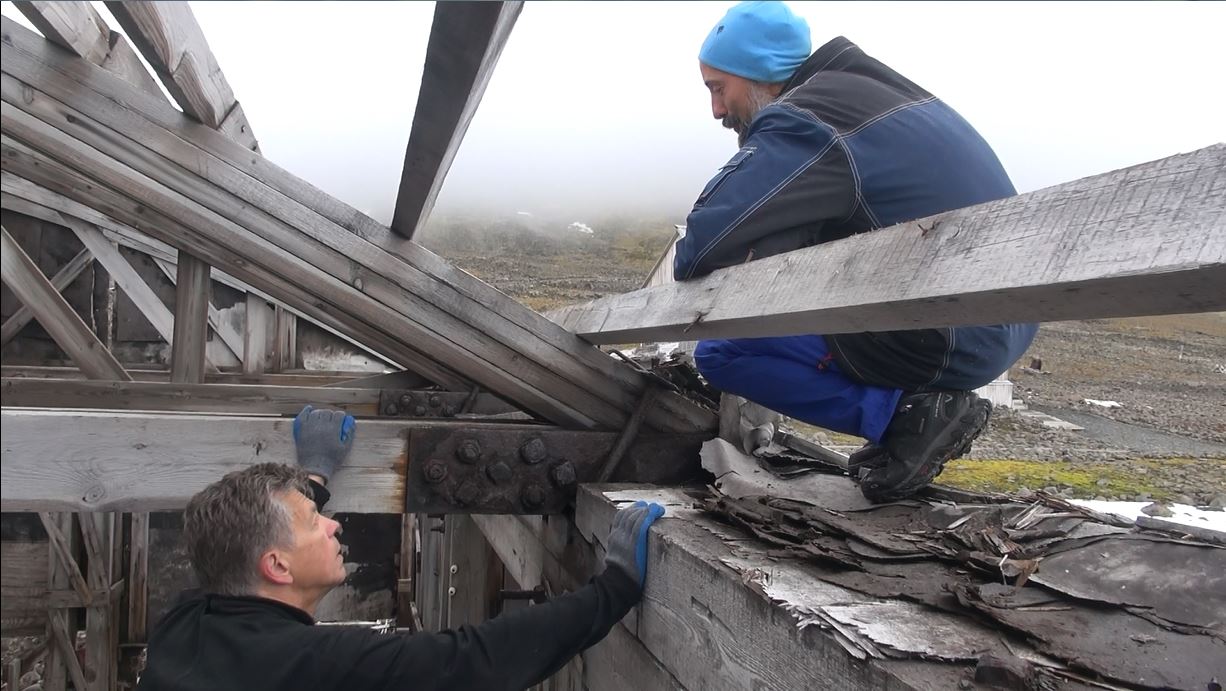
Now specialists of the Arctic Museum and Exhibition Center work on restoring the hangar, to create the northernmost museum in the world dedicated to polar aviation and Soviet polar explorers, their life and their duties.
Hide detailsOpposite the aerological room you can see an aerological pavilion, built in 1954. This is the last big building erected at Tikhaya Bay.
Opposite the aerological room you can see an aerological pavilion, built in 1954. This is the last big building erected at Tikhaya Bay. This was a pavilion where weather balloons used to be prepared for release. A hydrogen-generating plant was installed inside the building to fill big rubber balloons with this lighter-than-air gas which allowed them to lift a small weight high up into atmosphere. These hydrogen-filled balloons lifted radiosondes into the upper atmosphere to send information about its properties to ground receivers. At the same time, pilot balloons used to be released. They were just hydrogen-filled bags to help define wind characteristics at various heights. During the periods of darkness (the polar night, for example, which lasts about five months at a latitude of Tikhaya Bay) special paper lanterns with a small light bulb were attached to the pilot balloons. Trajectories of the pilot balloons used to be tracked with theodolites that were mounted at special observation points, including the aerological tower near the room. All observation points were connected to the room with a telephone line. Actual releases used to be made from a shore of Tikhaya Bay.
Now the aerological pavilion serves to accommodate a post office, a souvenir shop and a visitors center of Russian Arctic National Park. It is the northernmost post office in the world. Here you can send your letters and postcards to any place of the world, and buy any souvenirs you like. In the visitors center you can also learn more about plants and animals of Tikhaya Bay, its geography, climate, geology and history.
Hide detailsIn front of you is an aerological tower, one of the buildings of scientific purpose. Even though the tower was built only in 1942, aerological observations at Tikhaya Bay were actually made since the establishment of the station. The tower, which is 6 meter high, is 11 meter high above the sea level.
Aerology is the study of the upper atmosphere. At the station, aerological observations were performed with weather balloons and pilot balloons.
It is Tikhaya Bay where the first automatic meteorological radiosonde in the world was tested, back in 1932. The device, designed and built by a Soviet scientist Pavel Alexandrovich Molchanov, was a small box filled with instruments to measure the temperature, pressure and humidity of air, and a compact radio transmitter. Meteorological radiosondes could reach up to 30 kilometers to send the atmospheric data to receivers at the station. As they moved higher, thin air caused bursting a rubber gas bag and radiosondes fell down.
Molchanov's device was officially approved by the International Committee for the International Polar Year and then recommended to national committees. Over the following years design of radiosondes was improved, but their concept remained the same.
The main objective of the aerological tower at Tikhaya Bay was to perform pilot balloons observations. A trajectory of ballons at various heights used to be tracked with an aerological theodolite mounted in tower's cabin. There was also a second observation point to track the balloon. It was located on the ground, 911 meters away from the tower. Unlike the ground observation point, mounting the theodolite in the tower meant to protect it from snowfalls.
Making observations at Tikhaya Bay was not an easy task. The tower, the aerological pavilion and the room were too close to other station's buildings, including radio masts. It complicated the release of balloons at wind speed of 10 meters per second or more. Another problem was the proximity to the sea. All of this was one of the reasons to relocate the observation point, in the late 1950s, from Tikhaya Bay to a research observatory "Druzhnaya" located on Heiss Island. Aerological observations were made there not only with radiosondes and pilot balloons, but also with specially designed meteorological rockets.
In 1990, a biological research station of the Murmansk Marine Biological Institute was established at Tikhaya Bay. The station was located in a small house which was also built in 1990. As you can see, this building which was named a "MMBI house", looks like other buildings of the polar station.
So, since 1990 Tikhaya Bay provides an opportunity to systematically explore the Saint Anna Trough, located between Barents Sea and Kara Sea.
Research workers of the station, as well as members of MMBI expeditions with research ships "Dalnye Zelentsy", "Akademik Golitsyn", "Professor Logachyov" regularly collected and studied samples of sea-floor sediments. Researches made during 1990s and 2000s show that the mineral composition of the latest sediments of the Saint Anna Trough forms mainly due to erosion of swells around it, namely Franz Josef Land, Novaya Zemlya and Northern Kara.
Now this biological research station operates on a seasonal basis. The house also accommodates some services of Russian Arctic National Park.
Hide details"We are passing a small tidy house at a distance from other buildings. It is a magnetic pavilion. This will be a workplace for our magnetologists". These lines are from memoirs of Sergey Bezborodov, a writer who stayed for the winter in Tikhaya Bay from 1933 to 1934.
The magnetic pavilion was built at the station during the preparation to the Second International Polar Year. Tikhaya Bay was one of the main base points of this large-scale scientific project. At the time, the station was under the authority of the All-Union Arctic Institute, today known as the Arctic and Antarctic Research Institute located in Saint-Petersburg, the largest center of studies of polar regions of our planet.
One of the important programs of the International Polar Year was a program of geomagnetic observations. The major tasks were solved during the polar expedition from 1932 to 1933. It was headed by Ivan Dmitrievich Papanin. Later he became one of the leaders of the Soviet Arctic exploration and a head of "North Pole-1", the first Soviet manned drifting-ice station.
During the International Polar Year, studies of geomagnetism were conducted by a magnetologist Viktor Storozhko and a chief magnetologist Yevgeny Konstantinovich Fyodorov, who later became one of the members of the North Pole-1 drifting-ice station, an academician and the head of the Soviet Meteorological Agency.
In addition to their routine observations, they mushed around a large area of the Archipelago to conduct a geodetic survey. In the 1930s, magnetologists of Tikhaya Bay made not only geomagnetic observations, but studied phenomena of aurora borealis and radioactivity.
The most important prerequisite for instruments in the pavilion to function properly was the total absence of iron which could deviate their indications. The pavilion was built aside from other buildings of the station, and was assembled without any nails, brackets, screws or other iron hardware. Iron parts, such as shoe nails, were not allowed even in magnetologists' shoes and clothes.
Now the magnetic pavilion is restored and serves to accommodate workers of Russian Arctic National Park.
Hide detailsDear visitors, welcome to Tikhaya Bay! Let's discover together this historic polar station that is located on Hooker Island, one of the islands of Franz Josef Land. It is one of the most famous and important sites of the Russian Arctic.
This small bay got its name in 1913, when a Russian expedition led by Georgy Yakovlevich Sedov reached Hooker Island's west shore on a ship Michail Suvorin, originally named Saint Phocas the Martyr and renamed after the beginning of the expedition. Sedov's intention was to reach the North Pole. Being already heavily sick, on February 2, 1914 he set off from Tikhaya Bay for the North Pole by dog sled, accompanied by two seamen, and died on the way. The expedition didn't reach the North Pole as it was planned, but it produced some scientific findings.
There are memorable places in Tikhaya Bay which remind us about Sedov's expedition, and we will surely see them more closely later. A cape where the station is located, and a glacier that we can see deep in the bay, both bear the explorer's name.
In 1929, a Soviet polar expedition reached the bay. It is symbolic that a steam icebreaker used by polar explorers to reach Hooker Island's shore bore the name of Georgy Sedov. Among others, this expedition was led by Vladimir Yulyevich Wiese, a prominent Soviet scientist who also took part in Sedov's expedition.
And this was the first milestone of the Tikhaya Bay polar station. For many years, it served as the most important center of the Soviet science in the Arctic. Meteorologists and hydrologists, researchers of Earth's magnetic field and cosmic rays conducted their work here. The station kept on functioning even during the most disastrous period in our country's history, the years of the Great Patriotic War. Its polar explorers took part in large-scale international polar projects like the Second International Polar Year from 1932 to 1933 and the International Geophysical Year from 1957 to 1958.
In the late 1950s all observation work was gradually relocated from the Tikhaya Bay polar station to another station on Heiss Island. The Tikhaya Bay polar station was closed down. Here you can find a lot of buildings and items of the time of heroic polar explorers, including the first residential house which was built in 1929, and an aircraft hangar of 1932.
Now the Tikhaya Bay station is an unique facility of historic importance, a part of Russian Arctic National Park. In a rebuilt aircraft hangar its workers, together with their colleagues from the Arctic Museum and Exhibition Center, create the northernmost museum in the world, dedicated to the history of Arctic exploration and the conquest of the North Pole in 1937. And now let's discover the history of the station and its buildings more closely.
Hide detailsNear the aerological tower you can see two small buildings located side by side. This is an aerological room. These buildings were built in the 1930s and originally served as a tallow-boilery and a vegetable shed. Since the Great Patriotic War - in 1942, to be more exact - they were used for the aerological room.
Aerological observations at Tikhaya Bay were performed since the establishment of the station, to collect information about the upper atmosphere. In Tikhaya Bay, these observations used to be performed with weather balloons and pilot balloons. In the room, the collected information used to be processed and radiosondes were prepared to be released.
Hide details